Sebum Is Produced
Sebaceous glands produce sebum, the natural oil that helps lubricate the skin.
 ×
×
Those tiny dark dots on your nose or other oily areas aren't necessarily dirt.
Blackheads are a type of acne called open comedones. Learn why they form, why they look dark, how they differ from sebaceous filaments, and how to care for them without irritating your skin.
Start Learning ↓
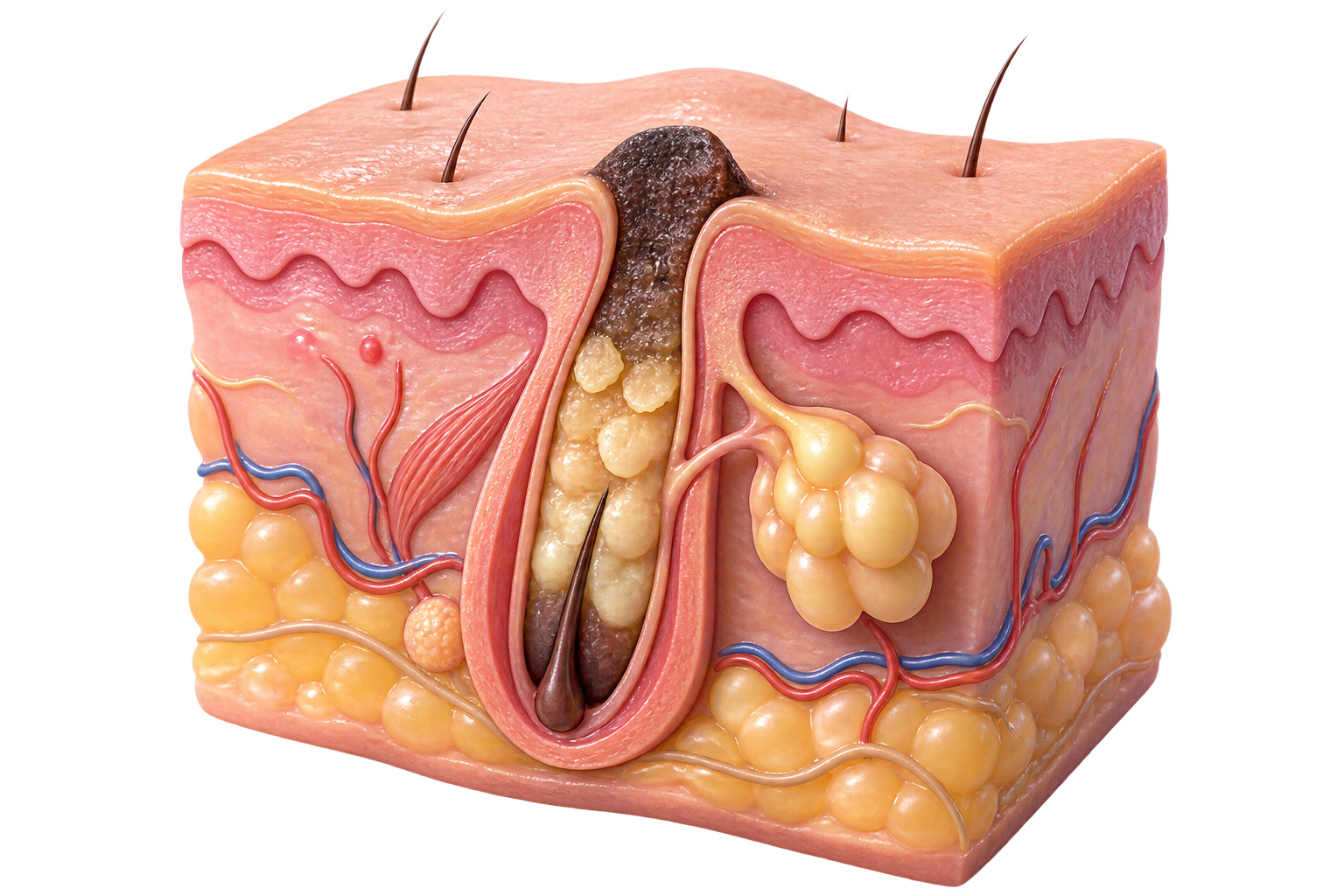
Blackheads are a type of non-inflammatory acne that develops when a hair follicle becomes clogged with sebum, dead skin cells, and other material.
Unlike a whitehead, the opening of a blackhead remains open at the surface of the skin.
When the material inside the pore is exposed to air, it undergoes oxidation, which contributes to its dark appearance.
Blackheads are not dirt trapped inside your pores.
That dark color doesn't mean your pore is dirty. It's mainly the result of oxidation at the surface.
Blackheads develop through a series of changes inside the hair follicle.
Sebaceous glands produce sebum, the natural oil that helps lubricate the skin.
Dead skin cells can mix with sebum inside the follicle.
The mixture accumulates and creates a comedone.
Unlike a whitehead, the opening stays exposed at the surface.
The material at the pore opening reacts with oxygen and becomes darker.
The clogged, open pore appears as a small dark spot on the skin.
Blackheads usually have a few recognizable features.
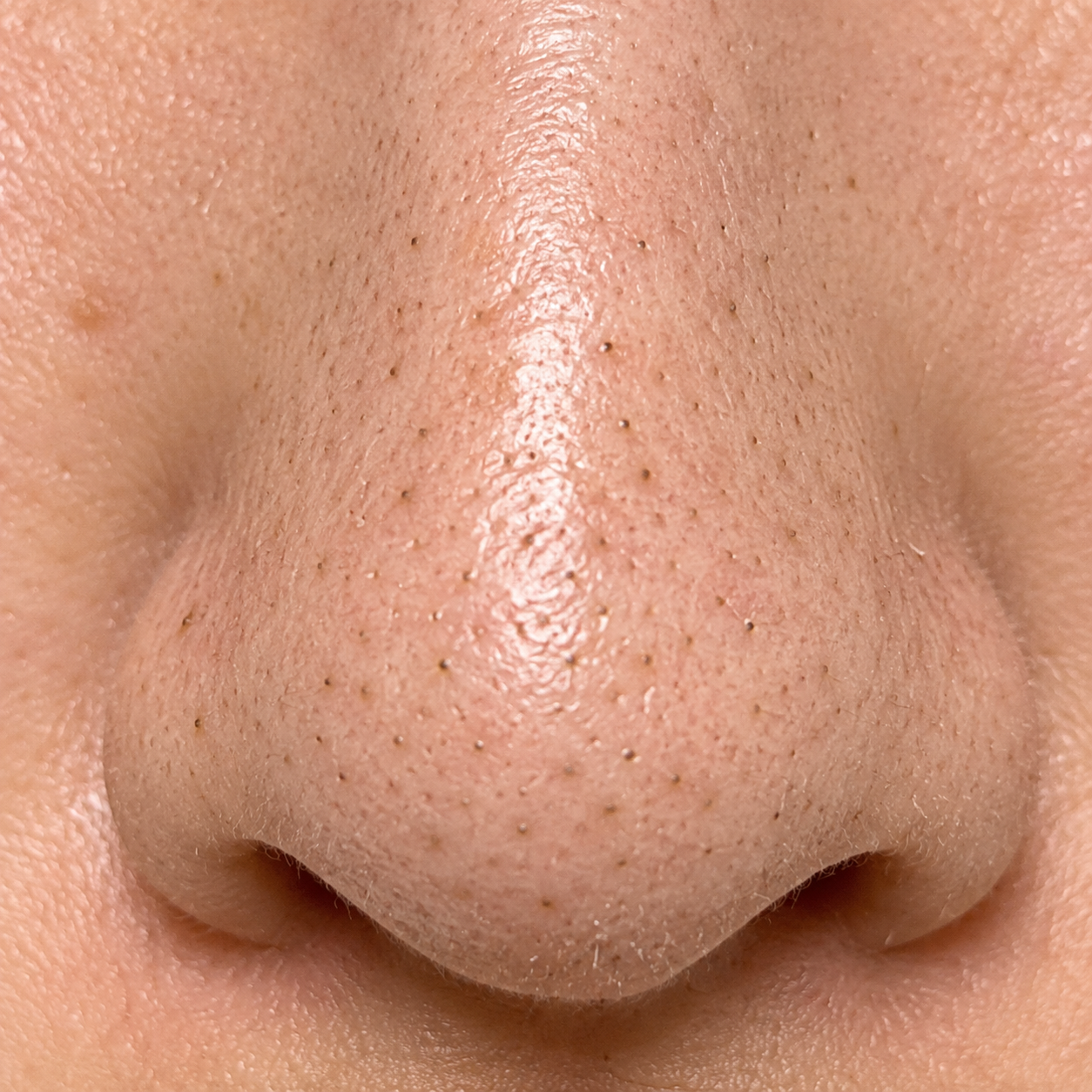
They commonly appear as tiny dark or black-looking spots.
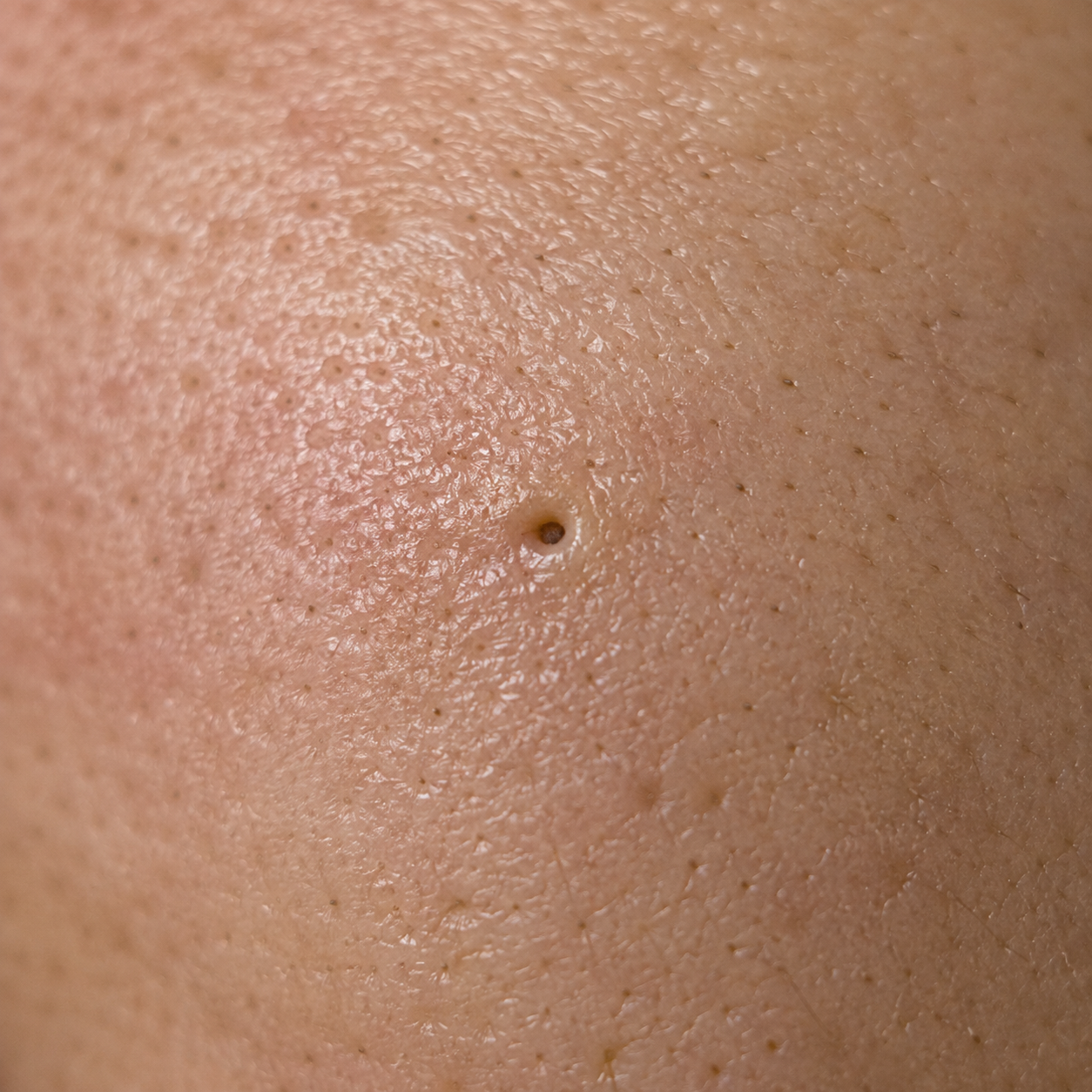
The clogged follicle remains open at the skin's surface.
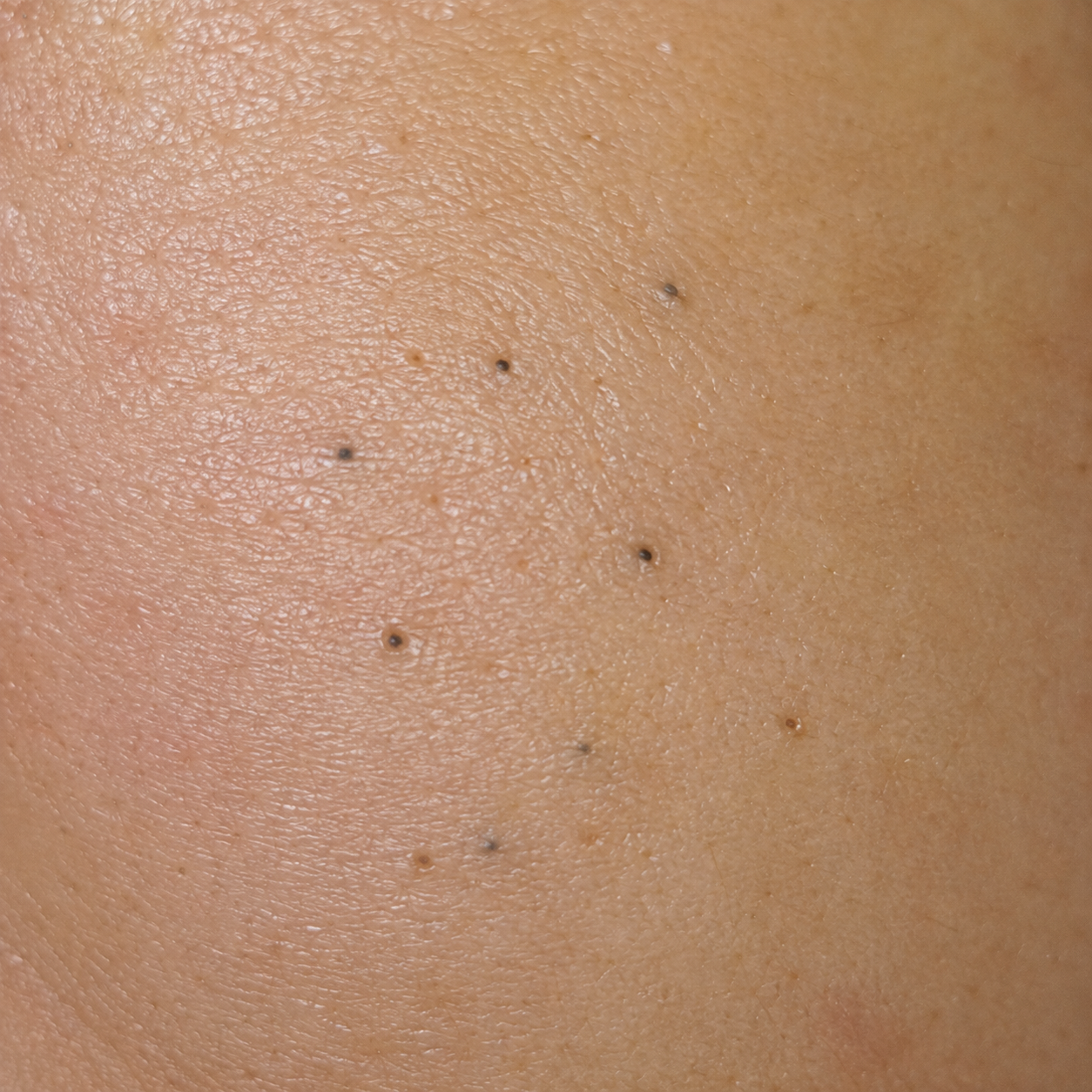
Blackheads generally aren't red, swollen, or painful like inflammatory acne.
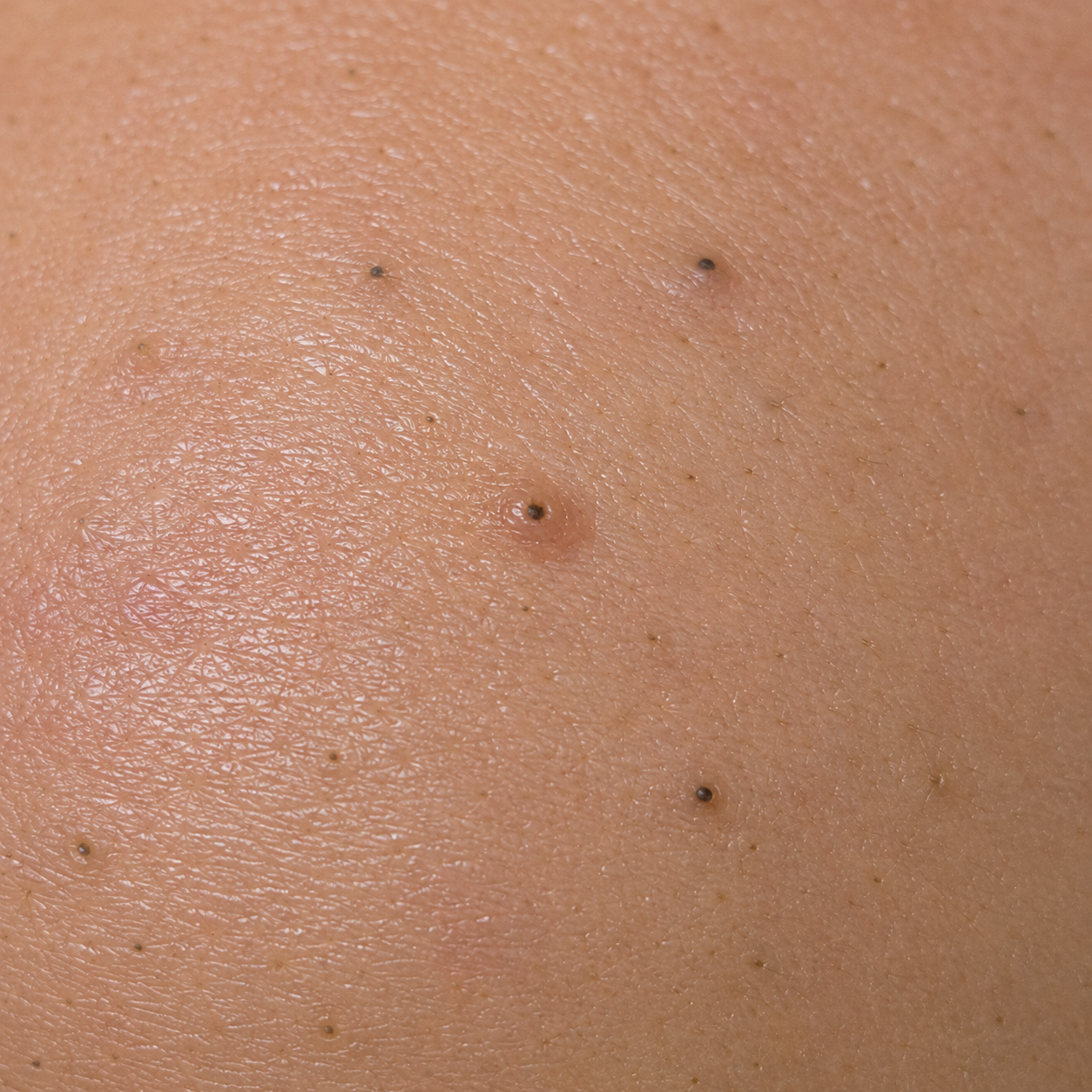
Some blackheads may feel slightly raised or rough when you run your fingers over the area.
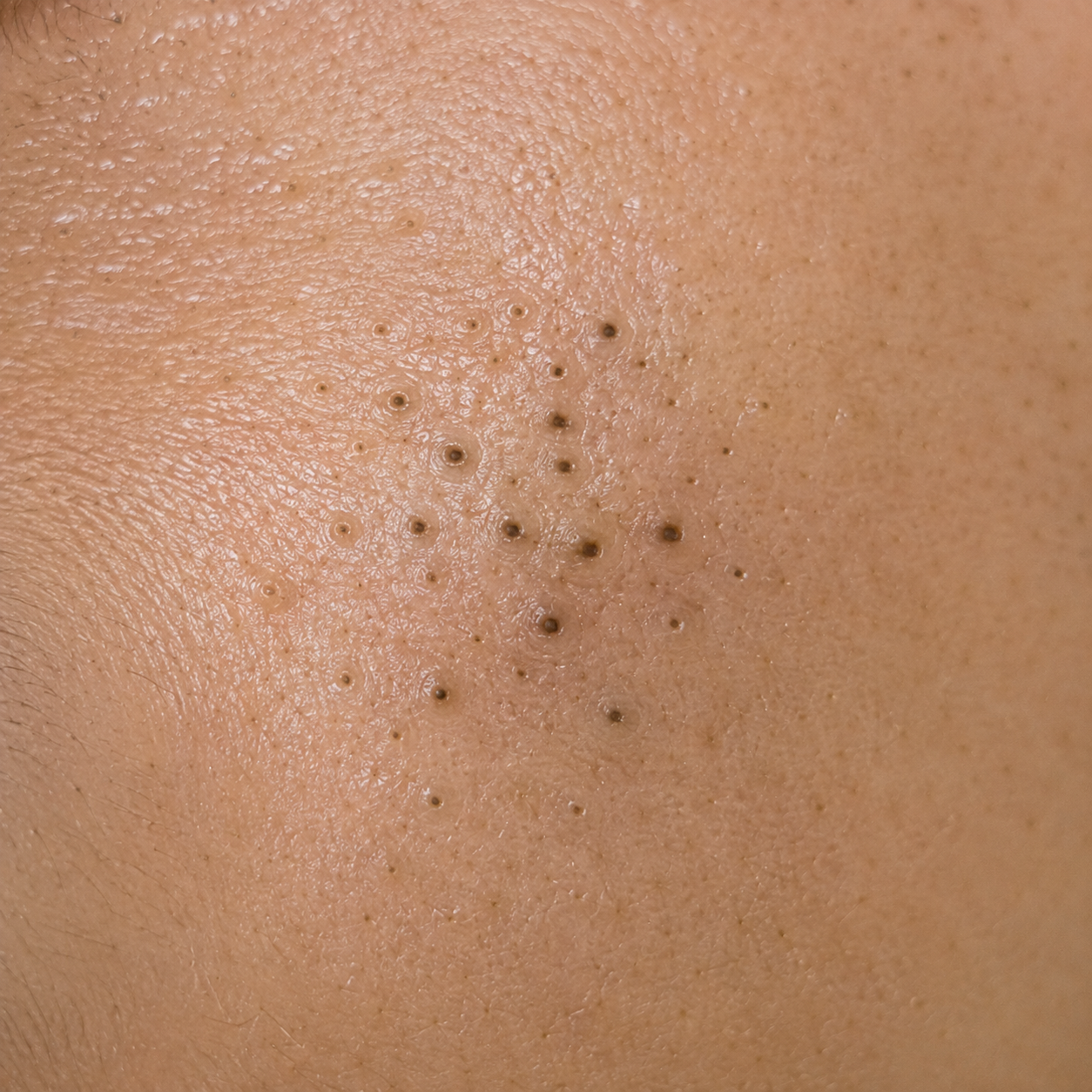
Multiple blackheads can develop in the same area, particularly where oil production is higher.
Blackheads can develop anywhere that contains hair follicles and sebaceous glands, but they're especially common in oilier areas.
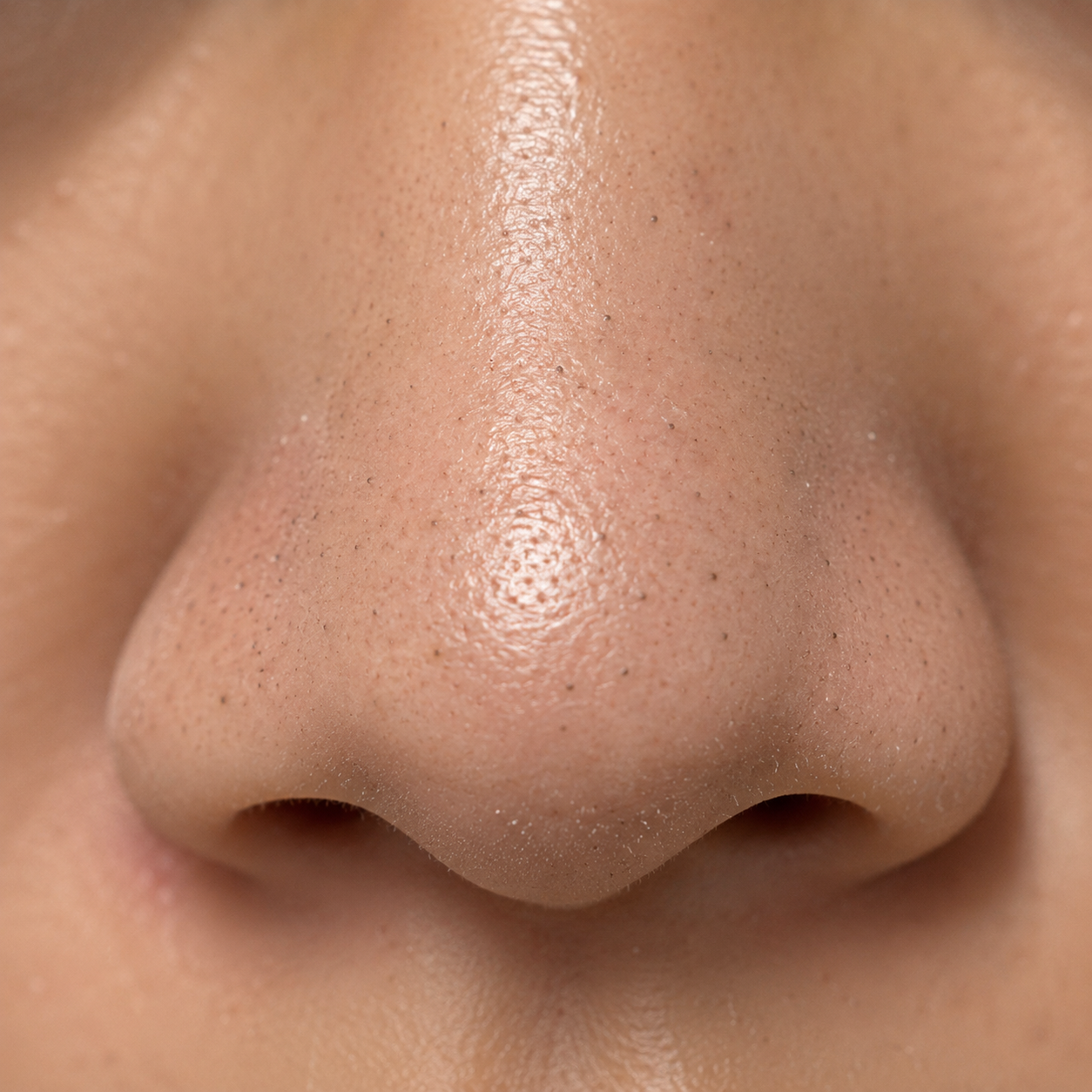
The nose is one of the most common places to notice blackheads.
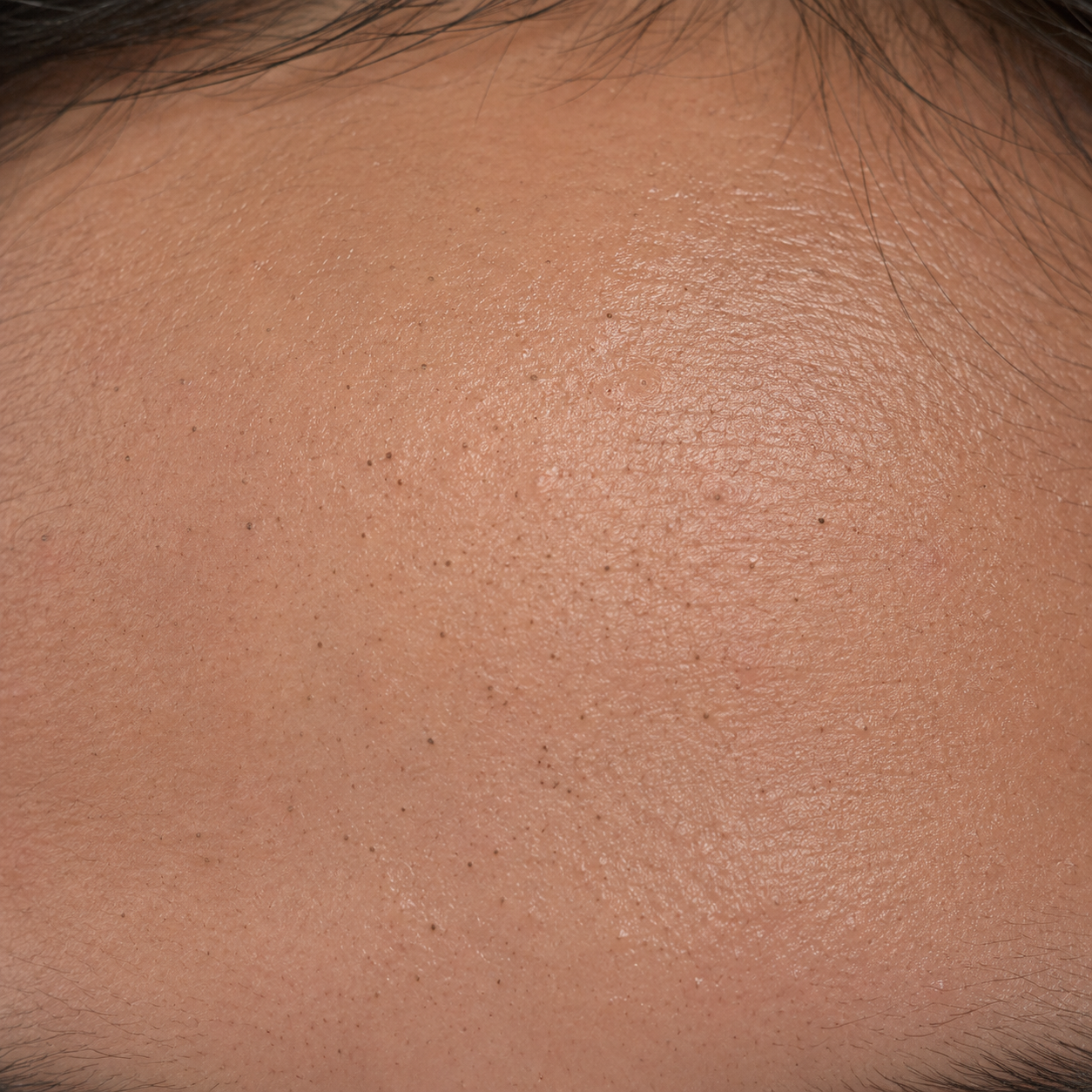
The forehead can develop blackheads as part of the T-zone.
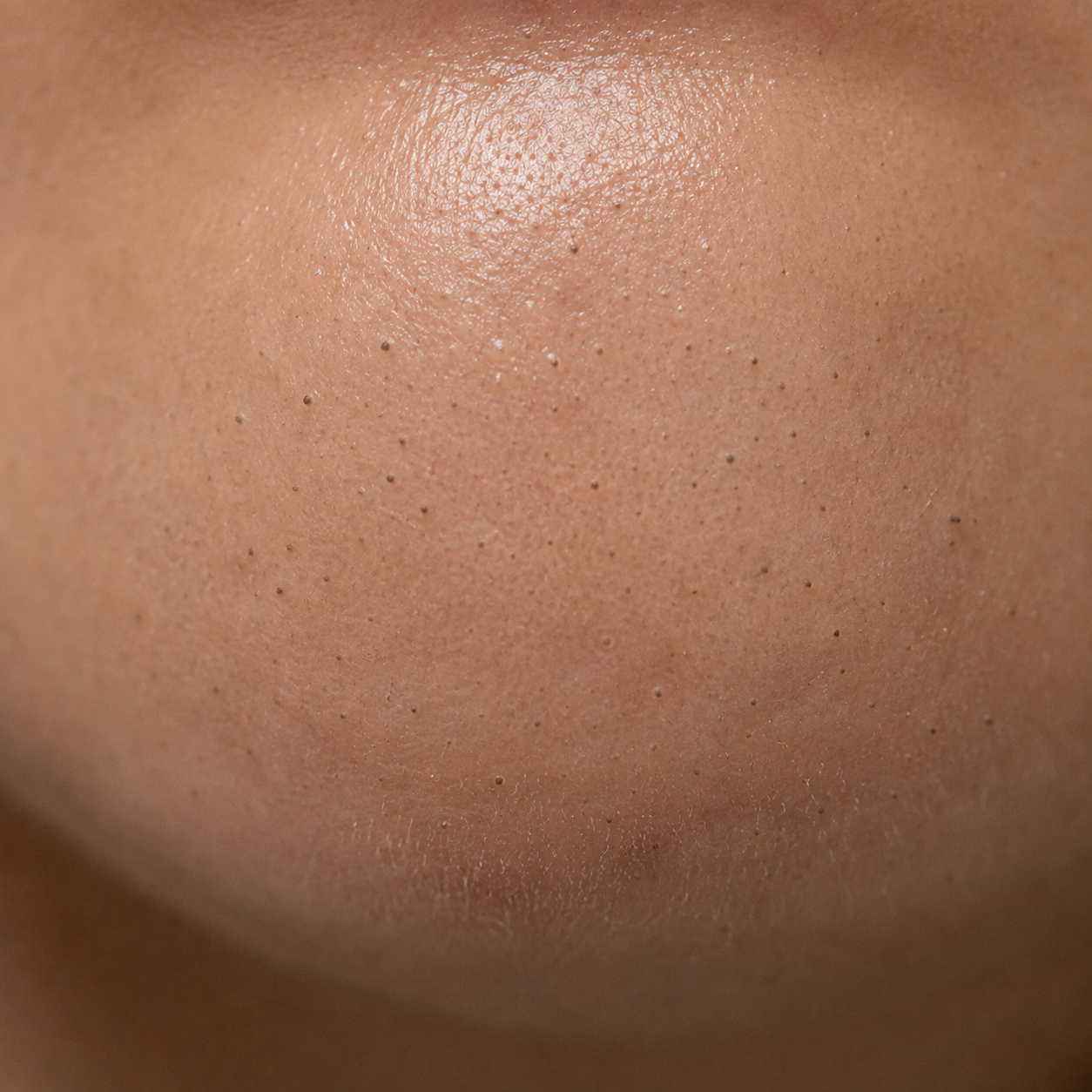
The chin may develop open comedones when excess oil and dead skin cells accumulate.
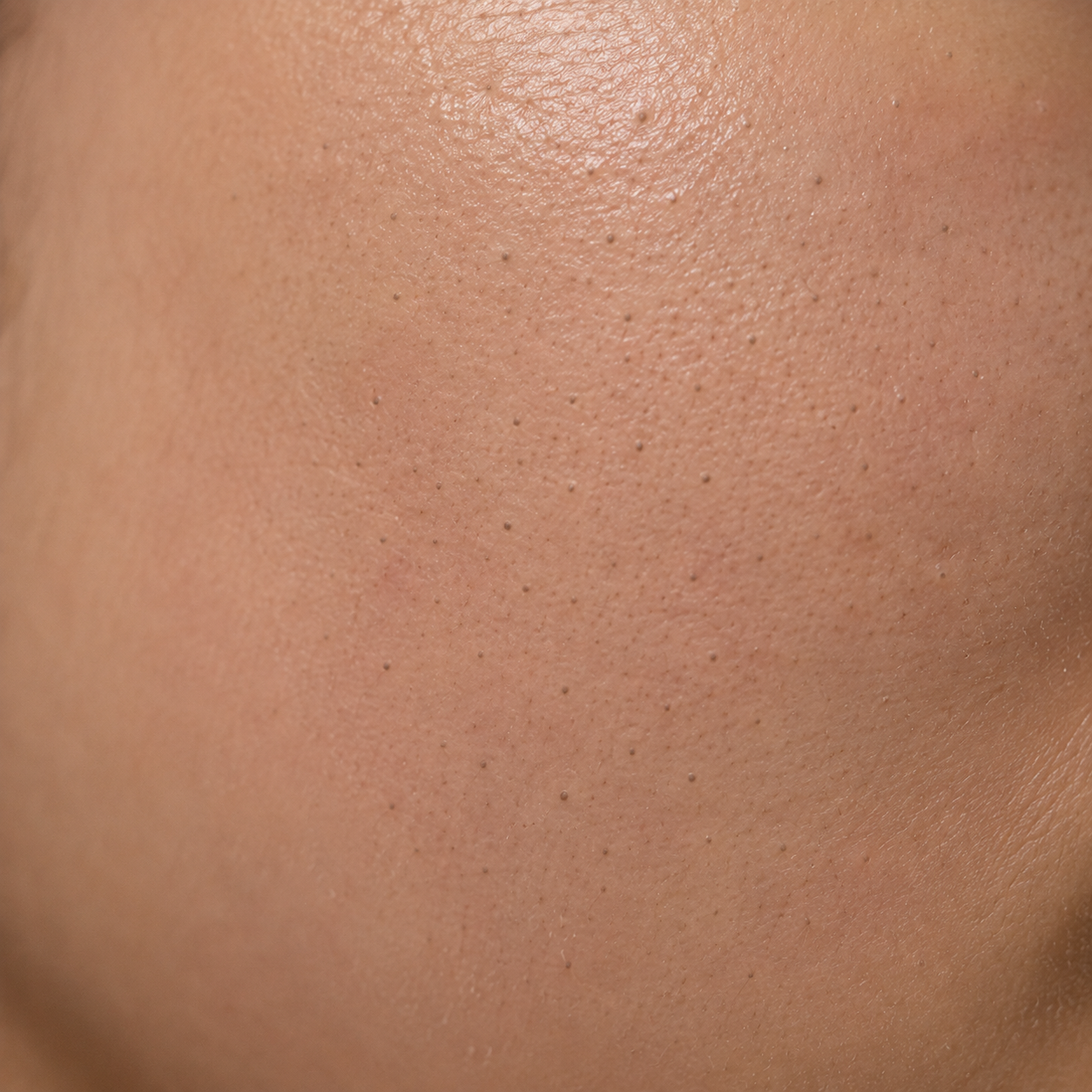
Some people develop blackheads around the cheeks and inner cheek area.
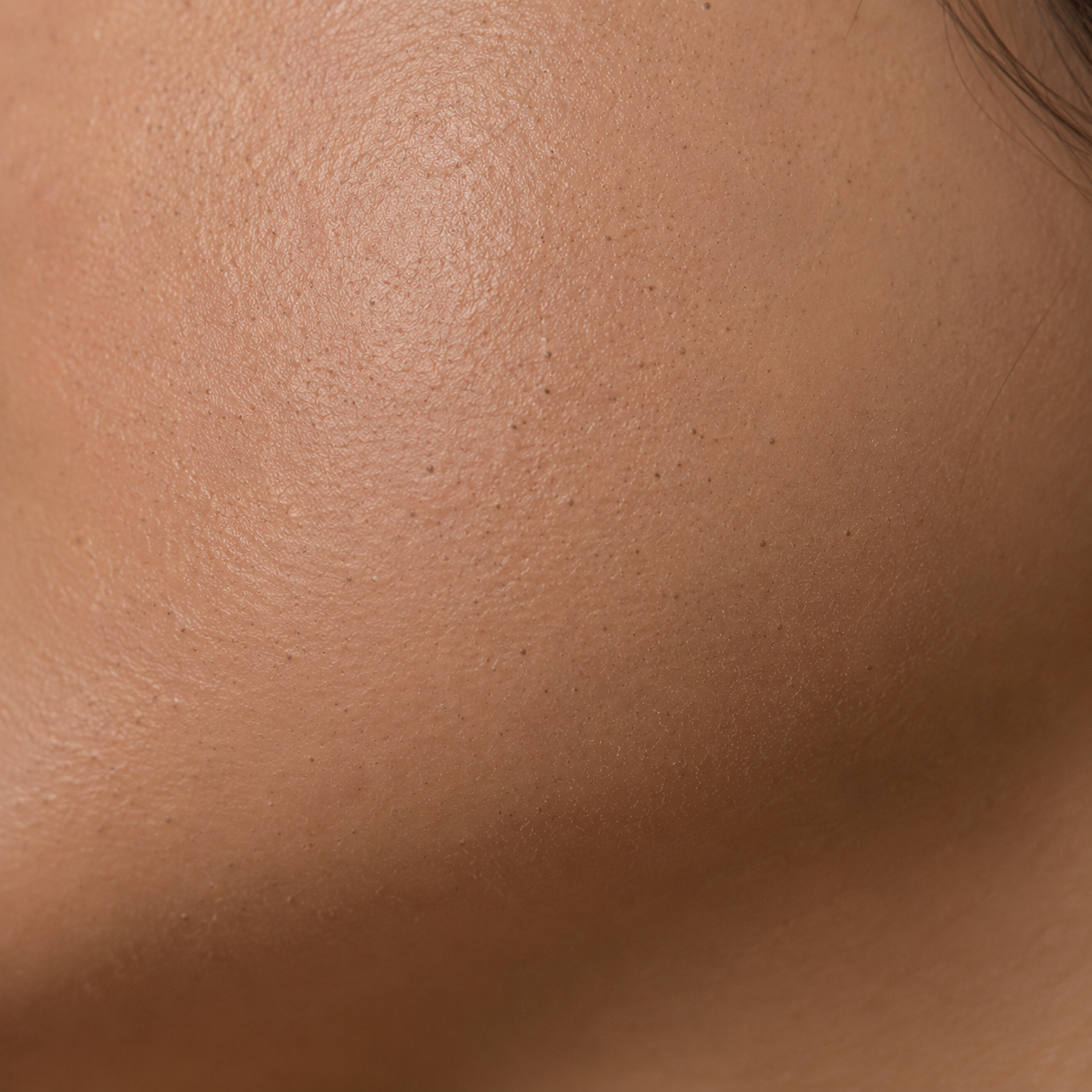
Blackheads can also appear along the jawline.
Not every tiny dark dot on your nose is a blackhead. Some may be sebaceous filaments, which are a normal part of your pores.
Both are forms of comedonal acne, but the main difference is whether the pore opening remains open or closed.
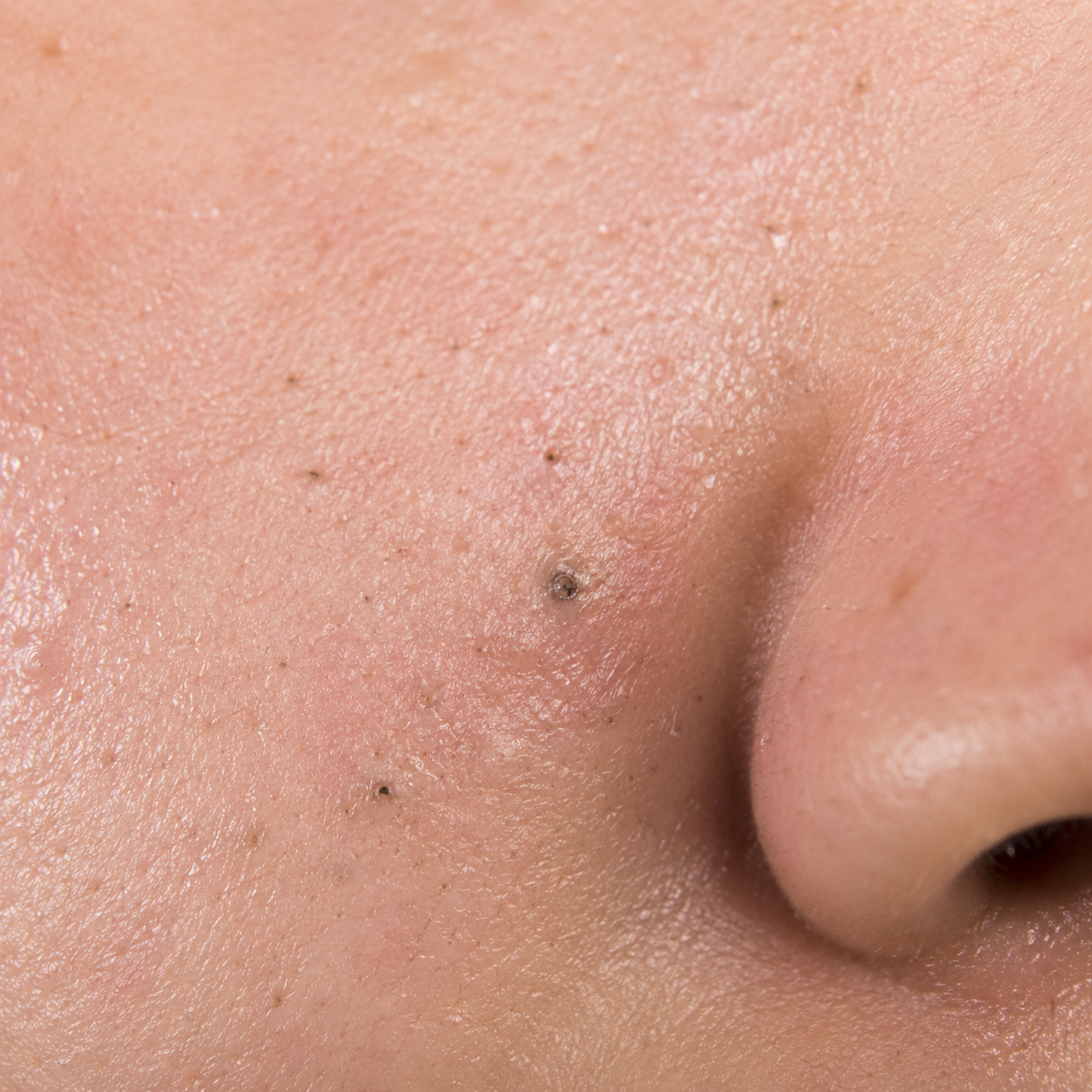
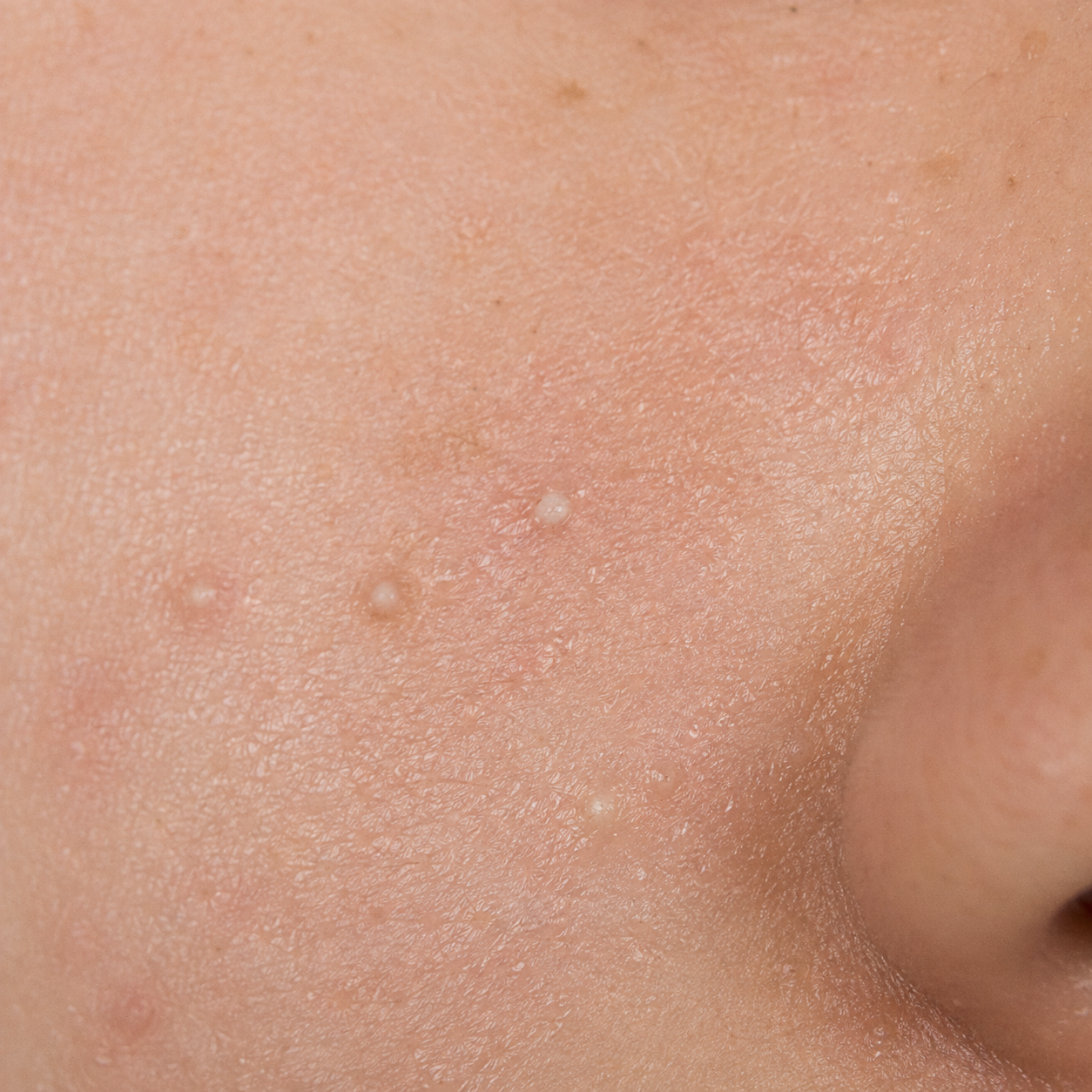
Blackhead = open comedone. Whitehead = closed comedone.
These two are commonly confused, especially around the nose.
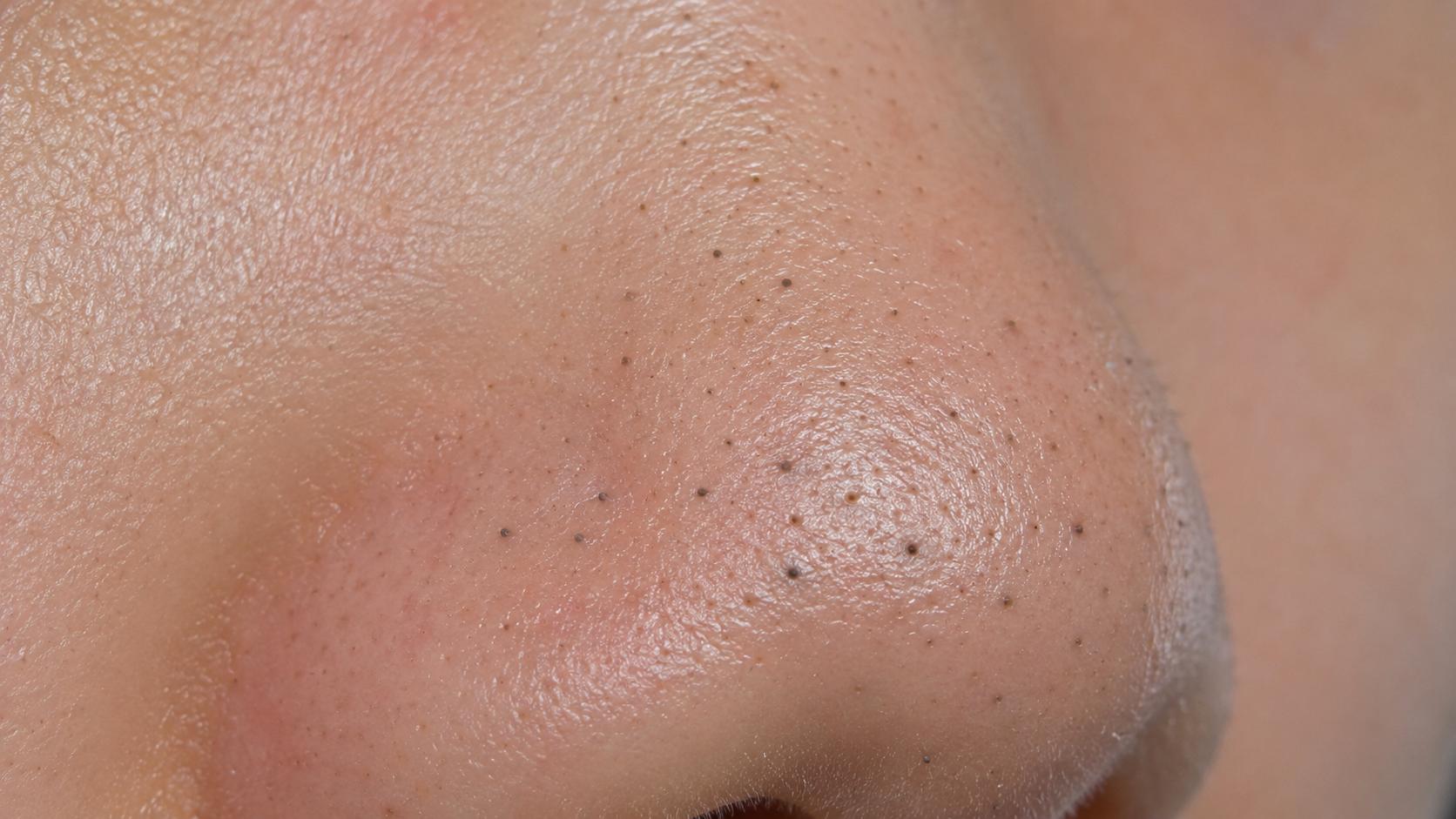
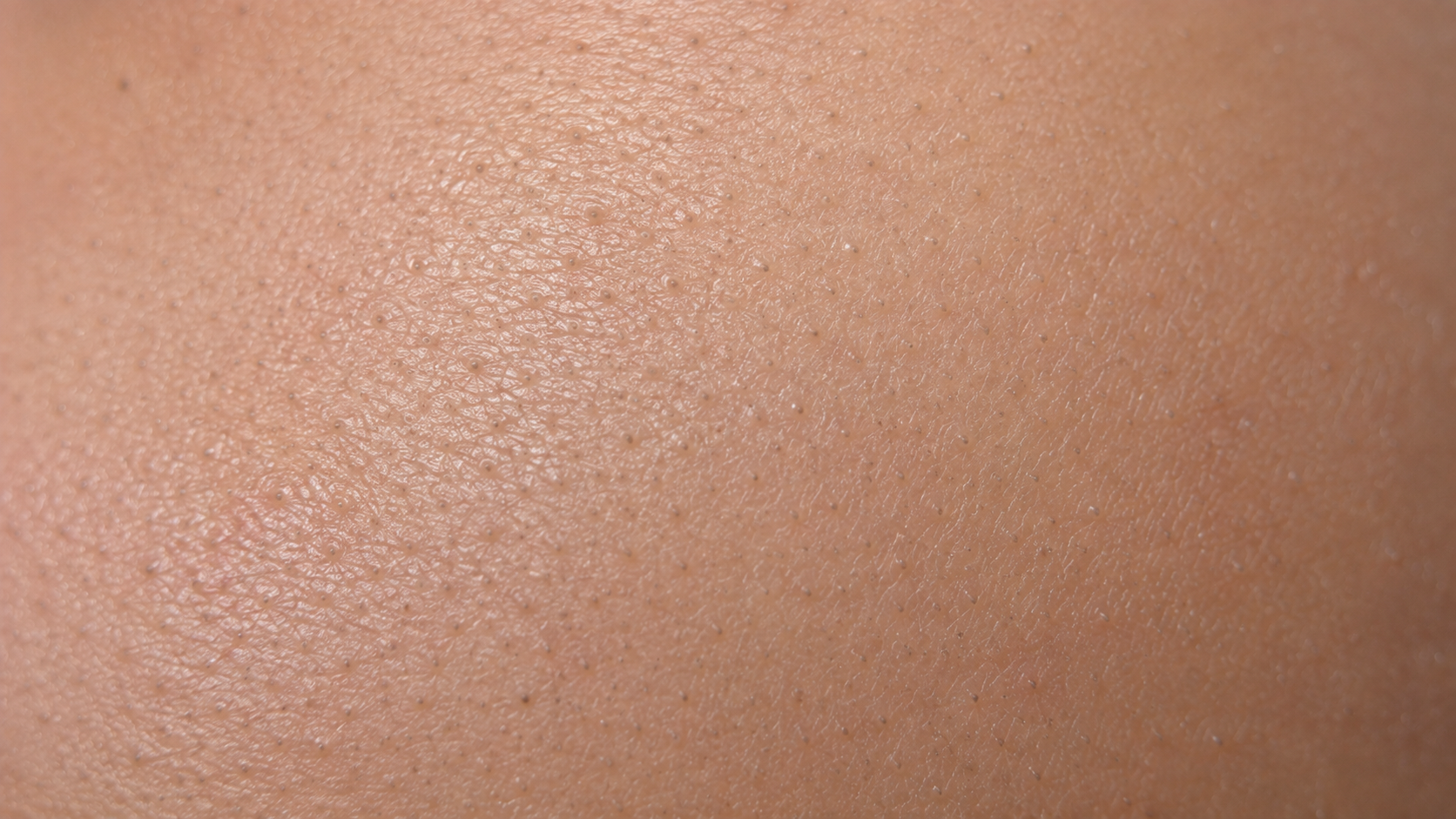
If the dots are tiny, evenly spaced, and seem to return quickly after being removed, they may be sebaceous filaments rather than blackheads.
Blackheads usually develop because several factors contribute to clogged hair follicles.
Higher oil production can increase the amount of material inside the pore.
Dead skin cells can accumulate and contribute to follicular blockage.
Hormonal fluctuations can increase sebum production and make comedonal acne more likely.
Your genetics can influence how much oil your skin produces and how prone you are to acne.
Some people naturally develop clogged pores more easily.
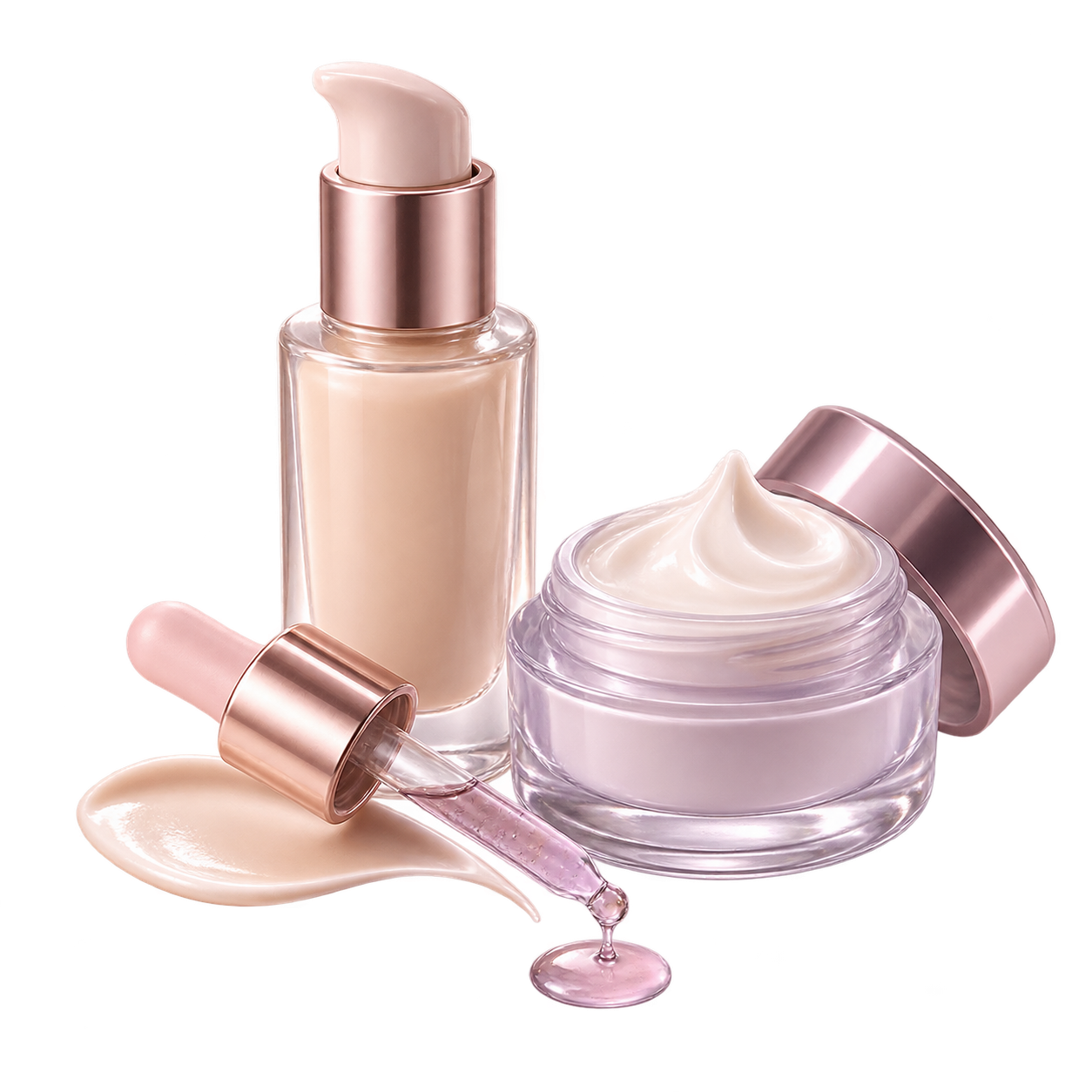
Some skincare, makeup, or hair products may contribute to clogged pores in susceptible individuals.
Some habits can increase congestion or irritate the skin.
Squeezing can irritate the surrounding skin and increase the risk of inflammation and marks.
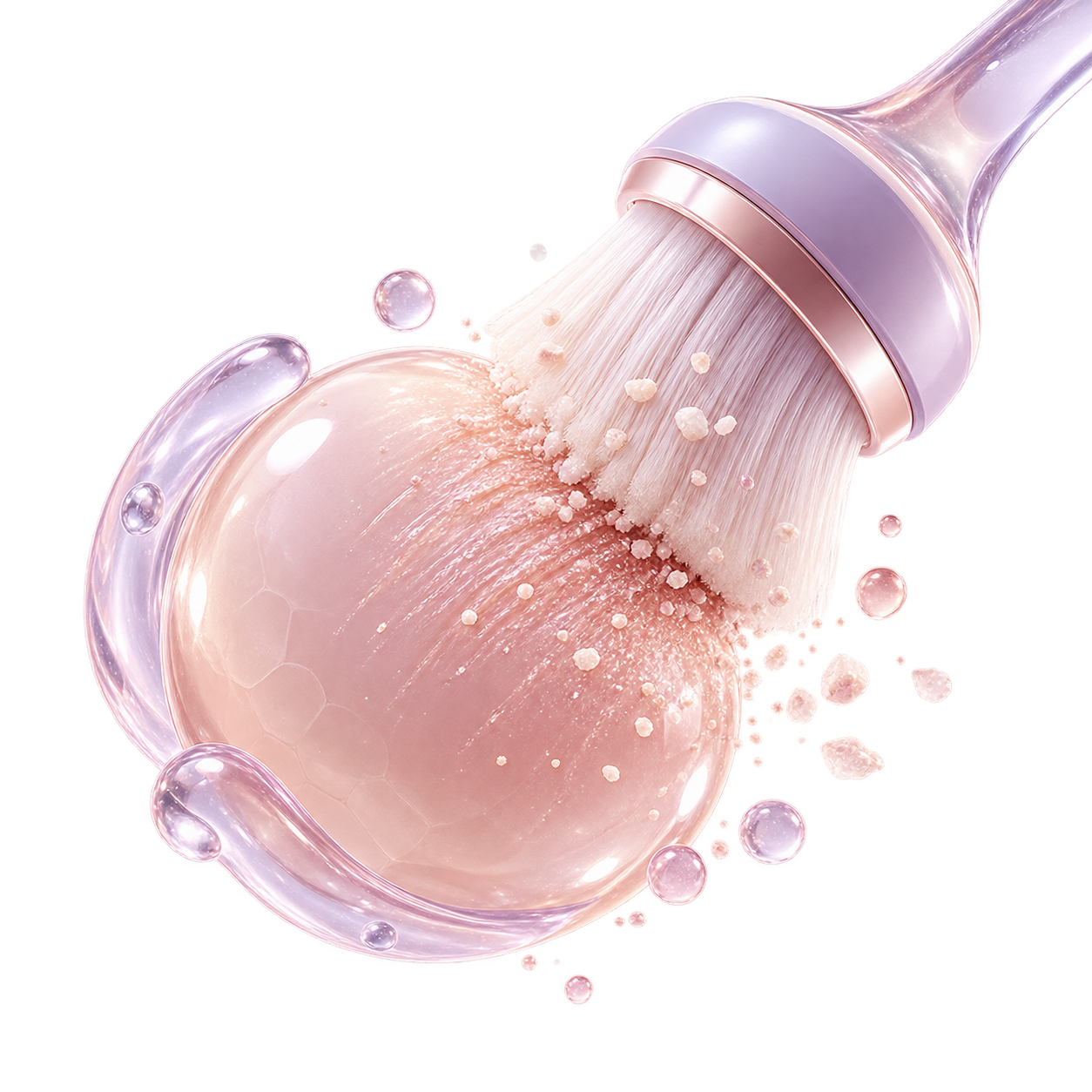
Aggressive physical exfoliation can irritate the skin without preventing blackheads from returning.
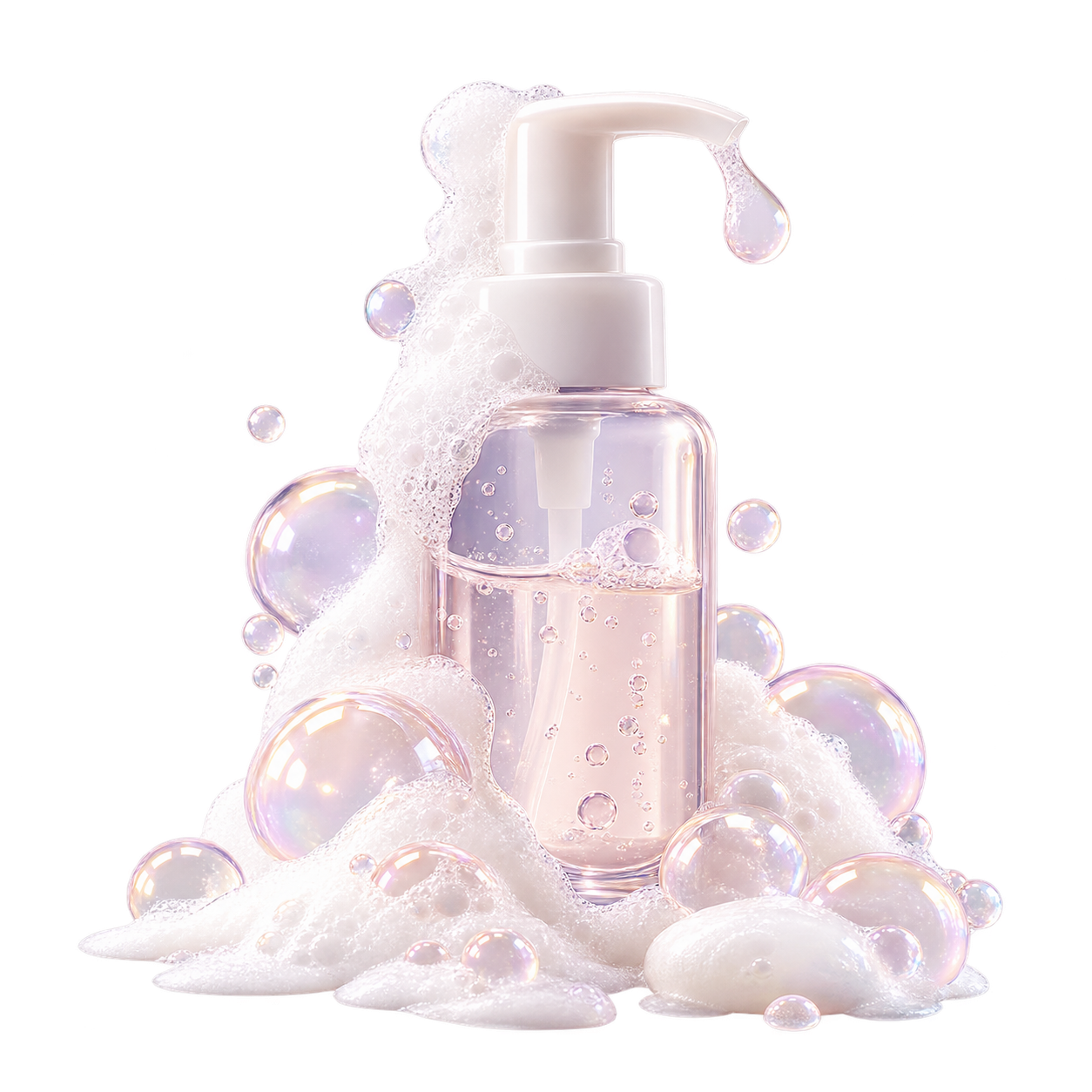
Washing too frequently can damage the skin barrier and doesn't necessarily remove the underlying clog.
Some products may contribute to clogged pores in people who are prone to comedonal acne.
Using several strong exfoliating or acne treatments at once can cause irritation.
The most useful ingredients are those that help prevent or clear clogged pores.
Helps exfoliate inside pores and loosen the buildup of sebum and dead skin cells.
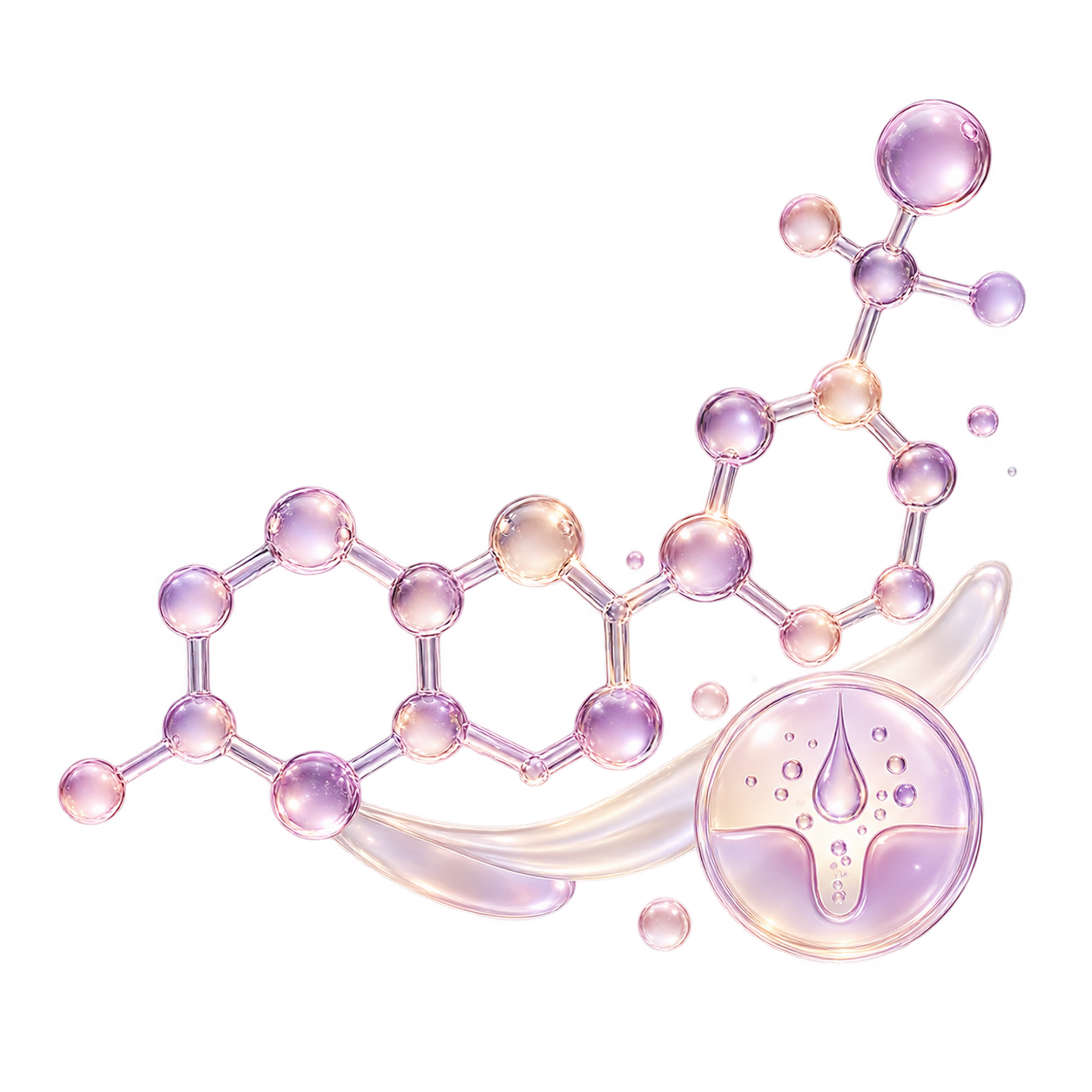
A topical retinoid that helps prevent clogged pores and is commonly used for acne.
Help regulate skin-cell turnover and reduce the formation of comedones.
Can help manage acne and inflammation and may also help with post-acne discoloration.

Can help support the skin barrier and may help regulate excess oil.
You don't need every acne ingredient at once. One well-tolerated treatment used consistently is better than overwhelming your skin.
Blackheads usually respond better to consistent care than aggressive pore-cleaning.
Use a gentle cleanser to remove excess oil, sunscreen, makeup, and impurities.
Choose an appropriate acne ingredient, such as salicylic acid or adapalene, depending on your skin and needs.

Use a moisturizer to maintain hydration and support the skin barrier.
Use broad-spectrum sunscreen during the day to protect your skin and reduce the risk of post-acne marks.

Blackheads don't disappear overnight. Consistent treatment is more useful than repeatedly switching products.
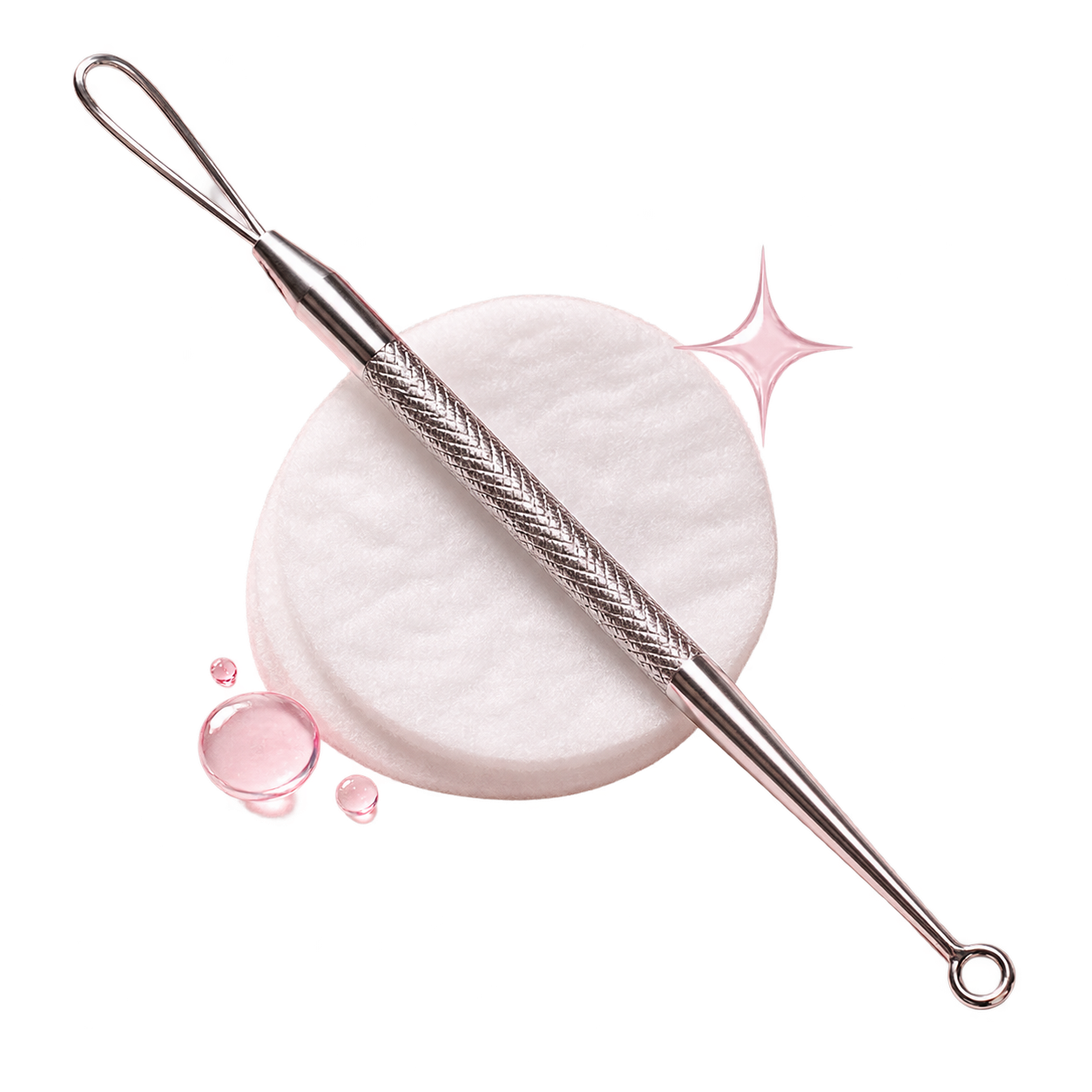
It may be tempting to squeeze a blackhead when you can clearly see it, but doing so yourself can irritate or injure the surrounding skin.
Repeated squeezing can lead to inflammation and increase the chance of dark marks or scarring.
If professional extraction is appropriate, a dermatologist or qualified skincare professional can determine the safest approach.
Your nose doesn't need to survive a squeezing session every Sunday. Leave stubborn blackheads alone rather than turning a small clog into irritated skin.
"Blackheads are dirt."
The dark appearance mainly comes from oxidation of material at the open pore, not dirt.
"You need to scrub blackheads away."
Blackheads form inside hair follicles, so aggressive surface scrubbing isn't the answer.
"Pore strips permanently remove blackheads."
Pore strips may temporarily remove some surface material, but they don't stop pores from producing sebum or developing new clogs.
"Blackheads mean you have poor hygiene."
Blackheads are a form of acne caused by follicular clogging and other biological factors.
"You can permanently shrink or close your pores."
Pores are normal skin structures. Their appearance can sometimes be minimized, but they cannot be permanently closed.
You can't guarantee that you will never develop another blackhead, especially if your skin is naturally prone to comedonal acne.
However, consistent skincare can help reduce their formation.
Regular cleansing and appropriate acne treatment can help manage clogged pores.
If you're prone to clogged pores, look for products that are suitable for your skin and avoid anything that repeatedly causes congestion.
Leaving blackheads alone reduces unnecessary irritation and the risk of marks.
Appropriate acne ingredients can help manage excess sebum and pore buildup.
Daily sun protection supports overall skin health and helps prevent post-acne discoloration.
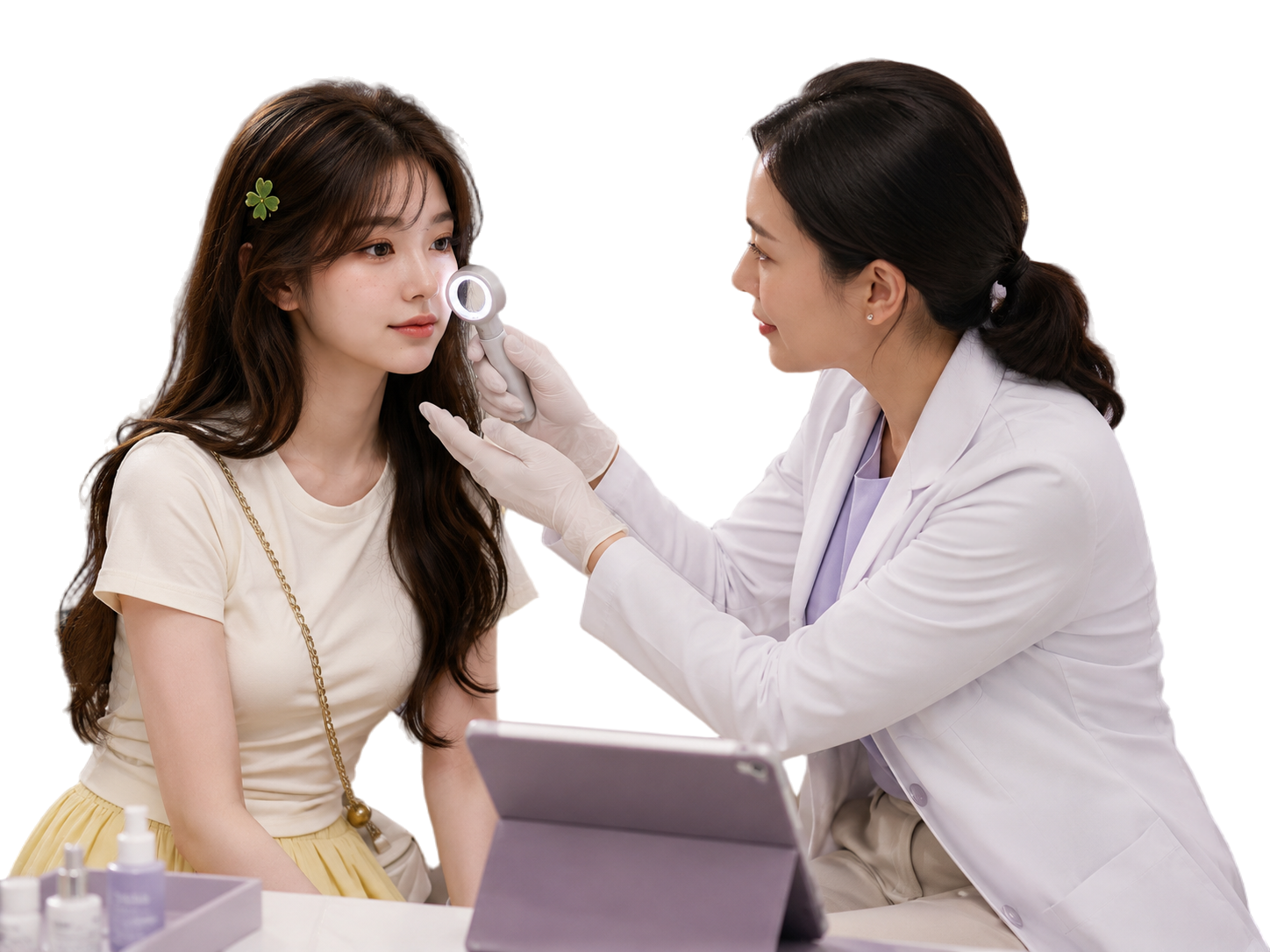
Blackheads are usually manageable, but professional care can be helpful when they become persistent or difficult to control.
Persistent comedonal acne may benefit from a more targeted treatment plan.
If blackheads are accompanied by many red, painful, or pus-filled lesions, professional treatment may help.
A dermatologist can help reduce the risk of acne-related complications.
If consistent treatment hasn't improved your acne, a dermatologist can recommend other options.
Some tiny dark dots are actually sebaceous filaments or another skin concern. A professional can help identify what you're dealing with.

Blackheads aren't dirt, and your pores aren't something you need to punish.
Keep your routine gentle, use an appropriate pore-clearing ingredient, moisturize, wear sunscreen, and give your skin time to improve.
And remember: a few visible pores don't mean your skin is dirty or unhealthy.
— Mimii ♡