Collagen Changes
Collagen helps provide structure and strength to the skin. Its production gradually decreases with age.
 ×
×
Wrinkles are a natural part of how skin changes over time — but sun exposure, repeated facial movements, dryness, and other factors can make them appear more noticeable.
Learn what wrinkles are, why they develop, the different types, what can accelerate them, and how to care for skin as it changes.
Start Learning ↓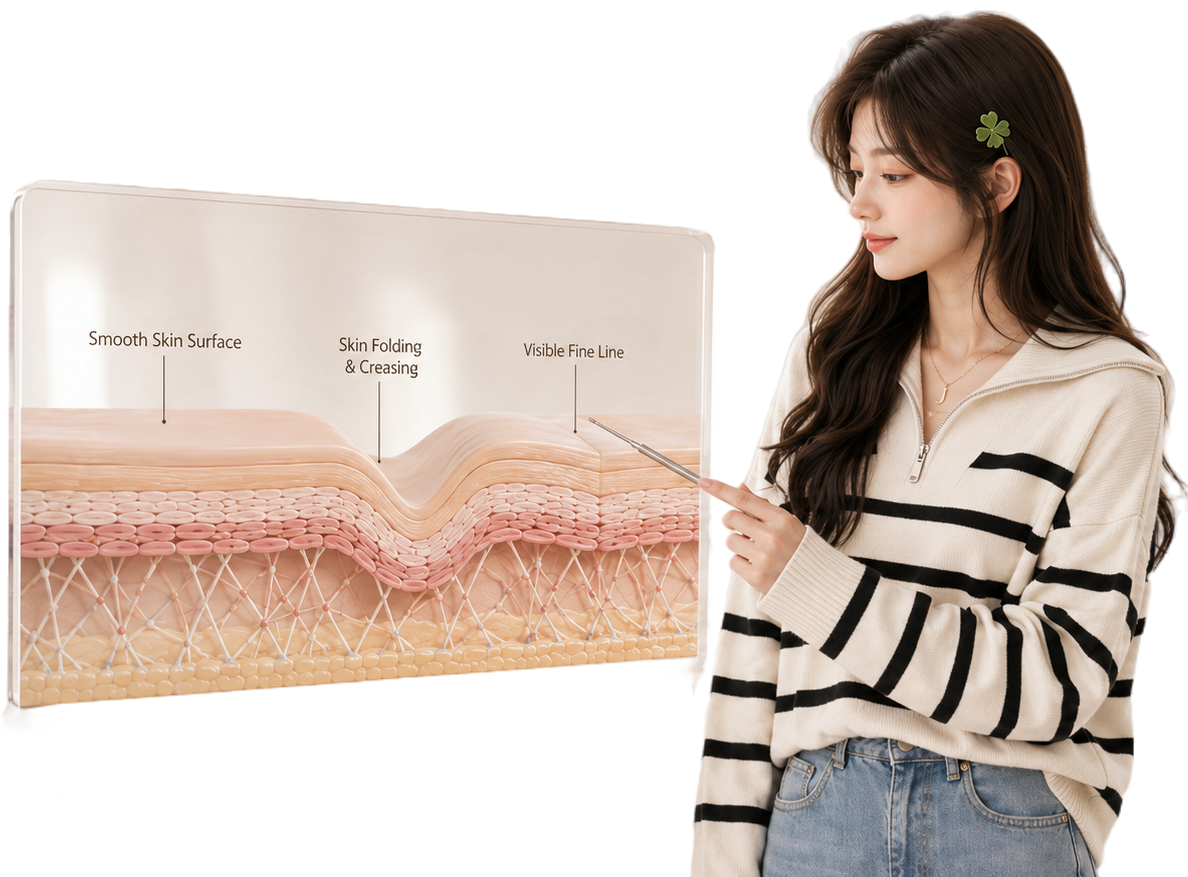
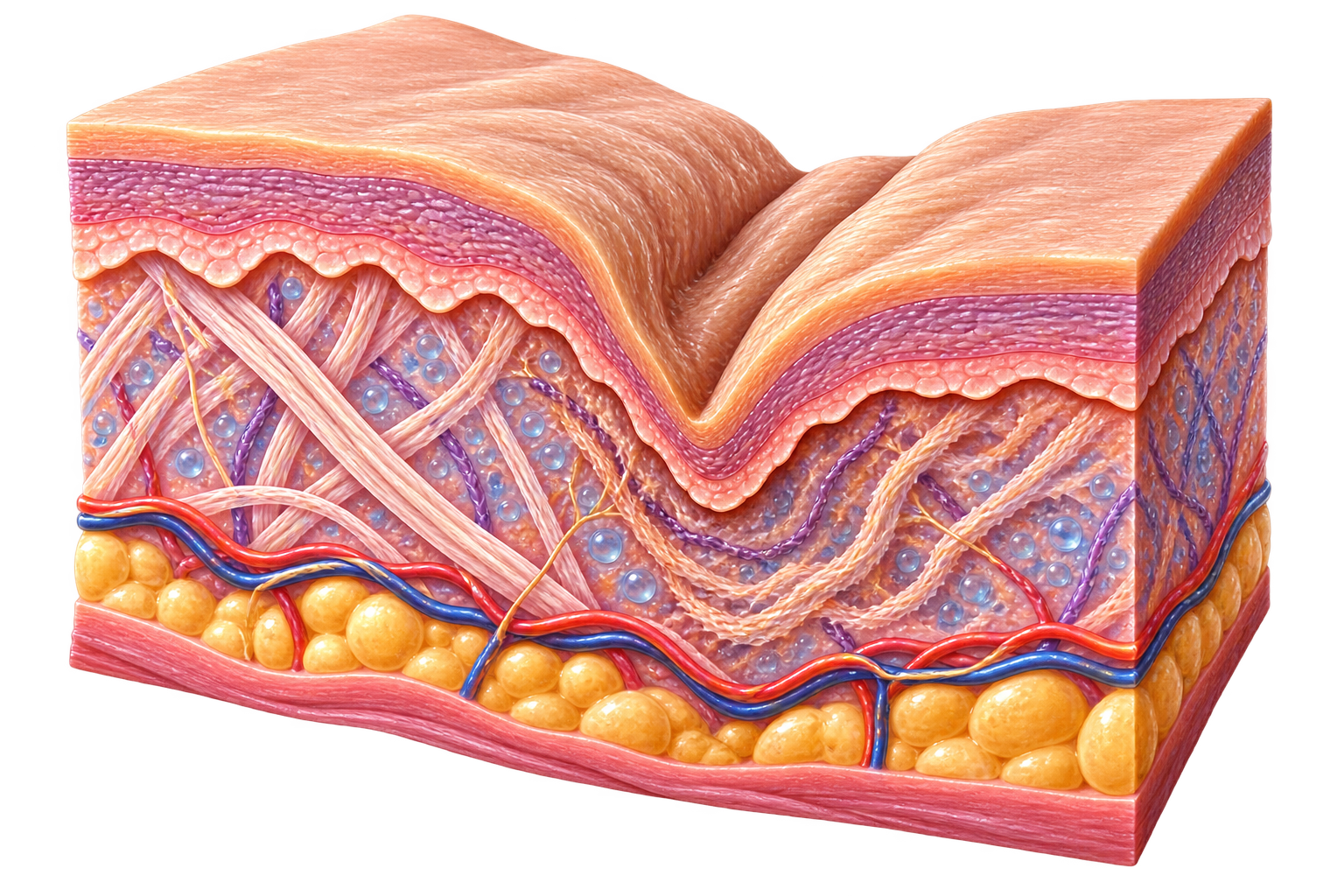
Wrinkles are lines, folds, or creases that develop on the surface of the skin.
As skin changes over time, it gradually produces less collagen and elastin and may become thinner and less elastic. Repeated facial movements and long-term UV exposure can also contribute to the development of visible lines.
Wrinkles are a normal part of skin aging and can appear differently from person to person.
Wrinkles aren't a sign that you've failed at skincare. Skin is living tissue, and it naturally changes with time.
Wrinkles develop gradually as several changes take place within the skin.
Collagen helps provide structure and strength to the skin. Its production gradually decreases with age.
Elastin helps skin return to its original shape after stretching or movement. Changes in elastin can reduce skin elasticity.
Changes in the skin's ability to retain moisture can make fine lines appear more noticeable.
Expressions such as smiling, squinting, and frowning repeatedly fold the skin.
Long-term UV exposure can damage collagen and elastin and accelerate visible skin aging.
Over time, repeated folding and structural changes can cause some lines to remain visible even when the face is relaxed.
Not every wrinkle develops in exactly the same way.
Small, shallow lines that may be especially noticeable around the eyes, forehead, or mouth.
Lines associated with repeated facial movements such as smiling, frowning, or squinting.
Lines that remain visible even when the face is relaxed.
More pronounced folds that can develop as changes in collagen, elastin, and skin structure accumulate over time.
Wrinkles can develop anywhere on the skin, but some areas experience more movement and sun exposure.
Repeated raising of the eyebrows can contribute to horizontal forehead lines.
The delicate skin around the eyes moves frequently and is commonly affected by fine lines.
Repeated frowning can contribute to vertical expression lines between the eyebrows.
Smiling and other facial movements can contribute to lines around the mouth.
The neck is also exposed to UV radiation and naturally undergoes changes in collagen and elasticity.
Wrinkles are influenced by both natural skin aging and external factors.
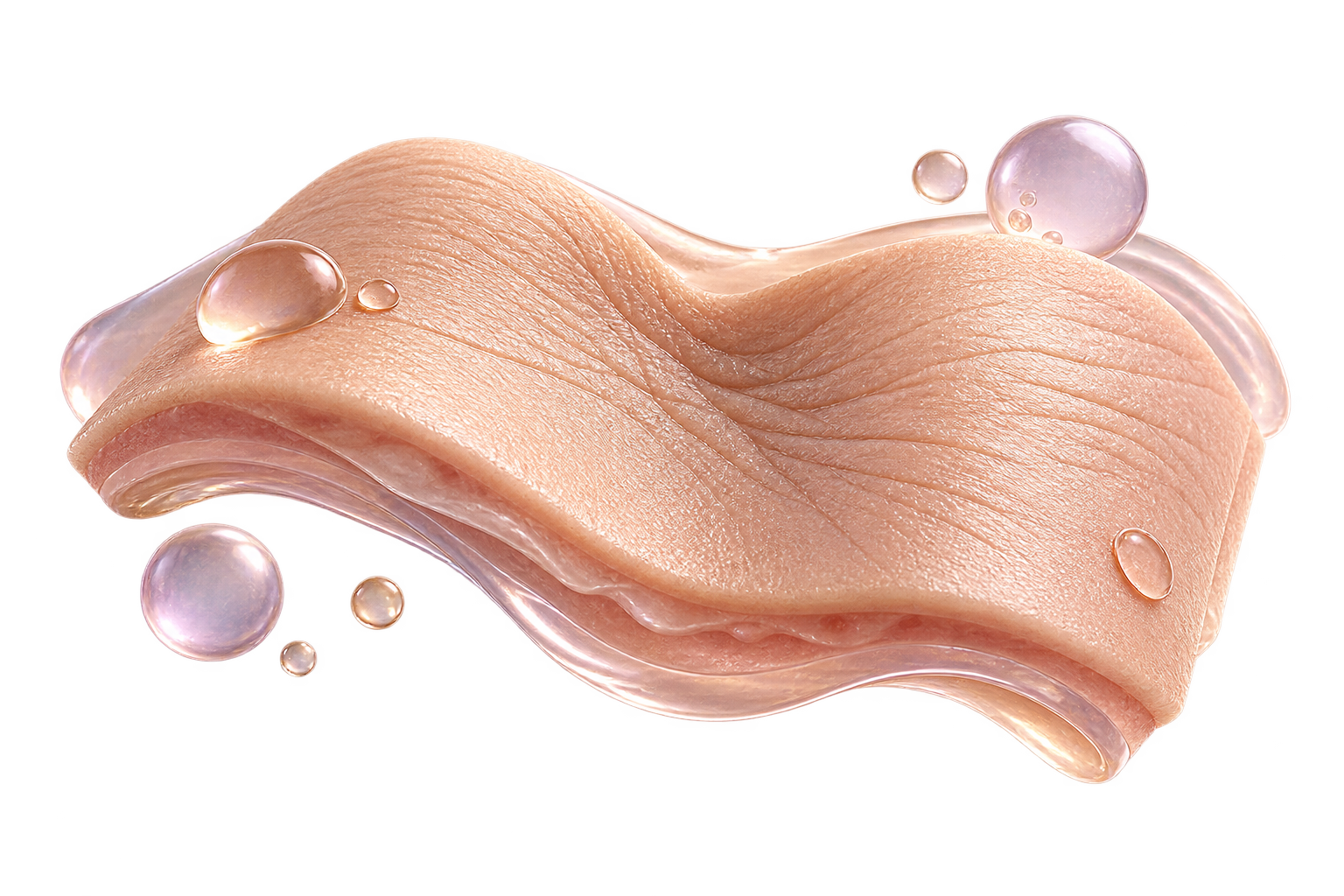
Collagen and elastin production gradually change as we age.

UV radiation can damage collagen and elastin and is one of the major external contributors to premature skin aging.

Repeated folding of the skin can contribute to expression lines over time.

Smoking can contribute to premature skin aging by affecting collagen and reducing blood flow to the skin.

Pollution and other environmental stressors can contribute to oxidative stress and skin damage.

Genetics influence how skin ages and how quickly certain visible changes appear.

Dehydrated skin can make existing fine lines temporarily appear more noticeable.

UV radiation can break down collagen and affect the structures that help keep skin firm and elastic.
Repeated UV exposure can therefore accelerate photoaging, causing wrinkles, fine lines, uneven pigmentation, and changes in skin texture to appear earlier or become more noticeable.
This is why protecting your skin from UV radiation is one of the most important habits for maintaining healthy-looking skin over time.
You can't stop your skin from aging — and you don't need to. But you can reduce unnecessary UV damage along the way.
Skincare cannot stop natural aging, but some ingredients have evidence for improving the appearance of fine lines and supporting healthier-looking skin.
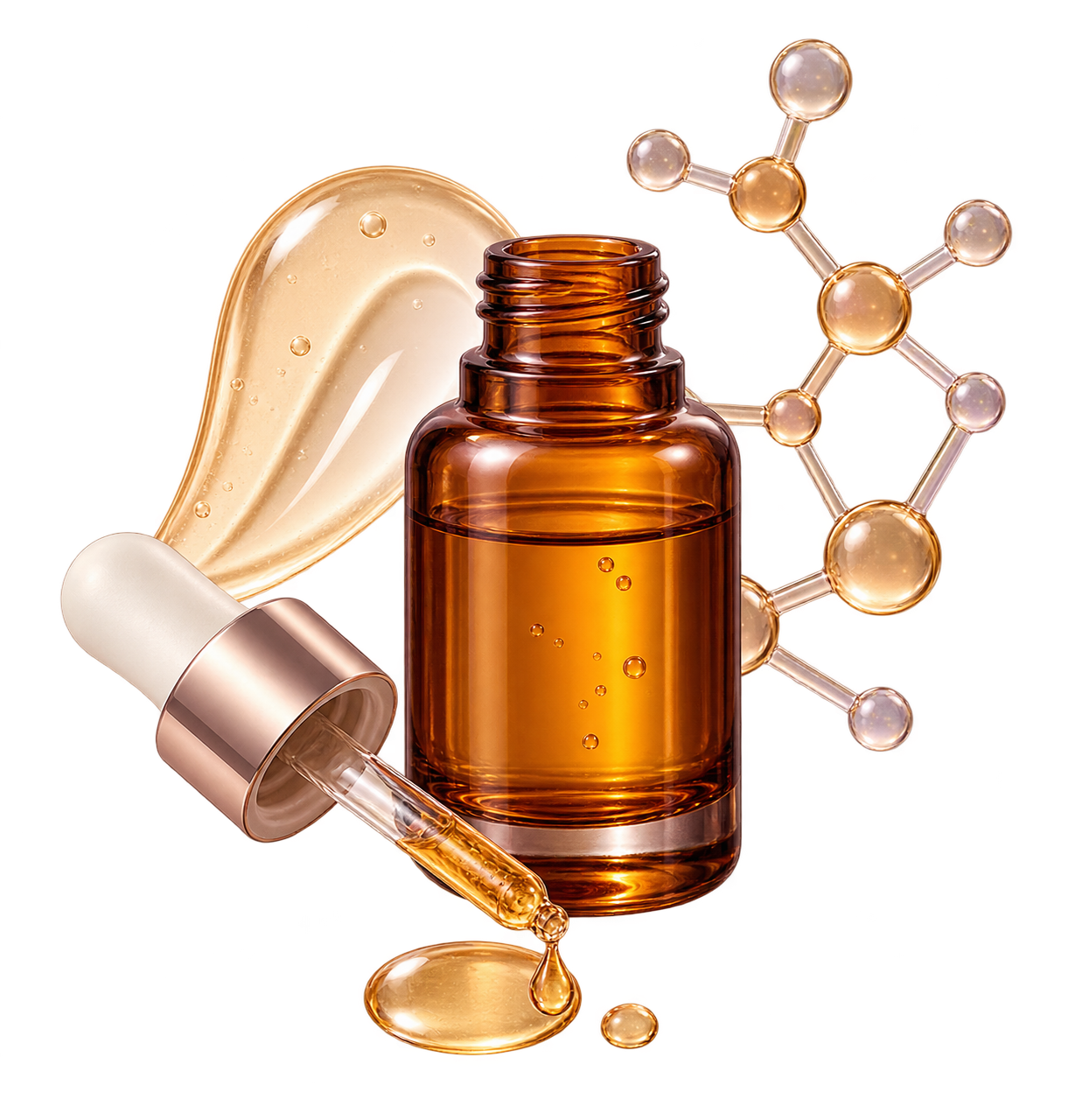
Retinoids can increase skin-cell turnover and stimulate processes involved in collagen production, making them one of the better-studied topical ingredients for photoaging.

An antioxidant that helps protect skin from oxidative stress and supports collagen production.
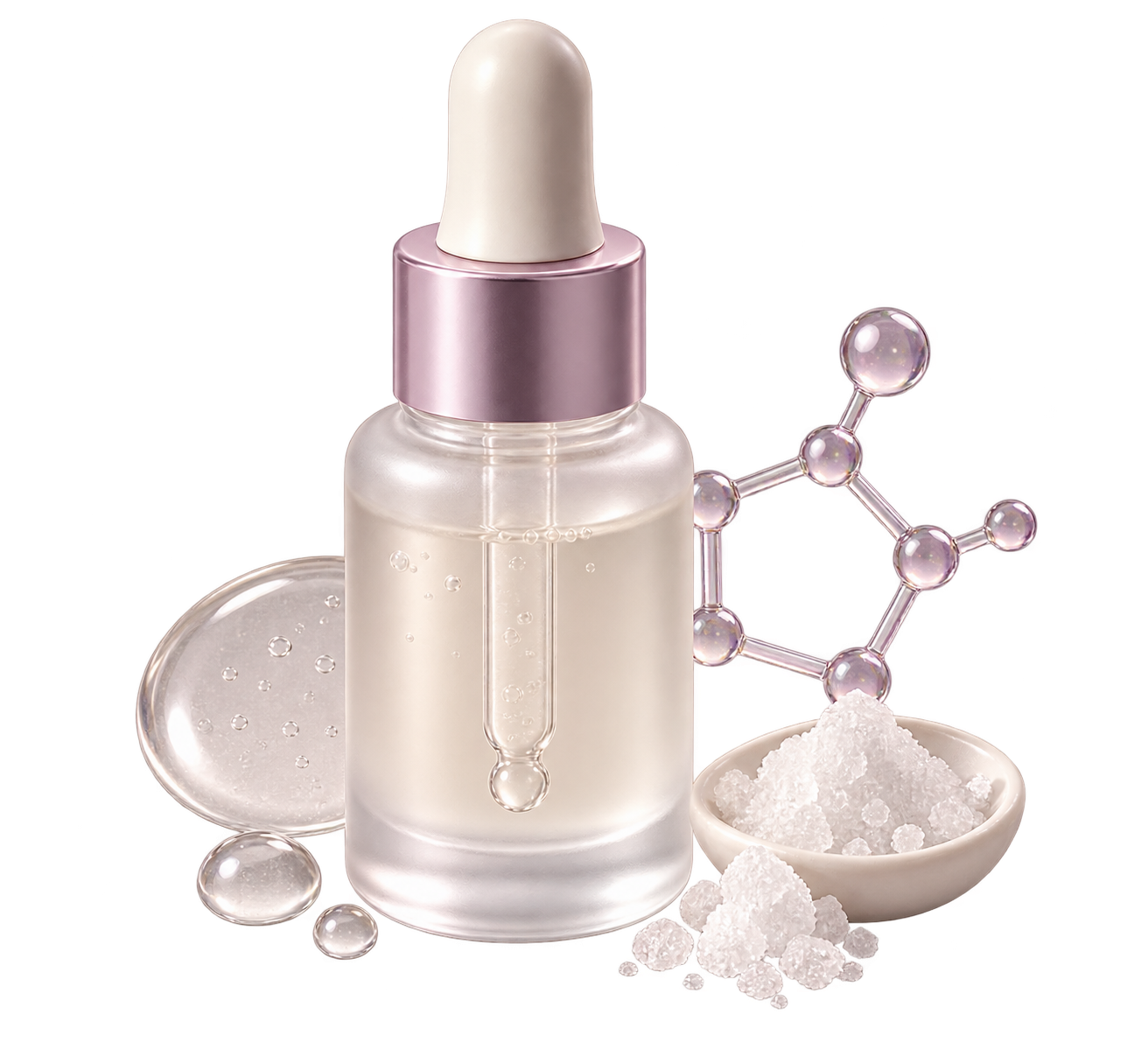
Helps support the skin barrier and can improve the appearance of fine lines and uneven skin over time.

Helps attract water to the skin, which can temporarily make the surface appear more hydrated and fine lines less noticeable.
Some peptide formulations may help support the appearance of firmer, smoother skin, although results vary between products.
Hydration can make fine lines look softer, but moisturizing doesn't permanently erase wrinkles. Keep your expectations realistic.
Some factors can temporarily emphasize existing lines or contribute to long-term skin changes.
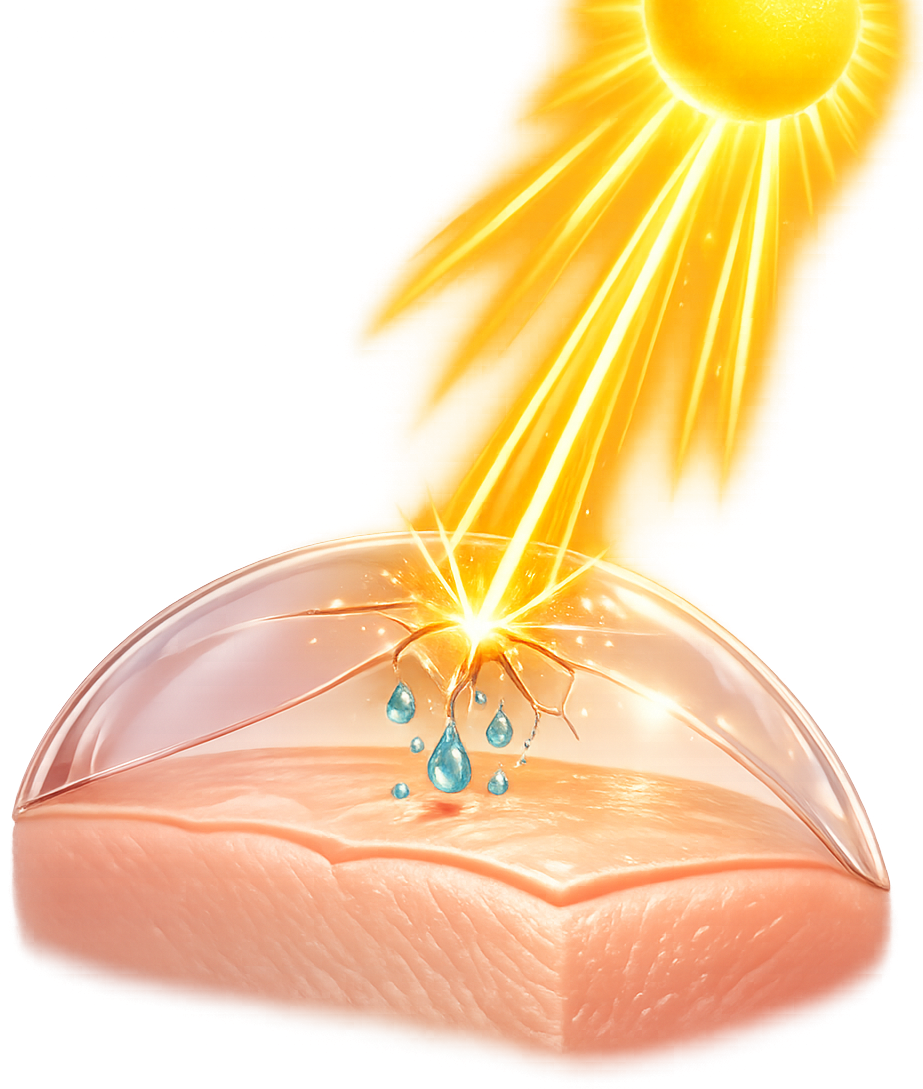
Repeated exposure to UV radiation can accelerate photoaging.

Dry or dehydrated skin can make fine lines appear more pronounced.
Smoking is associated with premature skin aging and wrinkle formation.

Consistently poor sleep can affect the skin's ability to maintain a healthy appearance.

Chronic irritation can affect the skin barrier and make the skin appear rougher or more uneven.

Skipping sun protection allows preventable UV exposure to accumulate over time.
The terms are often used interchangeably, but they can describe different degrees of visible skin folding.
Fine lines are usually small and subtle and may be more noticeable when the skin is dry or when making certain facial expressions.
Wrinkles are generally more pronounced and may remain visible even when the face is relaxed.
There isn't a magical line where a fine line suddenly becomes a wrinkle. They're simply different ways of describing visible skin folds.
Skin doesn't need to be "fixed" as it changes. A consistent routine can help maintain hydration and protect it from preventable damage.
Cleanse without unnecessarily stripping the skin.
Use ingredients that help maintain moisture and support comfortable, hydrated skin.

If appropriate for your skin, introduce a well-studied ingredient such as a retinoid gradually.

A moisturizer helps support the skin barrier and reduce dryness.
Use broad-spectrum sunscreen consistently to reduce UV-related skin damage.
Wrinkles cannot be completely prevented because skin naturally changes with age.
Daily sun protection is one of the most important steps.
Not smoking helps reduce exposure to a major contributor to premature skin aging.
Maintaining hydration can help the skin look smoother and more comfortable.

Certain ingredients, particularly retinoids, have stronger evidence for improving signs of photoaging.

Long-term habits matter more than occasional intensive skincare.
Let's separate useful skincare guidance from common wrinkle myths.
"Wrinkles mean your skin is unhealthy."
Wrinkles are a normal part of skin aging and do not automatically mean unhealthy skin.
"Moisturizer removes wrinkles."
Moisturizer can temporarily make fine lines look less noticeable by improving hydration, but it doesn't permanently remove wrinkles.
"Sunscreen is only for preventing sunburn."
Sun protection also helps reduce cumulative UV damage that contributes to premature skin aging.
"Facial exercises can completely erase wrinkles."
There isn't strong evidence that facial exercises can completely reverse established wrinkles.
"You need expensive products to care for aging skin."
Consistent basics such as gentle cleansing, moisturizing, and sun protection can be more important than having an expensive routine.
Wrinkles themselves are a normal part of aging and usually don't require medical treatment.
A dermatologist can be helpful if you're interested in evidence-based options for improving the appearance of wrinkles or if you're unsure about a skin change.
A dermatologist can explain which treatments may be appropriate for your skin.
A new, unusual, or rapidly changing skin lesion should be evaluated rather than automatically being considered a wrinkle.
If your anti-aging routine causes ongoing burning, redness, or irritation, professional guidance can help.


Wrinkles are part of having skin that has lived, moved, expressed, and changed.
Protect your skin from the sun, keep it hydrated, choose evidence-based ingredients when appropriate, and don't let the internet convince you that every line needs to disappear.
Healthy skin doesn't have to look frozen in time.