UVA
Associated with long-term skin changesUVA penetrates deeper into the skin and contributes to photoaging, including wrinkles, loss of elasticity, and some forms of pigmentation.
 ×
×
The sun can affect your skin long before you notice visible changes.
Learn how UV radiation affects the skin, the signs of sun damage, what increases your risk, and how daily sun protection helps protect your skin over time.
Start Learning ↓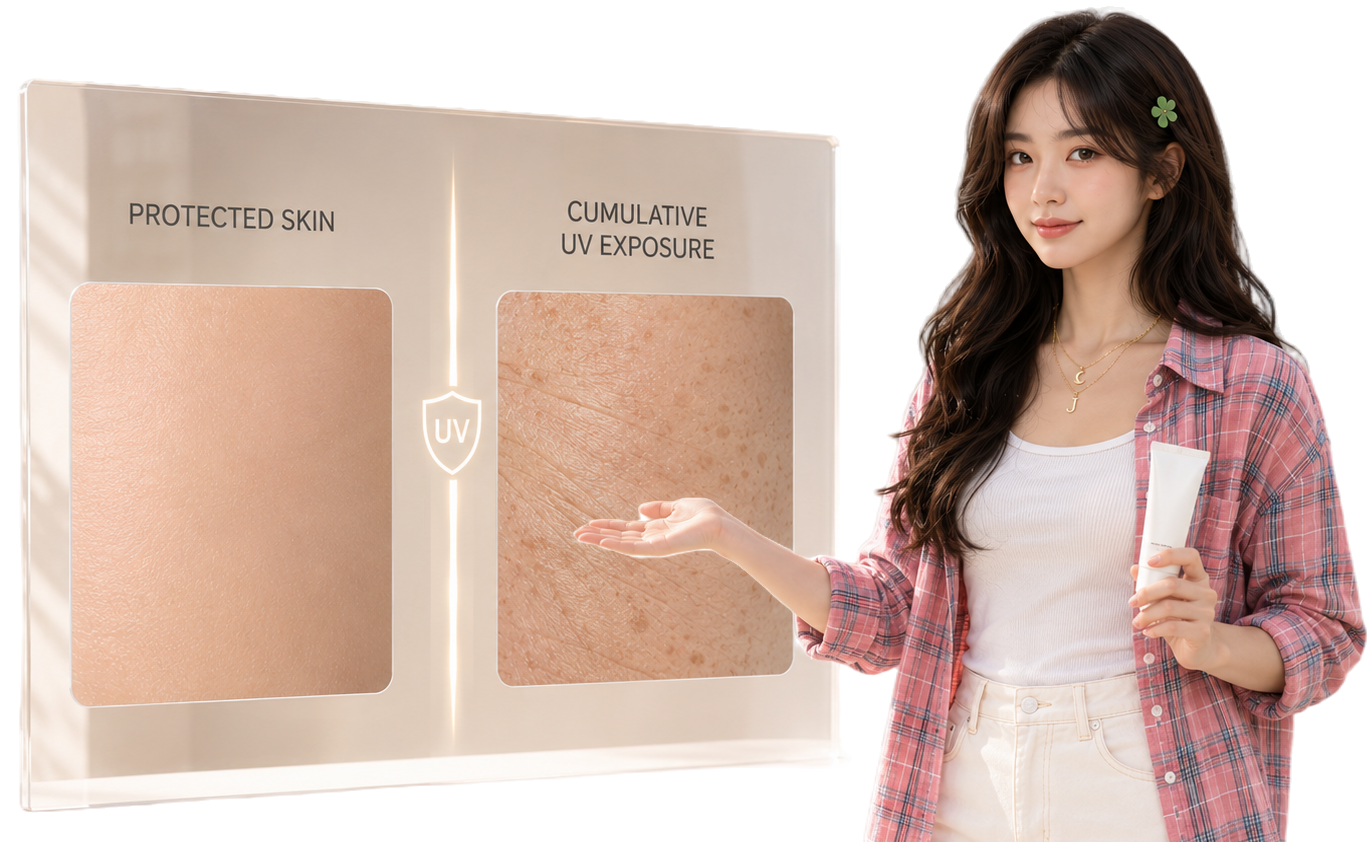
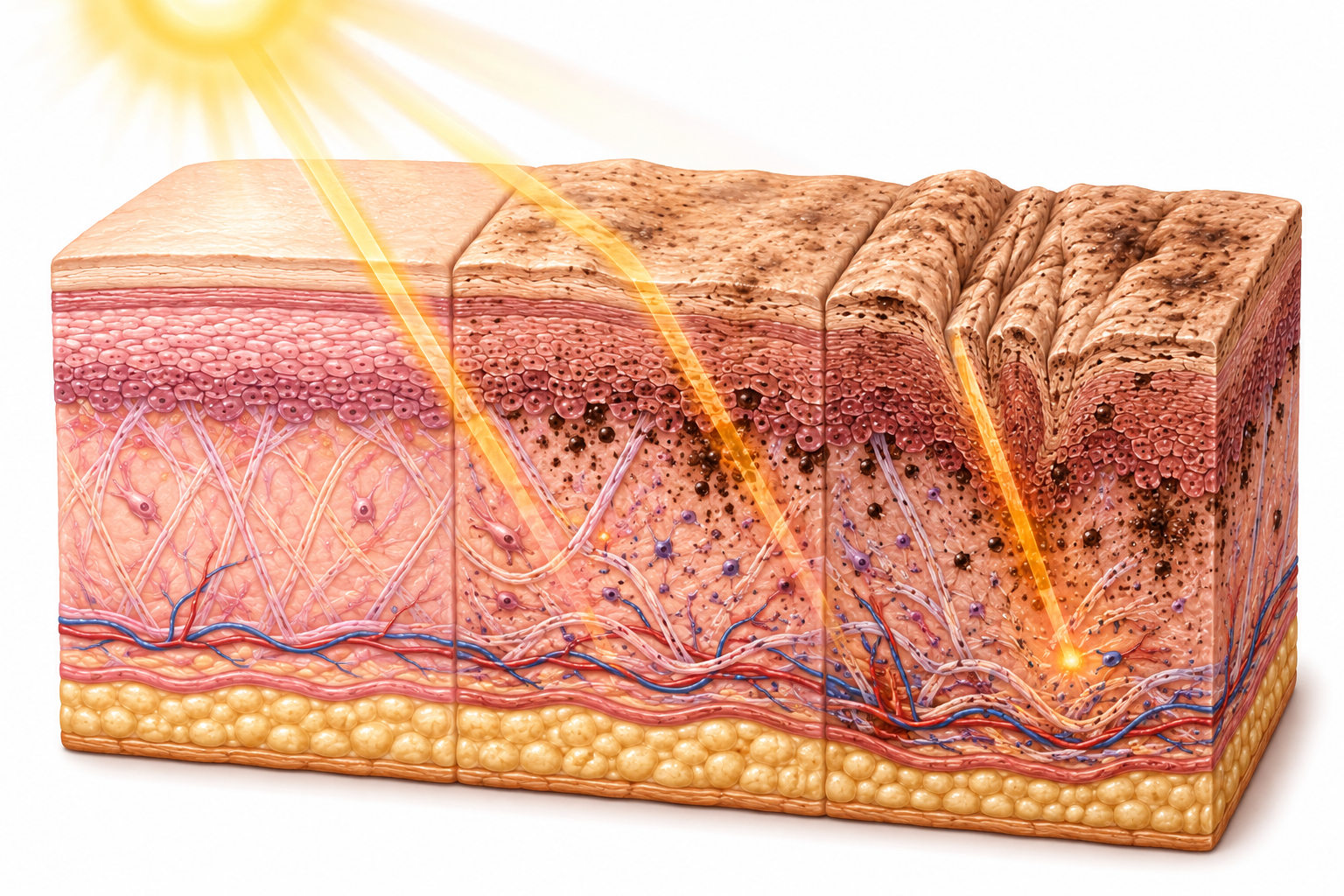
Sun damage refers to changes in the skin caused by repeated exposure to ultraviolet (UV) radiation from the sun.
UV radiation can affect the skin's cells and contribute to redness, pigmentation, premature skin aging, uneven texture, and an increased risk of skin cancer.
Some effects may appear quickly, such as sunburn, while other changes can build up gradually over many years.
Sun damage isn't only about getting a sunburn. UV exposure can accumulate over time, even when your skin doesn't look visibly burned.
Both UVA and UVB are types of ultraviolet radiation, but they affect the skin in different ways.
UVA penetrates deeper into the skin and contributes to photoaging, including wrinkles, loss of elasticity, and some forms of pigmentation.
UVB affects the outer layers of the skin and is a major cause of sunburn. It also contributes to DNA damage and skin cancer.
Think of UVA as the rays strongly linked with long-term photoaging and UVB as the rays strongly linked with sunburn. Both can damage your skin.
Sun damage can appear differently depending on how much UV exposure your skin has received and how long it has accumulated.

Red, painful, or tender skin after excessive UV exposure.

Repeated UV exposure can contribute to uneven pigmentation and make existing dark marks more noticeable.
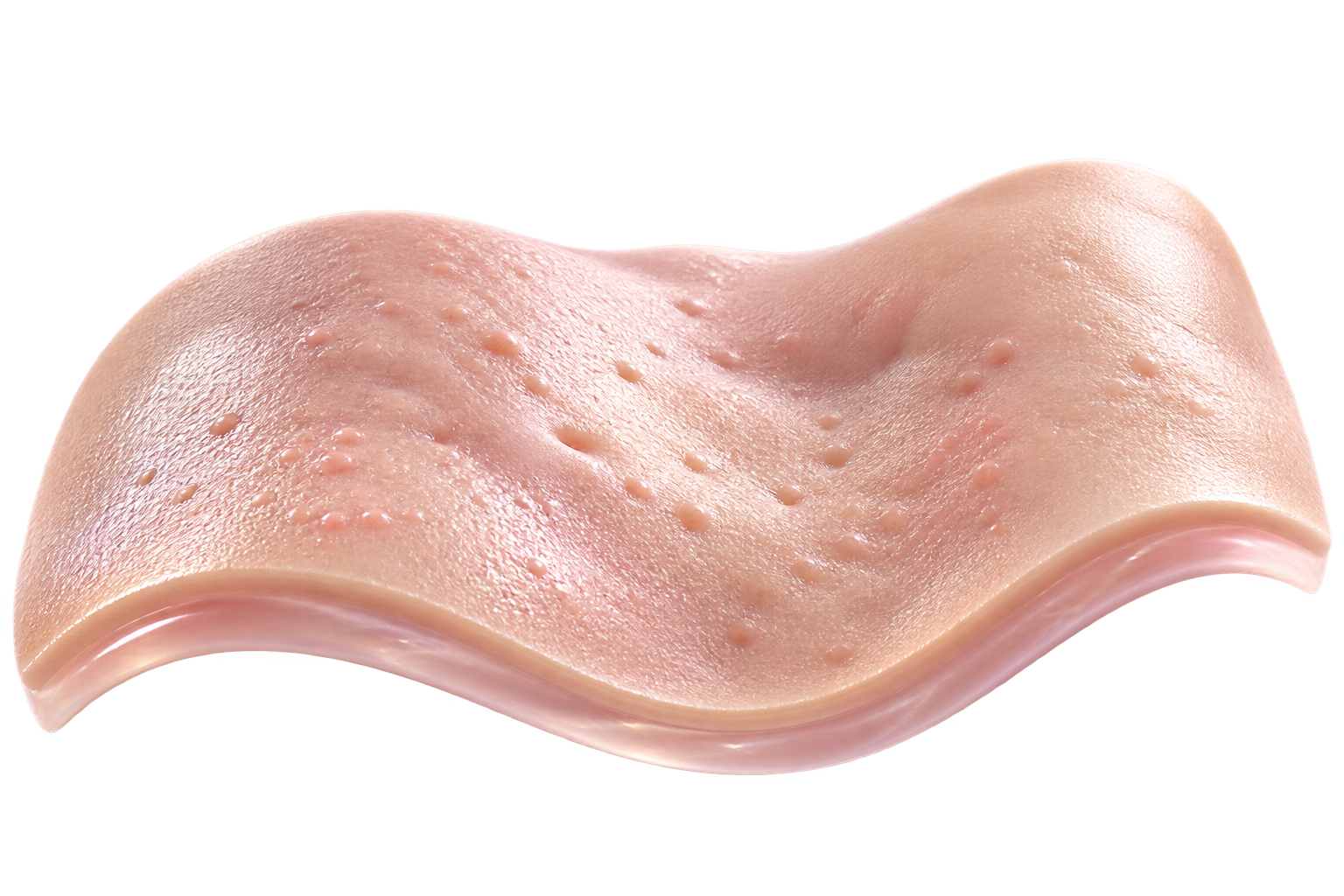
Sun exposure can cause areas of the skin to develop uneven pigmentation.
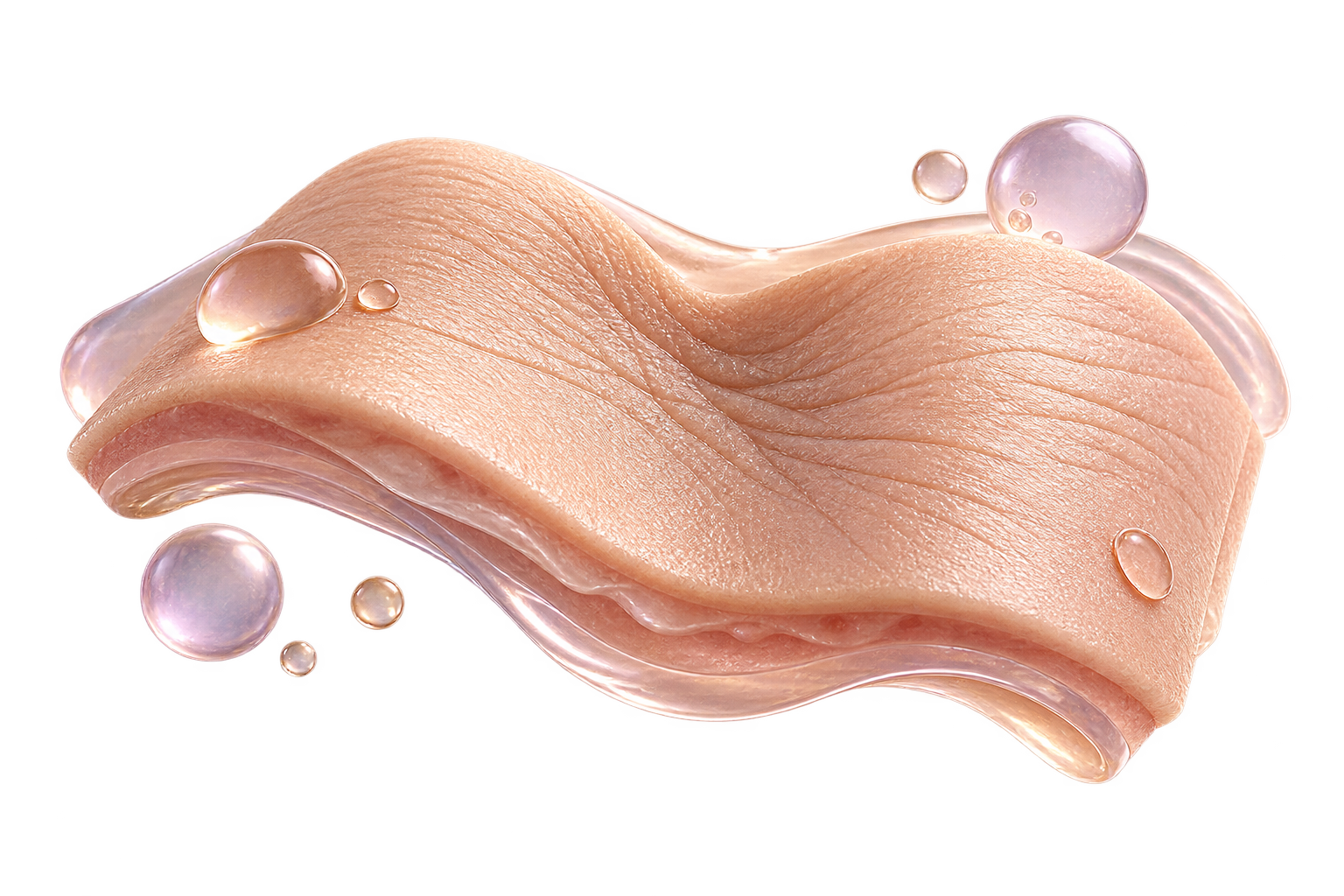
Long-term UV exposure can contribute to the breakdown of collagen and elastin, making lines and wrinkles more noticeable.

Chronically sun-exposed skin may develop a rougher or uneven surface.

Long-term UV exposure can contribute to changes in collagen and elastin, affecting skin firmness and elasticity.
UV radiation can affect skin cells and the structures that help keep the skin strong and healthy.

UV radiation can damage the DNA inside skin cells.

UV exposure can increase oxidative stress, which can contribute to cellular damage.
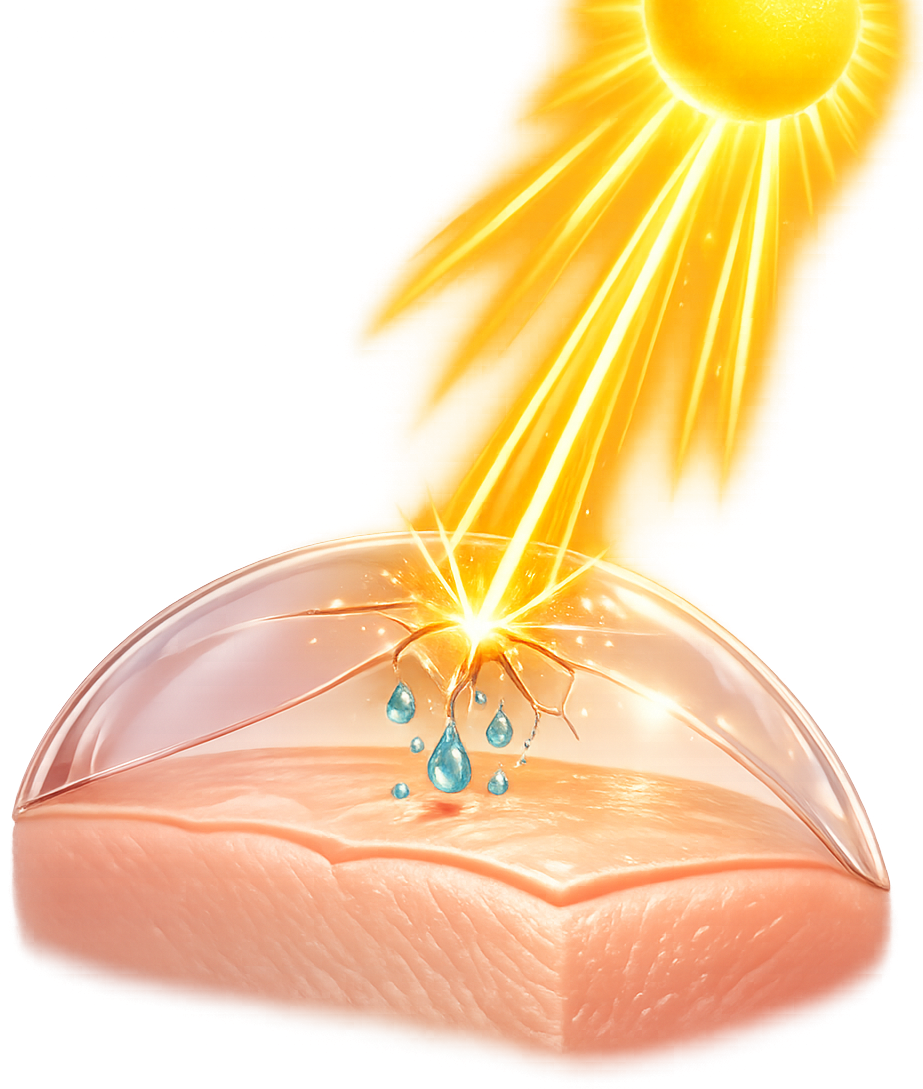
Long-term UV exposure can contribute to the breakdown of collagen and changes in the skin's supportive structures.
UV exposure can stimulate melanin production and contribute to tanning and uneven pigmentation.
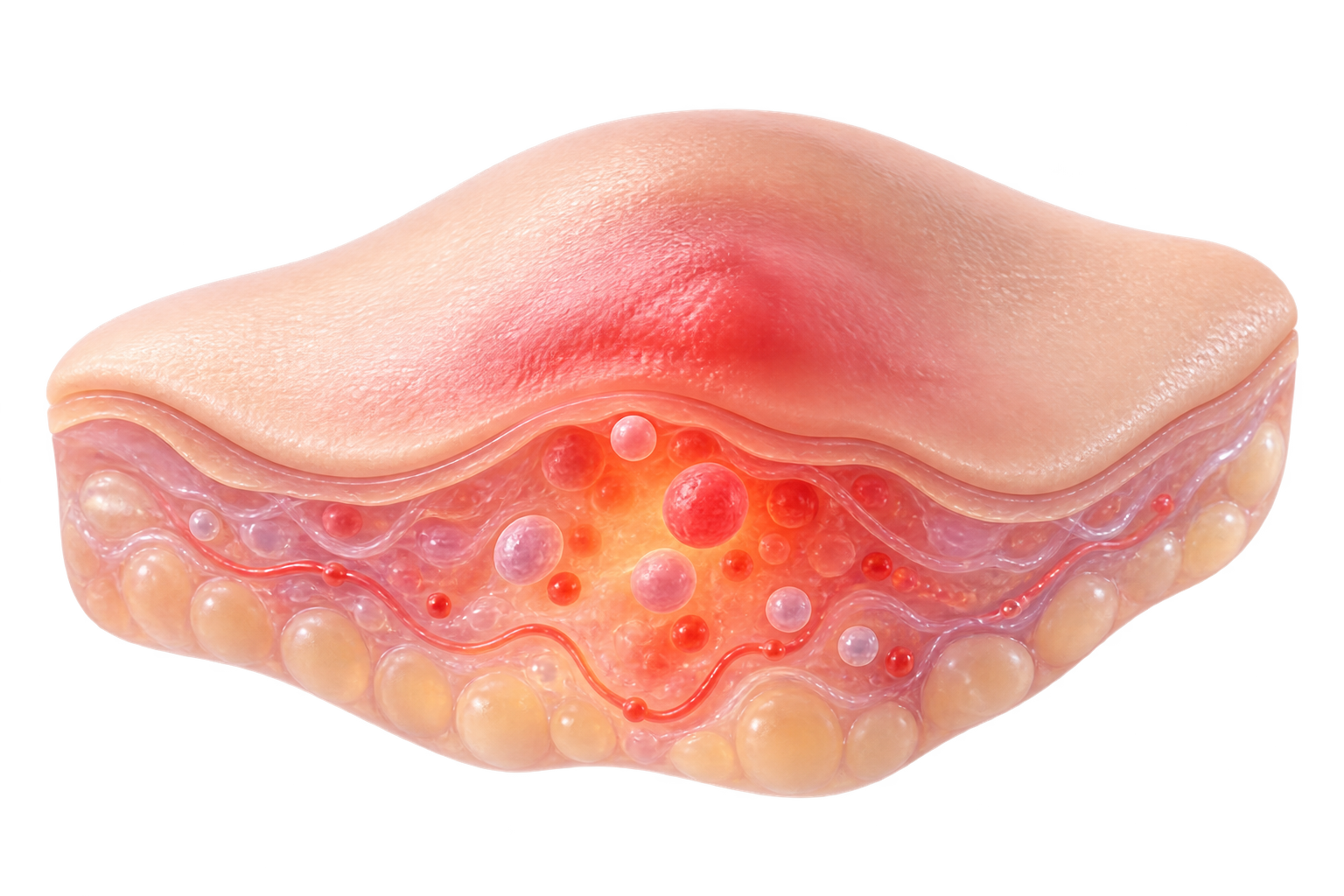
Excessive UV exposure can trigger inflammation, resulting in redness and sunburn.
Sun damage isn't limited to one visible change. It can affect the skin in several ways.
A short-term inflammatory response caused by excessive UV exposure.
UV exposure can trigger or worsen excess pigmentation, including some dark spots and uneven tone.
Long-term UV exposure can contribute to wrinkles, fine lines, uneven texture, and loss of elasticity.
Flat areas of increased pigmentation can develop on repeatedly sun-exposed areas over time.
Long-term sun exposure can contribute to persistent rough or scaly areas that should be evaluated by a dermatologist.
Cumulative UV exposure increases the risk of developing skin cancer.
Everyone can experience UV-related skin damage, but certain factors can increase exposure or susceptibility.
Long periods outdoors increase your total UV exposure.
Going without sunscreen, shade, or protective clothing can increase UV exposure.
UV radiation can be stronger at certain times, locations, and weather conditions.
Water, sand, snow, and other bright surfaces can reflect UV radiation.
Repeated sunburns indicate significant UV exposure and can contribute to cumulative skin damage.
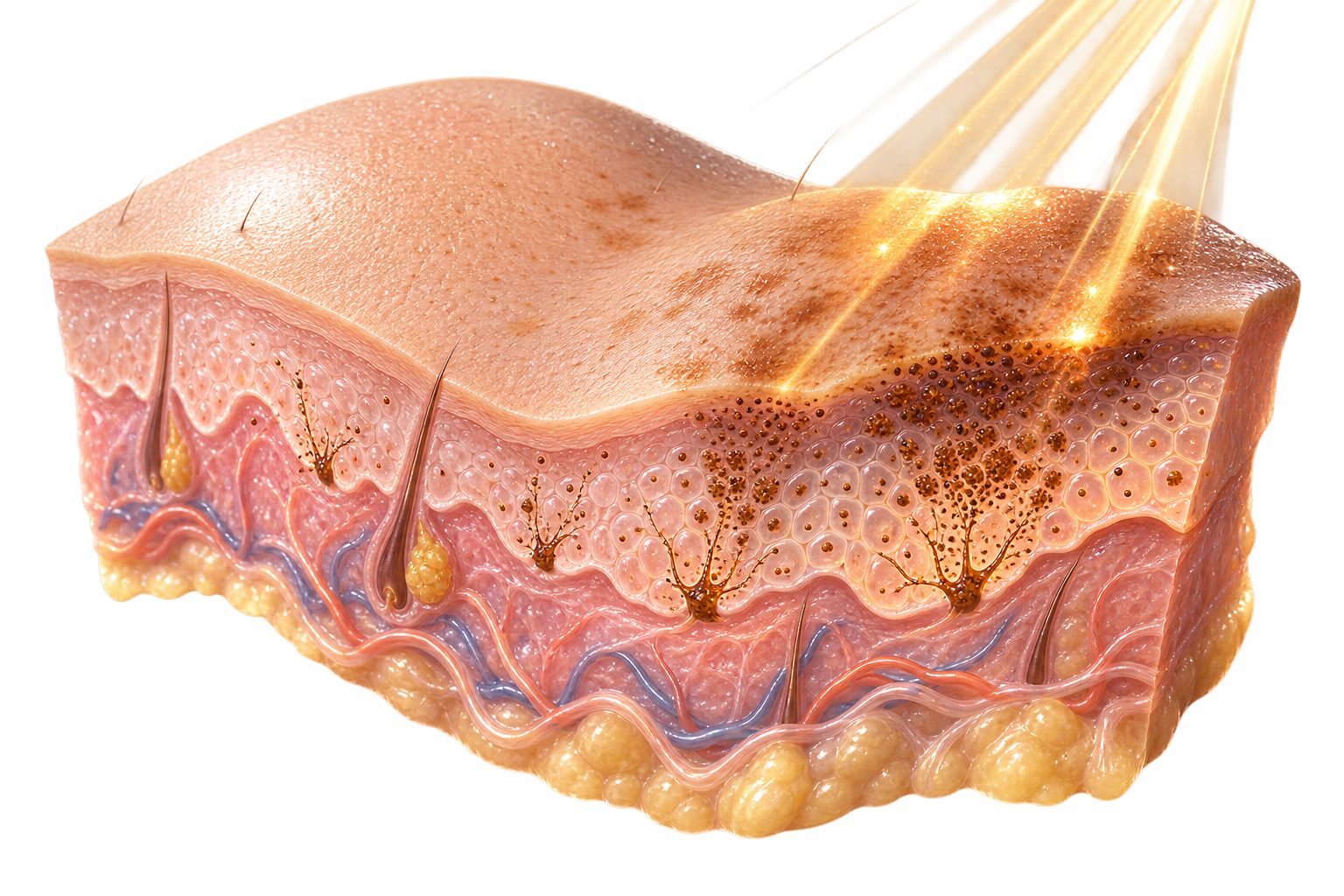
Some skin changes associated with aging are natural, but long-term UV exposure can accelerate many visible signs of aging.
UV exposure can contribute to:
This is why UV protection is considered one of the most important habits for protecting the skin over time.
You cannot avoid UV exposure completely, but you can reduce it with consistent sun-protection habits.
Choose a broad-spectrum sunscreen that protects against both UVA and UVB radiation.

Reapply sunscreen according to the product's directions, especially after swimming, sweating, or extended outdoor activity.

Shade can reduce direct UV exposure, particularly when the sun is strong.

Hats, sunglasses, and clothing that covers the skin can provide additional protection.
Sun protection isn't only for beach days. UV exposure can happen during everyday outdoor activities too.
Sunscreen is one part of a complete sun-protection routine.
Broad-spectrum sunscreen helps protect against both UVA and UVB radiation.
SPF primarily measures protection against UVB-related sunburn.
Water-resistant formulas can provide protection during swimming or sweating, but they still need to be reapplied according to the product's directions.
Using too little sunscreen can reduce the level of protection you actually receive.
Sunscreen works best when it's part of a bigger strategy — shade, protective clothing, and smart sun habits matter too.
Let's separate useful sun-protection guidance from common skincare myths.
"You only need sunscreen on sunny days."
UV radiation can still reach your skin when the sky is cloudy. Sun protection should be based on UV exposure, not simply whether the day looks sunny.
"A tan means your skin is healthy."
A tan is a response to UV exposure and indicates that the skin has been affected by radiation.
"If you don't get sunburned, your skin isn't being damaged."
UV exposure can cause cumulative skin damage even without an obvious sunburn.
"Sunscreen completely blocks UV radiation."
Sunscreen helps reduce UV exposure but doesn't provide complete protection on its own.
"Dark skin doesn't need sun protection."
All skin tones can experience UV-related damage and benefit from sun protection.

Some visible signs of sun damage can improve with consistent skincare and professional treatment, but not every type of damage can simply be reversed.
Sun protection is important because preventing additional UV damage is the first step.
Depending on the concern, dermatologists may recommend treatments for pigmentation, fine lines, uneven texture, or other signs of photoaging.
Some sun-related changes, particularly cellular DNA damage, cannot simply be "erased" with skincare.
Don't wait until you see wrinkles or dark spots to start protecting your skin. Prevention is much easier than trying to undo years of UV exposure.
Most everyday sun exposure doesn't require medical treatment, but certain changes should be professionally evaluated.
A spot that changes in size, shape, or color should be checked by a dermatologist.
A rough area that doesn't heal or keeps returning should be evaluated.
Persistent bleeding or a sore that doesn't heal should not be ignored.
A severe sunburn with significant symptoms may require medical attention.
If you're concerned about a new or unusual change in your skin, professional evaluation is the safest option.


You don't need to hide from the sun. Just respect it.
Use sunscreen, seek shade when UV levels are high, wear protective clothing when appropriate, and make sun protection part of your everyday routine.
Your future skin will thank you for the boring little habit you kept doing every day.