Genetics
A person's genetic background may contribute to their tendency to develop rosacea.
 ×
×
Rosacea is a common, long-term inflammatory skin condition that mainly affects the face, especially the cheeks, nose, chin, and forehead.
It can cause persistent redness, flushing, visible small blood vessels, burning or stinging, and sometimes small red or pus-filled bumps.
Persistent redness or flushing
Visible small blood vessels
Burning or stinging
Red or pus-filled bumps
Rosacea can come and go. Some people mainly experience redness, while others develop bumps, visible blood vessels, or eye symptoms.

Rosacea is not contagious, and it is not caused by dirty skin.
The exact cause isn't completely understood. Researchers believe several biological and environmental factors may contribute to rosacea.
A person's genetic background may contribute to their tendency to develop rosacea.
Changes in immune-system activity may play a role in the inflammation associated with rosacea.
Blood vessels may respond unusually to certain triggers, contributing to flushing and redness.

Environmental factors can trigger or aggravate symptoms in people who are prone to rosacea.
Changes involving microorganisms that naturally live on the skin may also contribute.
Rosacea can be understood as a cycle in which triggers activate blood-vessel and inflammatory responses in skin that is biologically prone to the condition.
A person has a genetic or biological tendency toward rosacea.
A trigger causes blood vessels and inflammatory pathways to react.
The skin becomes flushed or red as the vascular and inflammatory response develops.
Repeated inflammation can make redness last longer and become more noticeable.
Some people develop visible blood vessels, bumps, or other rosacea symptoms.
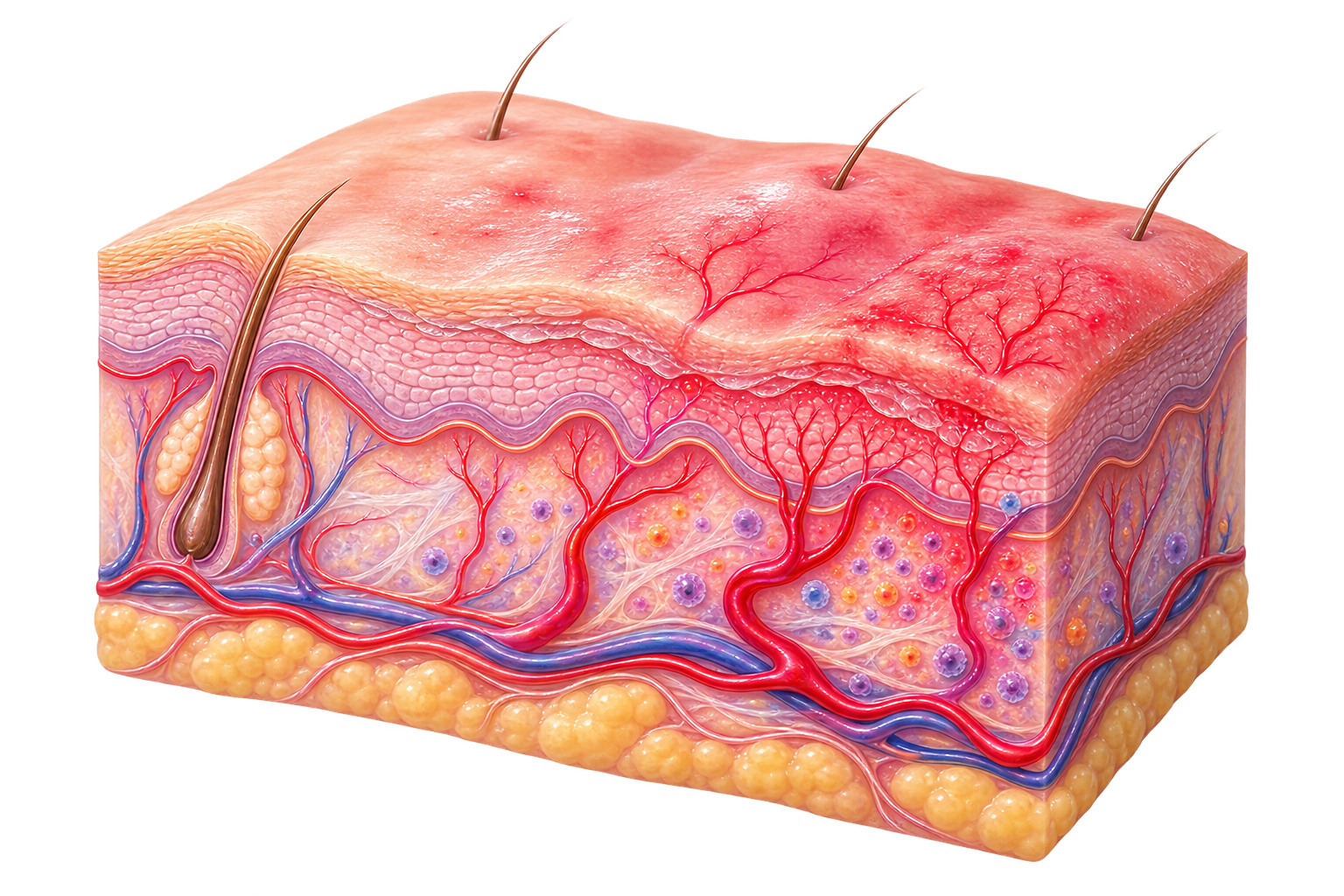
A trigger does not affect everyone in the same way. Symptoms can vary from person to person and may become more noticeable during repeated flare-ups.
Rosacea can appear in different ways. Some people mainly experience redness and flushing, while others develop bumps, visible blood vessels, thickening of the skin, or eye symptoms.
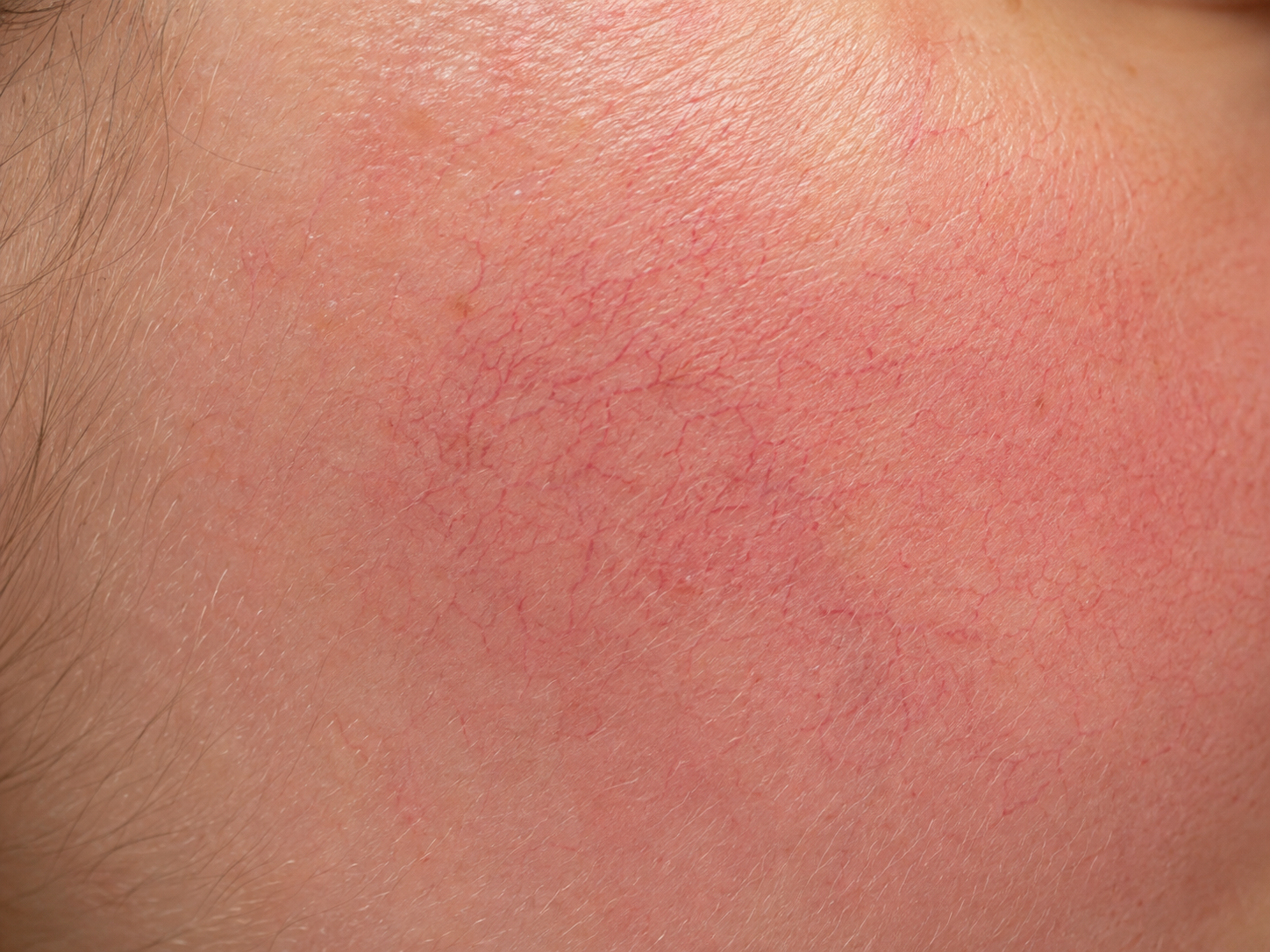
This pattern is mainly associated with persistent facial redness and frequent flushing.
Persistent facial redness
Frequent flushing
Visible tiny blood vessels
Burning or stinging
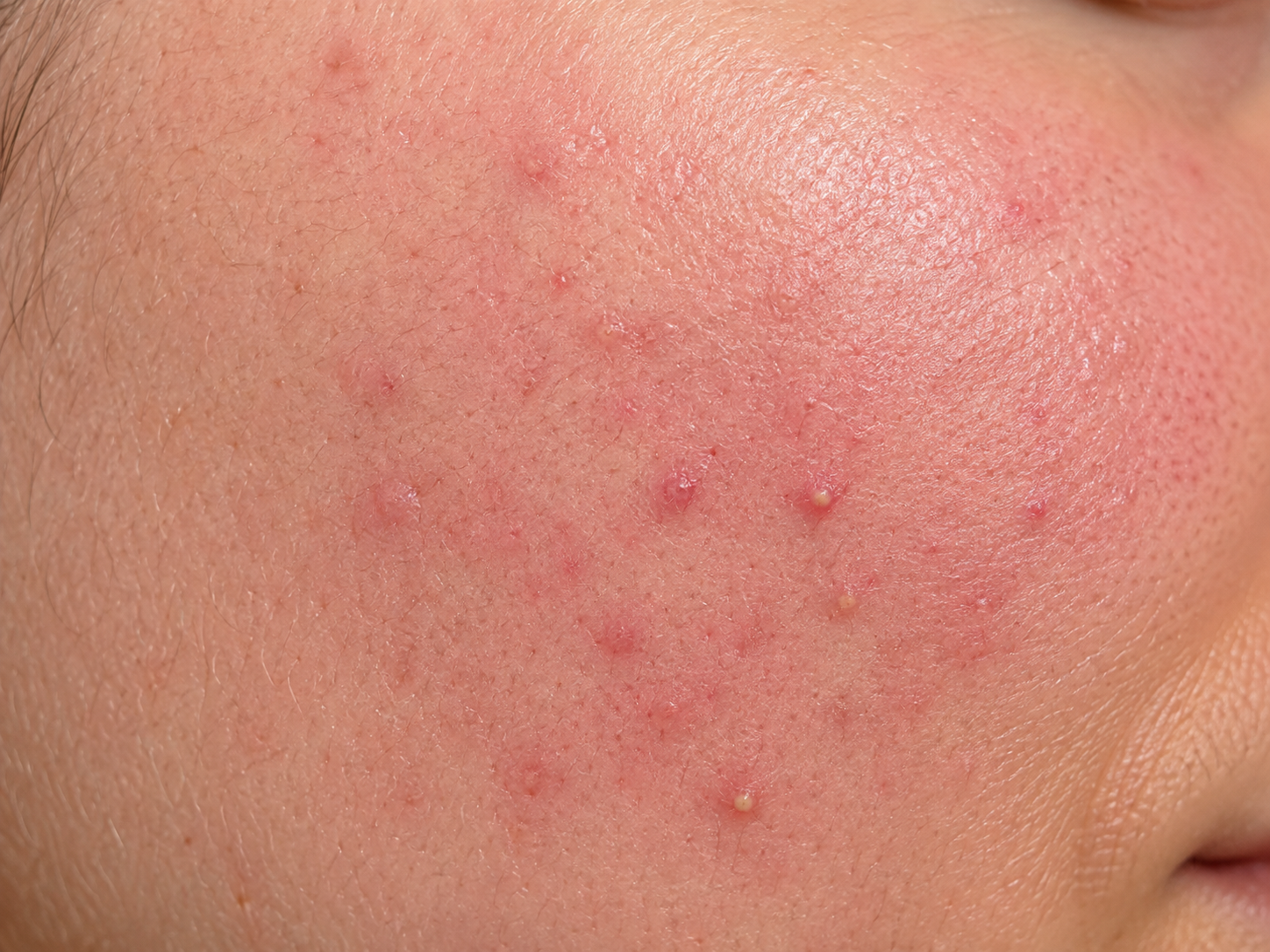
This pattern can look similar to acne because it may cause inflammatory bumps and pustules.
Red bumps
Pus-filled bumps
Persistent redness
Blackheads are usually absent
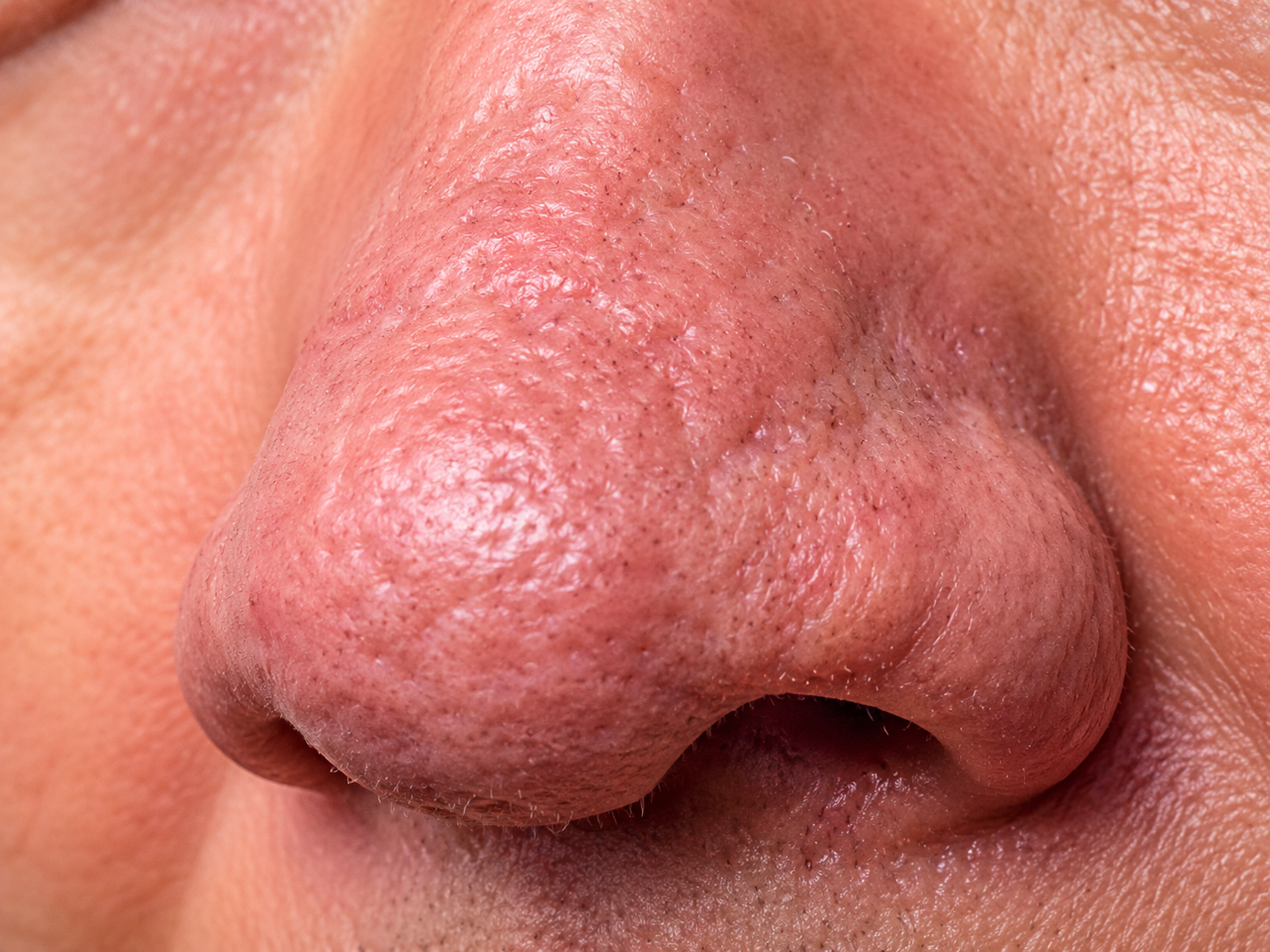
This pattern involves thickening of the skin and can change the texture and appearance of the affected area.
Skin thickening
More textured appearance
Most commonly affects the nose
Can lead to rhinophyma
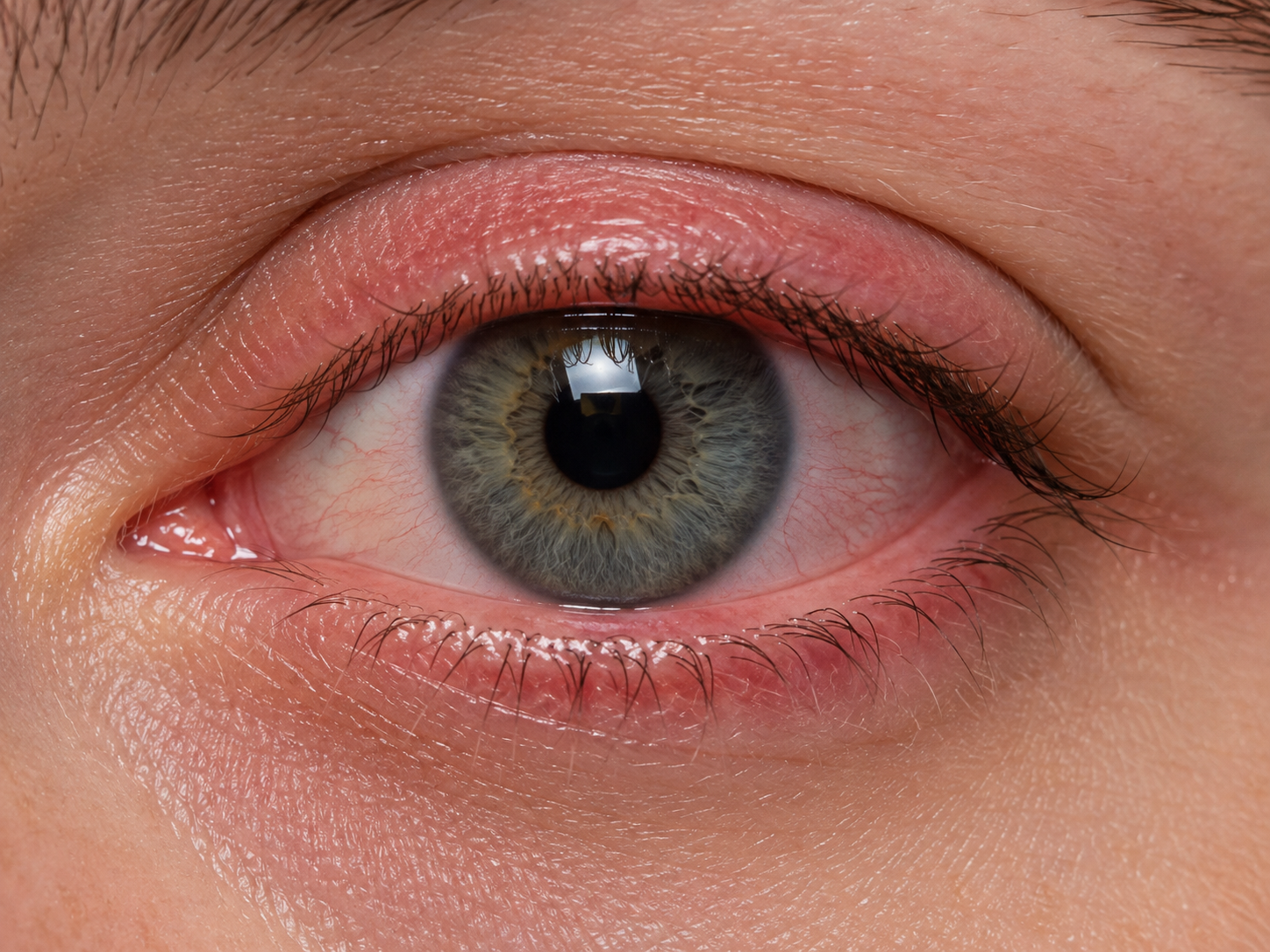
This pattern affects the eyes and the surrounding area and should not be ignored.
Dry eyes
Burning or irritation
Red eyes
Gritty feeling
Eyelid inflammation
Rosacea can present differently from person to person. Some people experience more than one pattern or combination of symptoms.
Triggers vary from person to person. Something that causes a flare-up for one person may not affect someone else.
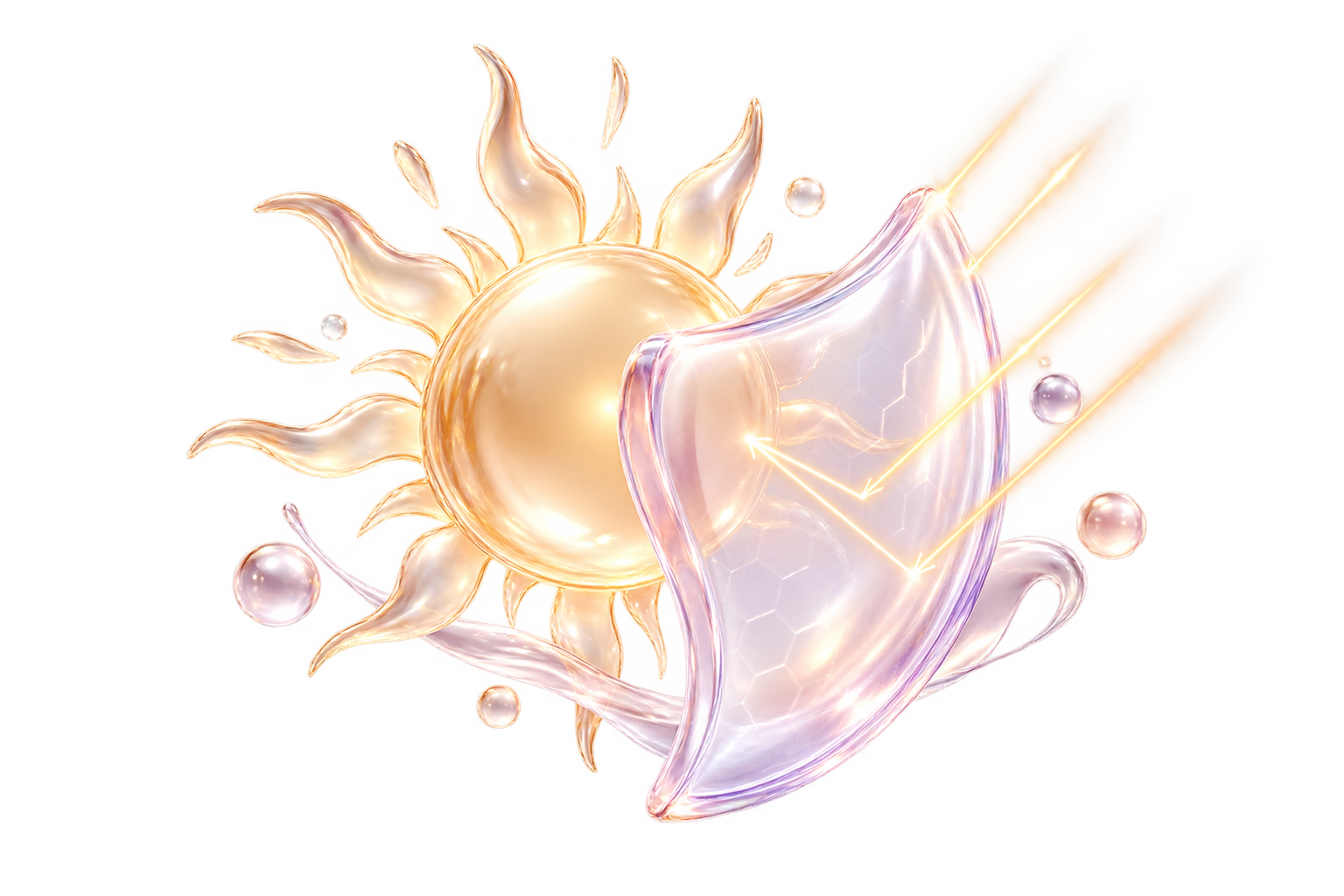
UV exposure is one of the most common triggers associated with rosacea flare-ups.
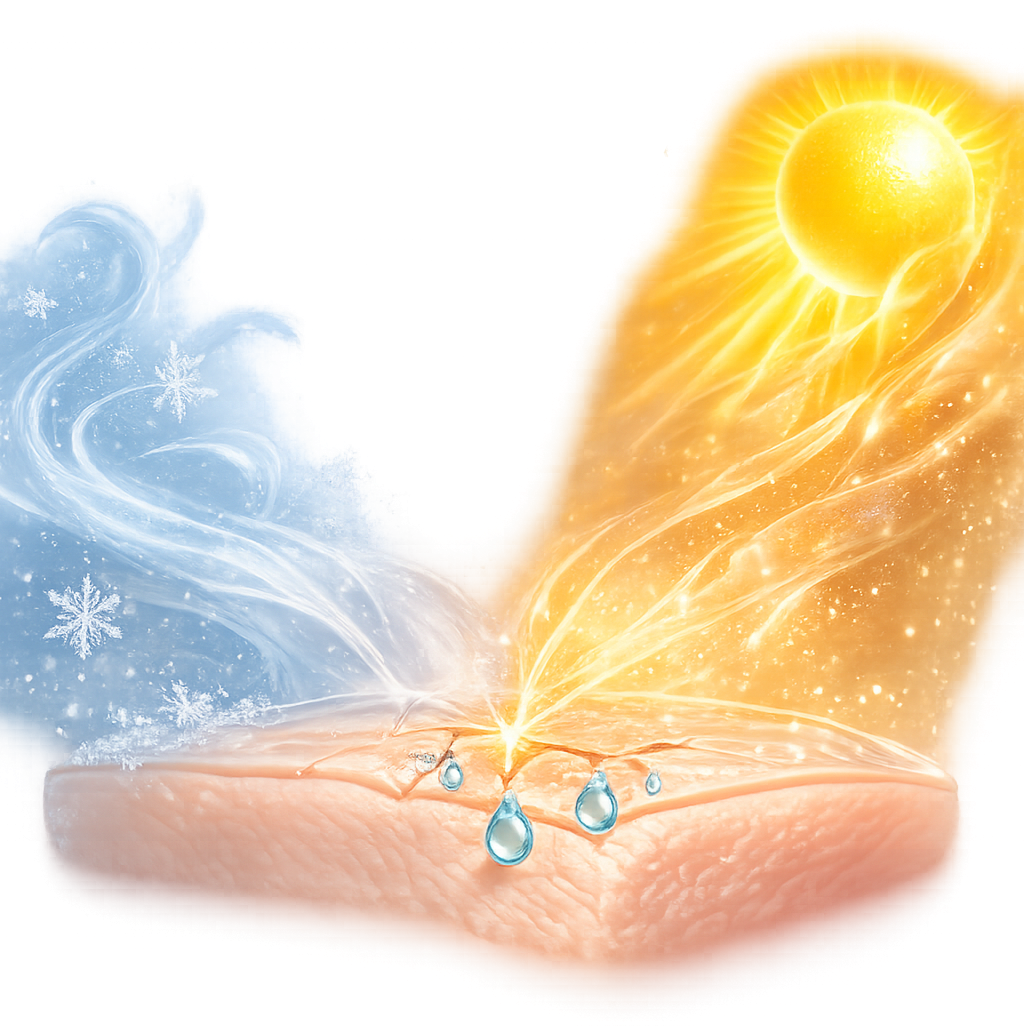
Hot weather, hot rooms, saunas, and hot showers can trigger flushing.

Spicy foods can trigger facial flushing in some people with rosacea.
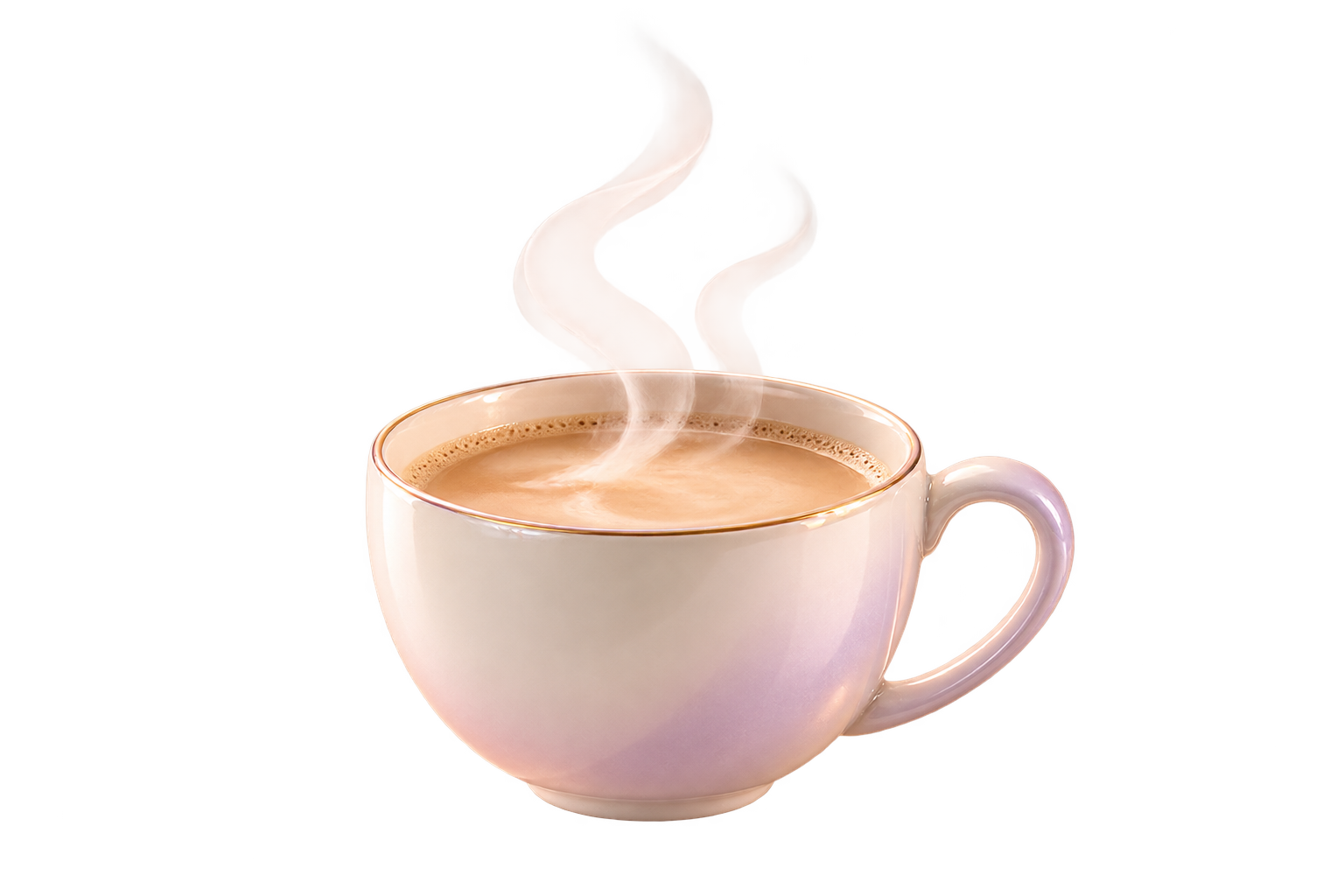
Very hot beverages may trigger facial flushing in some people.

Alcohol can trigger flushing in some people.
Emotional stress and strong emotions may trigger rosacea symptoms.
Intense exercise can increase body temperature and trigger flushing.
Extreme weather can irritate the skin and trigger symptoms.
You don't need to avoid everything on this list. Pay attention to what consistently causes your own symptoms and use that information to understand your personal triggers.
Papulopustular rosacea can look similar to acne, but the two conditions have important differences. Knowing them can help you understand why the same approach may not work for both.
Common and may be persistent.
Common and can be triggered by heat, sun, spicy foods, and other factors.
Usually absent.
Burning or stinging may occur.
Heat, sun, spicy foods, hot drinks, stress, and other individual triggers.
Often affects the central face.
Usually surrounds individual lesions.
Not a defining feature of acne.
Common.
Pain or tenderness may occur.
Clogged pores and hormonal influences can contribute.
Can affect the face, chest, back, and shoulders.
Someone can have both acne and rosacea. If you're unsure which condition you're dealing with, a dermatologist can help determine the cause.
Sensitive skin and rosacea can feel similar, but they aren't the same thing. One describes a tendency for skin to react easily, while the other is a specific inflammatory skin condition.
A tendency for skin to react easily to products or environmental conditions.
Skin that is more easily irritated or reactive.
A specific inflammatory skin condition with characteristic symptoms such as persistent redness, flushing, visible blood vessels, or inflammatory bumps.
A condition involving inflammation and abnormal vascular responses.
Some everyday habits and skincare practices can aggravate rosacea-prone skin. Recognizing what repeatedly irritates your skin can help reduce unnecessary flare-ups.
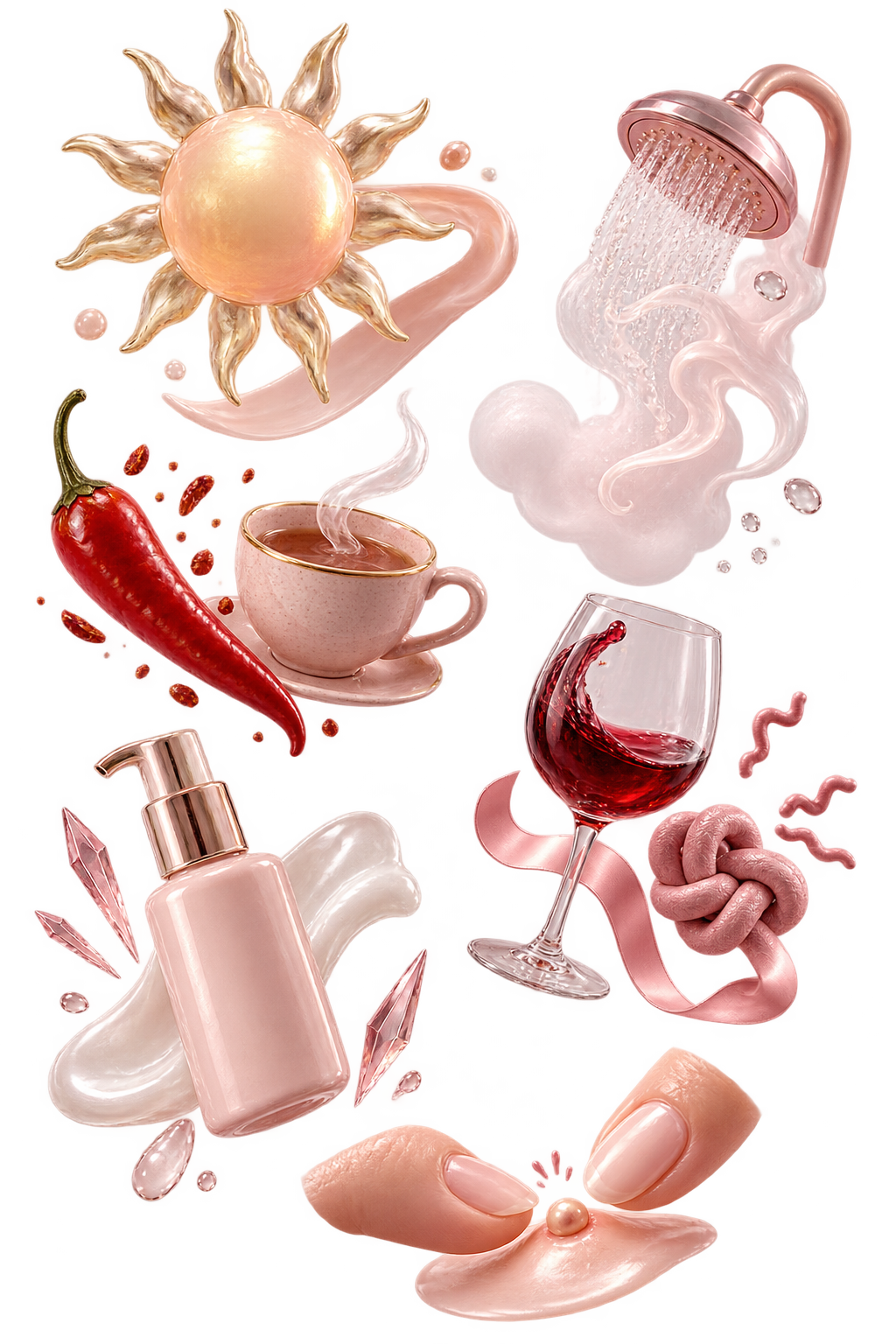
UV exposure can trigger or aggravate rosacea symptoms.
Heat, hot environments, and very hot water can contribute to flushing.
These may trigger flushing in some people.
Both can trigger symptoms for some people.
Strong fragrance, aggressive cleansing, frequent exfoliation, and products that repeatedly burn or sting may worsen irritation.
Manipulating bumps can create additional irritation and inflammation.
Don't assume that "natural" automatically means gentle. Some botanical ingredients and essential oils can irritate rosacea-prone skin too.
Rosacea treatment is more medical than an average skincare concern. A gentle routine can support the skin barrier, while some ingredients may help with specific symptoms.
 Active
Can help reduce inflammatory bumps and redness in some people.
 Barrier Support
Can support the skin barrier and may be useful in a gentle routine.
 Barrier Support
Help support the skin barrier and protect against unnecessary moisture loss.
 Hydration
Helps maintain hydration and can make a gentle routine more comfortable.
 Daily Care
A simple, fragrance-free moisturizer can help reduce dryness and irritation.
 Essential
Daily broad-spectrum sunscreen is extremely important because UV exposure can trigger rosacea.
Some people find mineral sunscreens containing zinc oxide or titanium dioxide more comfortable.
Skincare can support rosacea-prone skin, but it does not replace medical treatment when treatment is needed. If symptoms persist or worsen, consider seeing a dermatologist.
Rosacea-prone skin can be easily irritated. The goal isn't to avoid every skincare ingredient, but to reduce habits and products that repeatedly trigger burning, stinging, or inflammation.
Avoid aggressive physical scrubbing that can increase irritation.
Over-exfoliating can weaken the skin barrier and make irritation worse.
Very hot showers and water can trigger flushing and discomfort.
Fragrance can be irritating for some people with rosacea-prone skin.
If a product consistently burns or stings, it may be irritating your skin.
Cleansing too harshly can strip the skin and increase discomfort.
Manipulating bumps can create additional irritation and inflammation.
Some botanical ingredients and essential oils can irritate rosacea-prone skin. What matters is how your individual skin responds—not whether a product is labeled natural.
Currently, there isn't a permanent cure for rosacea. But it can be managed. The goal is to reduce symptoms, understand personal triggers, protect the skin barrier, and prevent flare-ups.

Management focuses on reducing redness, flushing, bumps, irritation, and other symptoms.
Learning your personal triggers can help you recognize and reduce avoidable flare-ups.
Gentle skincare, regular moisturizing, and avoiding unnecessary irritation can support the skin barrier.
Consistent skincare and trigger awareness can help keep symptoms under better control.
Some people may need medical treatment to control inflammation and other symptoms. A dermatologist can help determine what treatment is appropriate.
Rosacea can go through periods when symptoms are mild and periods when they become more noticeable. The aim is not to make your skin "perfect"—it's to keep symptoms manageable and your skin comfortable.
Rosacea can resemble acne, dermatitis, lupus, and other skin conditions. If symptoms persist or keep returning, getting the diagnosis right matters.
Facial redness persists or repeatedly returns.
You develop recurring red bumps or pus-filled bumps.
You experience eye redness, pain, irritation, or vision changes.
Visible blood vessels are becoming more noticeable.
Your symptoms are affecting your comfort or daily activities.
Your current skincare routine isn't improving the symptoms.
Rosacea can resemble acne, dermatitis, lupus, and other conditions. A dermatologist can help determine what's actually causing your symptoms and choose appropriate treatment.
Rosacea is often misunderstood. Let's separate common skincare myths from what we actually know about the condition.
Rosacea is a chronic inflammatory skin condition. Sensitive skin can occur alongside it, but they aren't the same thing.
Rosacea isn't caused by dirty skin.
Rosacea and acne are different conditions, although some rosacea bumps can look similar to acne.
Aggressive exfoliation can worsen irritation and trigger more redness.
Triggers vary from person to person. What causes a flare for one person may not affect another.
Rosacea isn't something you caused by having "bad skin." Understanding your symptoms and personal triggers is much more useful than chasing skincare myths.

With rosacea, less is often more. Instead of constantly
trying new products to "fix" redness, focus on a gentle
routine, daily sunscreen, and identifying your personal
triggers.
If you have persistent redness, recurring bumps, or eye
symptoms, don't assume it's simply sensitive skin—a
dermatologist can help determine whether it's actually
rosacea and choose appropriate treatment.

Rosacea is a long-term inflammatory skin condition that can look different from person to person. Here's what to remember.
Rosacea isn't caused by poor hygiene and it isn't contagious.
Sun, heat, stress, spicy foods, hot drinks, and other factors can trigger symptoms in some people.
Gentle cleansing, moisturizer, appropriate skincare, and daily sunscreen can help support the skin.
Rosacea can resemble acne and other conditions, so persistent or concerning symptoms may need professional evaluation.
You don't need to erase every sign of redness to have healthy skin. Understanding rosacea, recognizing your triggers, and caring for your skin gently are more useful than fighting against your skin.