01
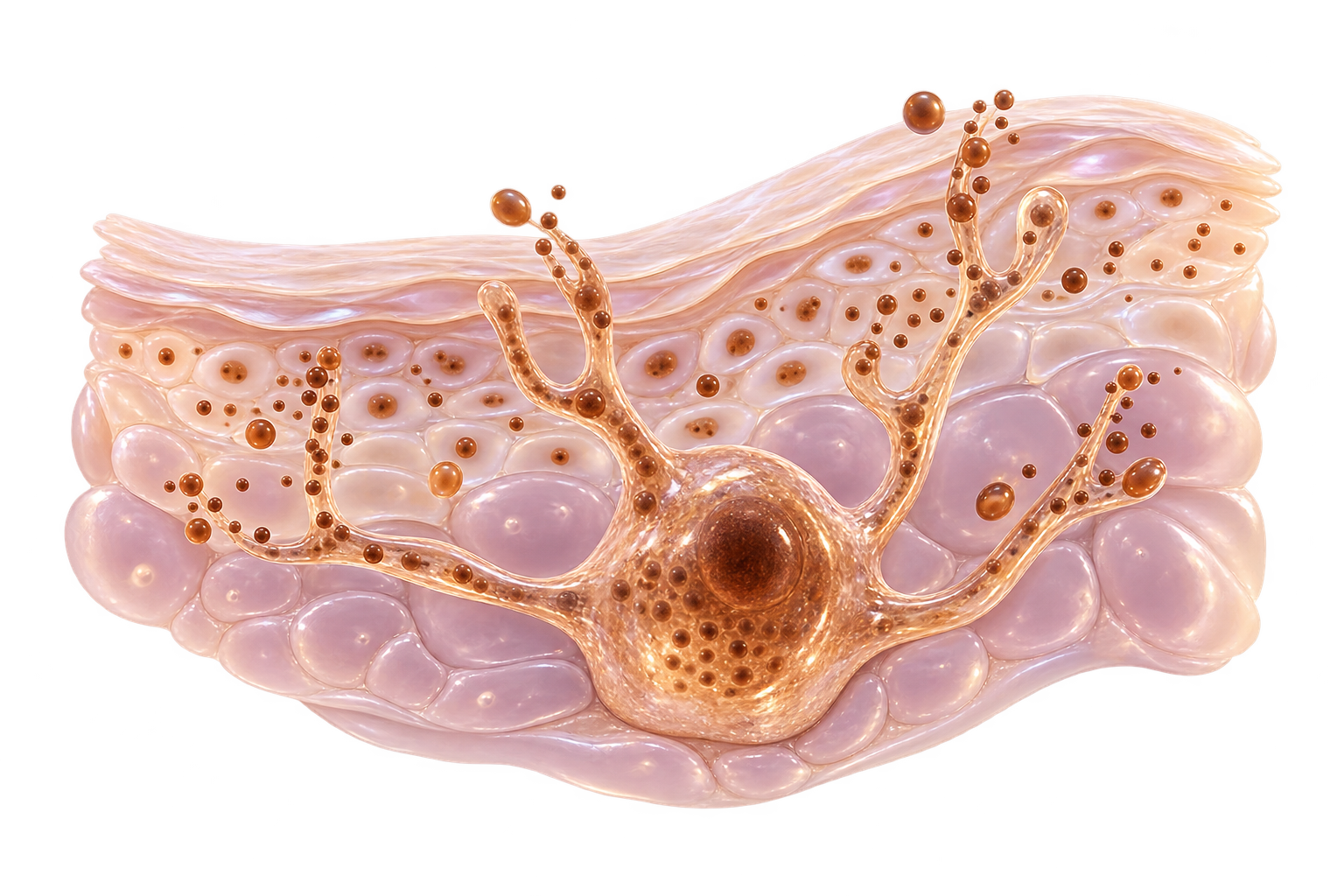
Triggers Activate Melanocytes
Hormones, ultraviolet (UV) radiation, visible light, or heat stimulate pigment-producing cells called melanocytes.
 ×
×
Noticing symmetrical brown patches on your face? Melasma is a common pigmentation condition that causes areas of the skin to become darker than the surrounding skin. It is often influenced by hormones, sun exposure, and genetics.
Learn what melasma is, what causes it, how to manage it, and why consistent sun protection is one of the most important parts of caring for this chronic pigmentation condition.

Melasma is a common chronic pigmentation disorder that causes larger areas of the skin to become darker than the surrounding skin. It most commonly develops on the face and usually appears in a symmetrical pattern.
Unlike freckles or post-inflammatory hyperpigmentation (PIH), melasma forms larger, flat patches instead of individual dark spots. The skin remains smooth because only the pigment changes—not the skin's texture.
Melasma is not contagious, not painful, and does not itch. Although it is harmless, many people seek treatment because the visible pigmentation affects their confidence.
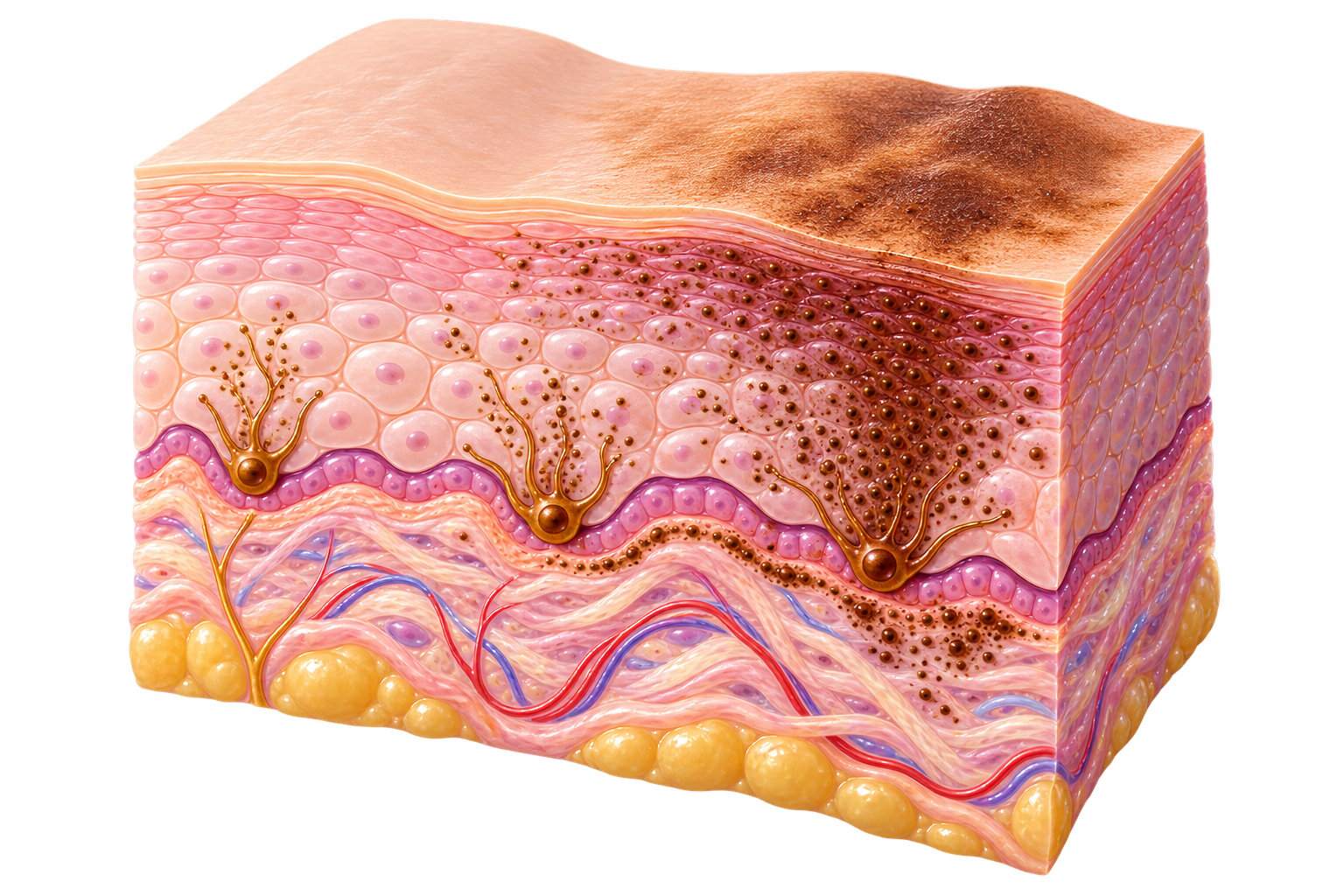
Melasma develops gradually as certain triggers stimulate melanocytes to produce more melanin than usual. Over time, this excess pigment accumulates in specific areas, creating the characteristic symmetrical patches seen in melasma.
Hormones, ultraviolet (UV) radiation, visible light, or heat stimulate pigment-producing cells called melanocytes.
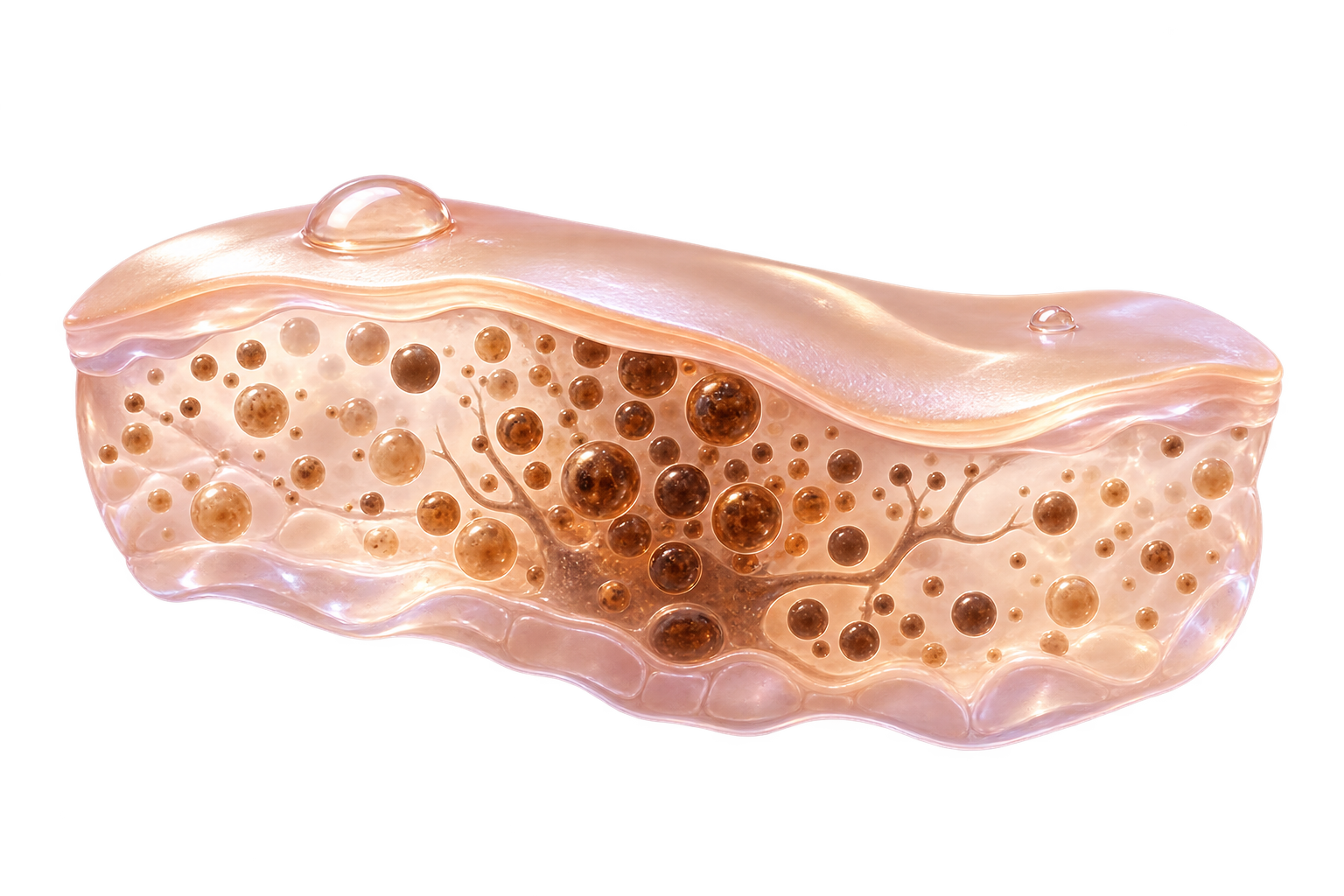
Activated melanocytes begin producing more melanin than the skin normally needs.
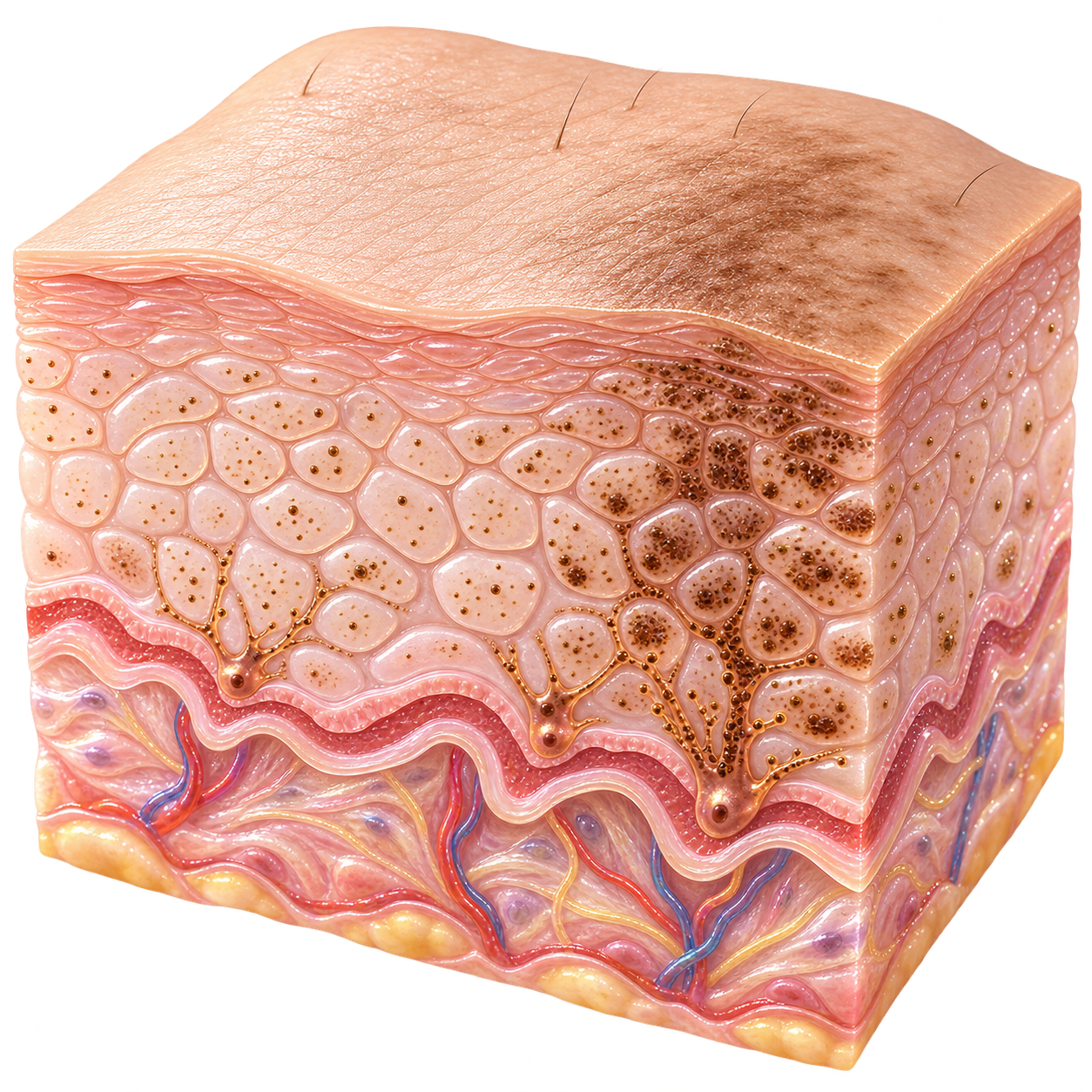
The excess melanin gradually accumulates in specific areas instead of being evenly distributed throughout the skin.
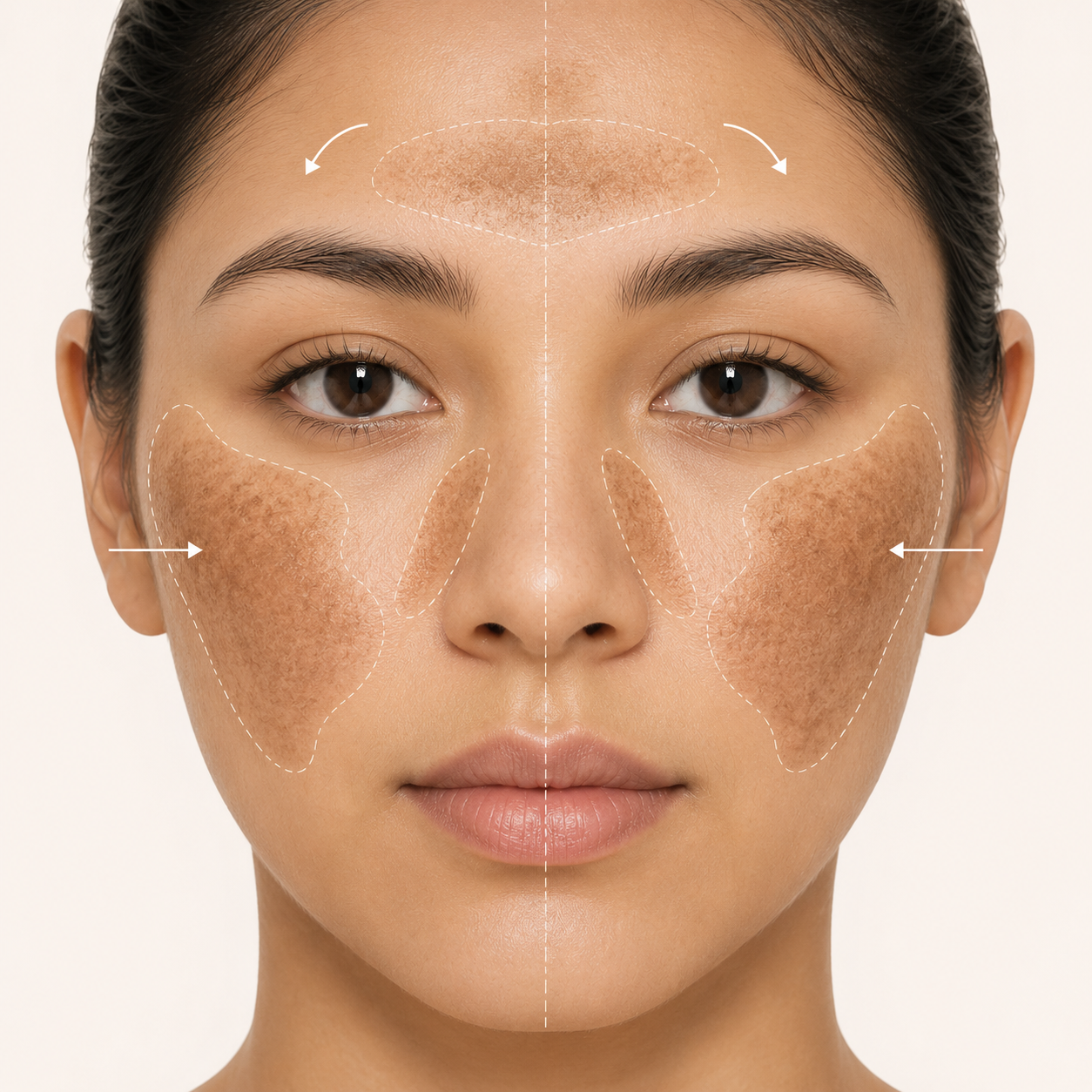
Brown or gray-brown patches begin appearing, usually on both sides of the face in a similar pattern.
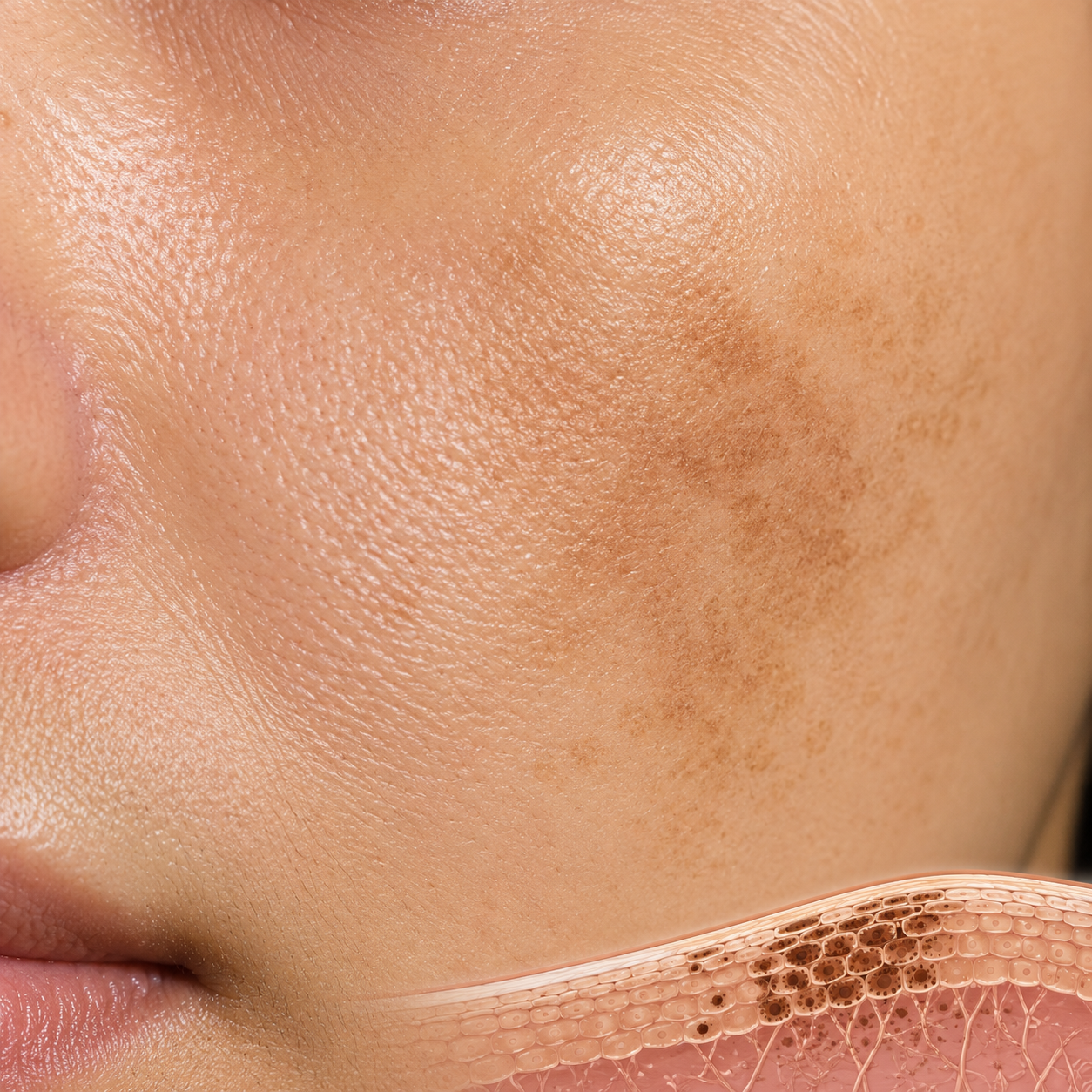
Without consistent sun protection and trigger management, melasma may become darker or return even after it has improved.
Melasma is classified based on where the excess melanin is located within the skin. Understanding the type of melasma helps explain why some cases respond to treatment more easily than others.
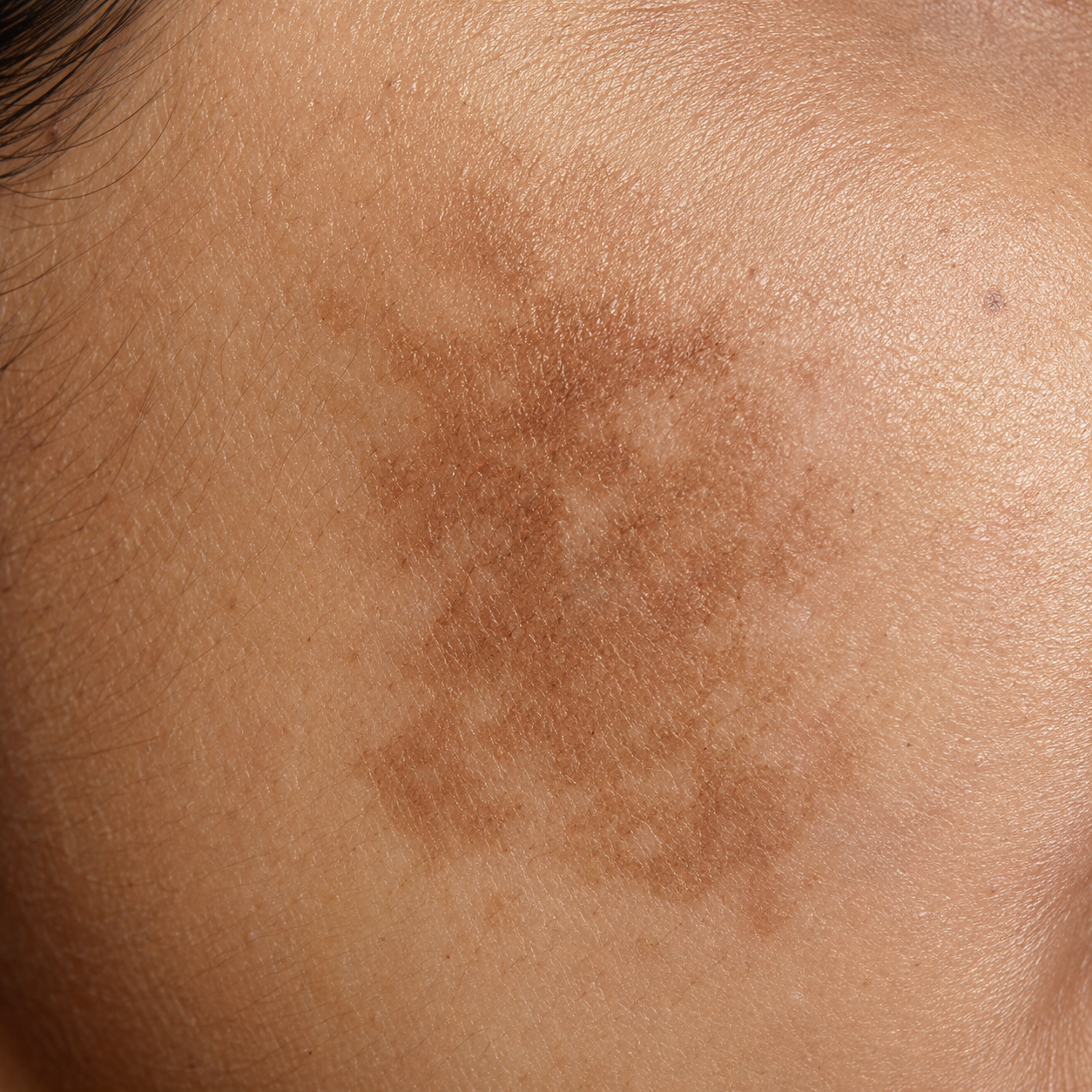
Pigment is located mainly within the epidermis, the outermost layer of the skin.
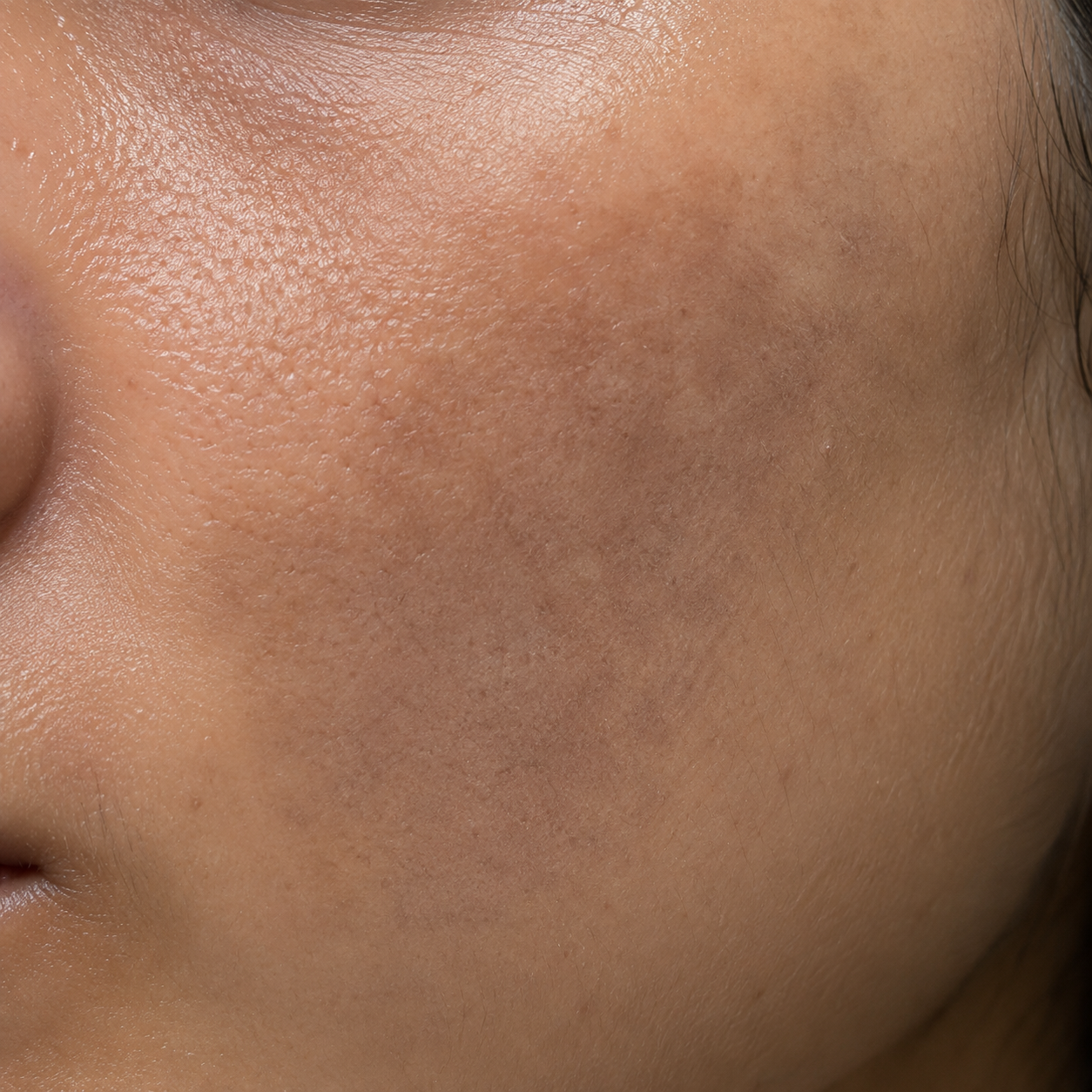
Pigment is found deeper within the dermis, making discoloration more difficult to improve.
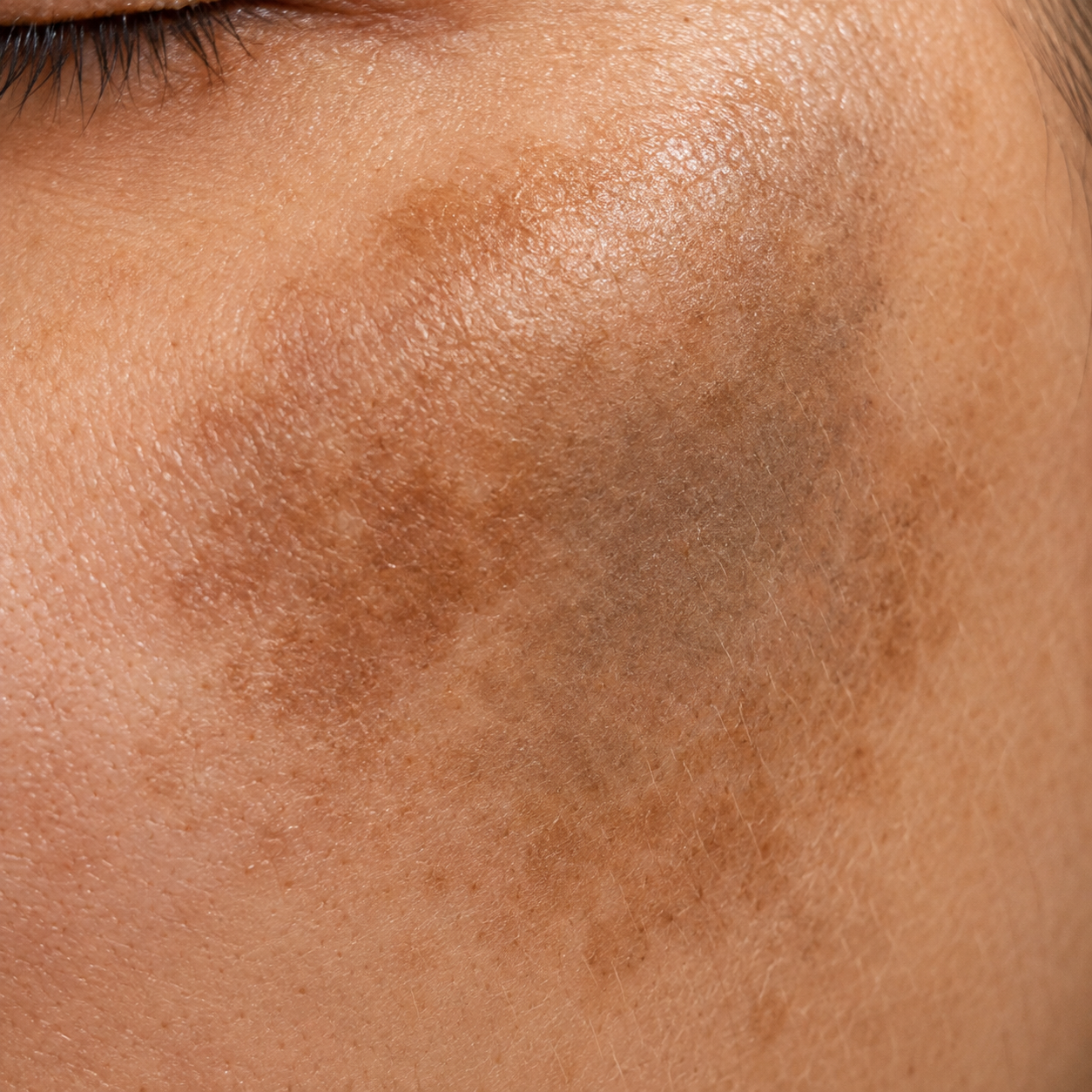
A combination of both epidermal and dermal pigmentation. This is the most common type of melasma.
Melasma usually develops gradually and appears as larger, flat patches rather than individual dark spots. The skin texture remains smooth, while only the skin's color changes.

Melasma commonly appears as tan, brown, or gray-brown areas of pigmentation.
The pigmentation is flat and does not form raised bumps or rough areas.
Melasma changes the skin's color, not its texture, so the surface remains smooth.
Similar patches usually appear on both sides of the face in a balanced pattern.
Melasma is generally painless and does not cause itching or discomfort.
The pigmentation often develops slowly over weeks or months instead of appearing suddenly.
Melasma develops when melanocytes become overactive and produce excess melanin. Several internal and external factors can stimulate these pigment-producing cells, leading to the characteristic patches of melasma.

Pregnancy, birth control pills, and hormone therapy can stimulate melanocytes, increasing melanin production and triggering melasma.

Ultraviolet (UV) radiation is one of the strongest triggers for melasma and can make existing patches become darker.

Visible light, especially blue light, may also stimulate pigment production in some people with melasma.
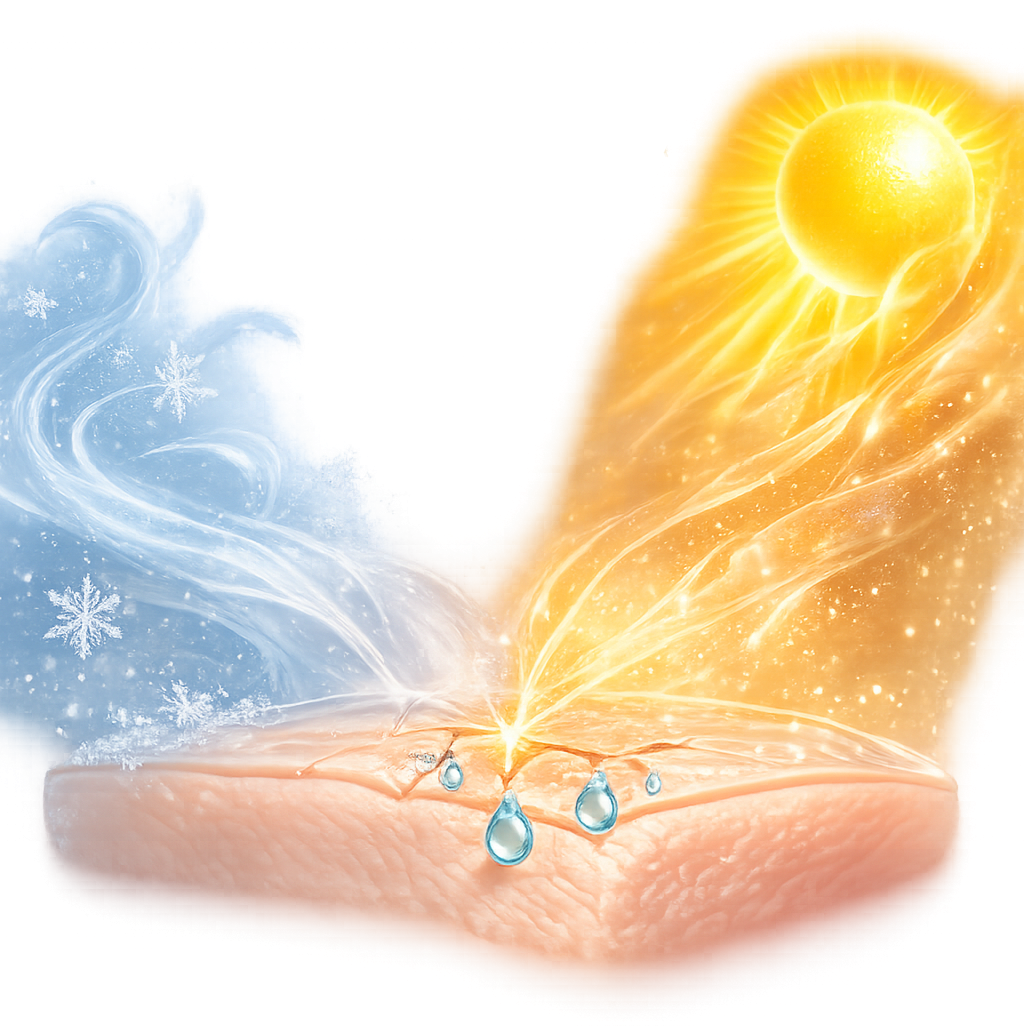
Heat from hot weather, cooking, or steam may worsen melasma by encouraging pigment production.

People with a family history of melasma have a higher likelihood of developing the condition.
Melasma most commonly develops on areas of the face that receive frequent sun exposure. Although it mainly affects the face, it can occasionally appear on other exposed parts of the body.

Melasma usually develops on areas that receive the greatest amount of ultraviolet (UV) radiation and visible light. This is why the cheeks, forehead, nose, and upper lip are the most commonly affected.
Melasma and post-inflammatory hyperpigmentation (PIH) both cause darker areas of the skin, but they develop for very different reasons. Understanding these differences can help explain why treatment approaches are not always the same.
Although both conditions cause darker skin, melasma is primarily triggered by hormones and sun exposure, while post-inflammatory hyperpigmentation (PIH) develops after the skin heals from inflammation or injury. Because they have different causes, they may require different treatment approaches.
Yes. Melasma is considered a chronic pigmentation condition, which means it can improve with treatment but may return if its triggers are not managed consistently.
Ultraviolet radiation and visible light stimulate melanocytes again.

Treatment and skincare gradually reduce the appearance of pigmentation.
Heat, hormones, sunlight, or inconsistent protection reactivate pigment production.

Brown patches may gradually become noticeable again if triggers are not controlled.
Even after melasma fades, daily sun protection and a consistent skincare routine remain important. Preventing new pigment from forming is just as important as improving existing pigmentation.
Melasma cannot always be prevented completely, but consistent daily habits can help reduce flare-ups and prevent existing pigmentation from becoming darker.
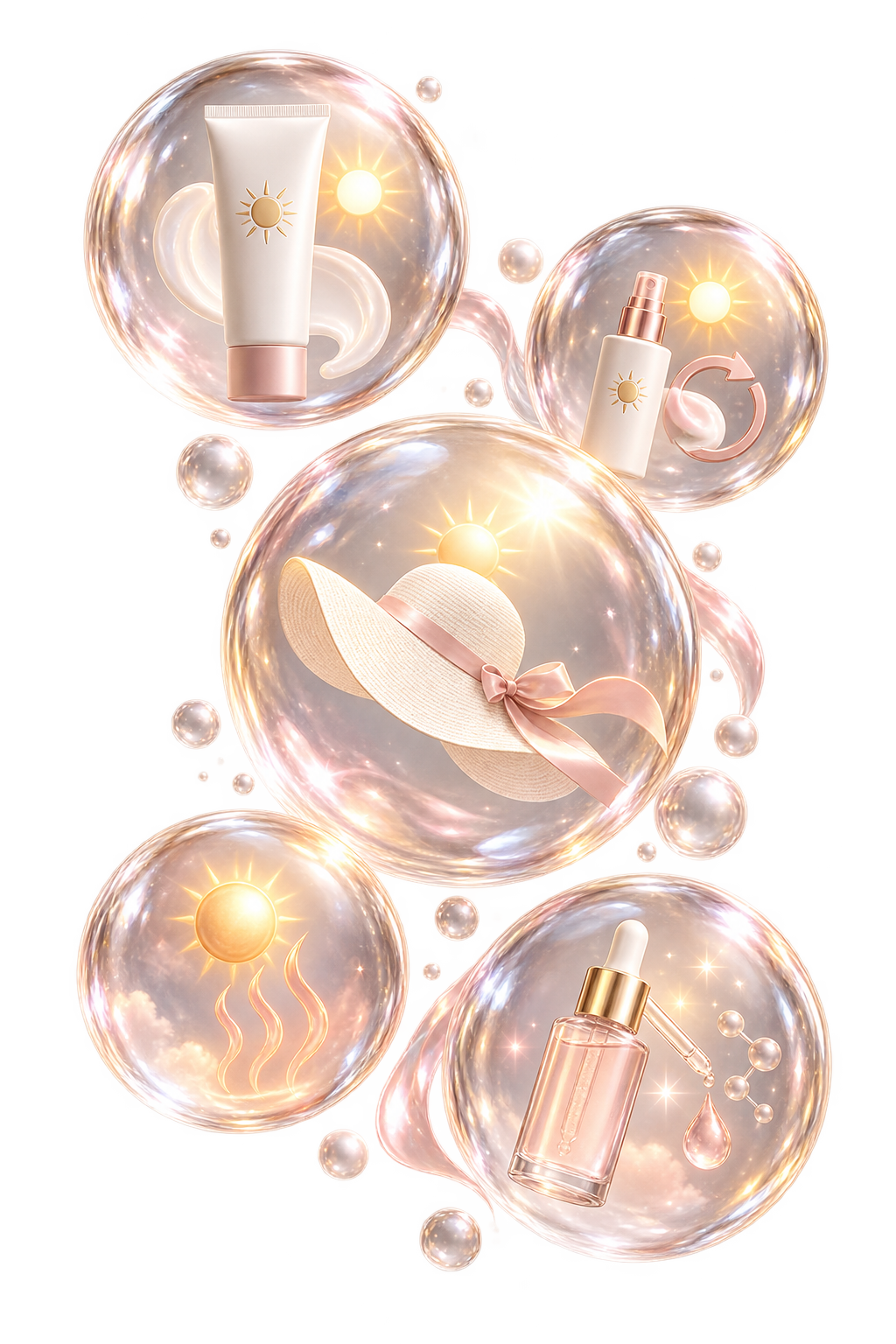
Managing melasma isn't about one perfect product—it's about protecting your skin every day and reducing the triggers that encourage excess pigment production.
Melasma is a long-term pigmentation condition, so improving it often requires consistency rather than quick fixes. These ingredients are commonly used to help reduce excess pigmentation while supporting a more even-looking complexion. Daily sunscreen remains one of the most important parts of melasma management.

Helps reduce excess pigmentation associated with melasma and supports a more even-looking complexion.
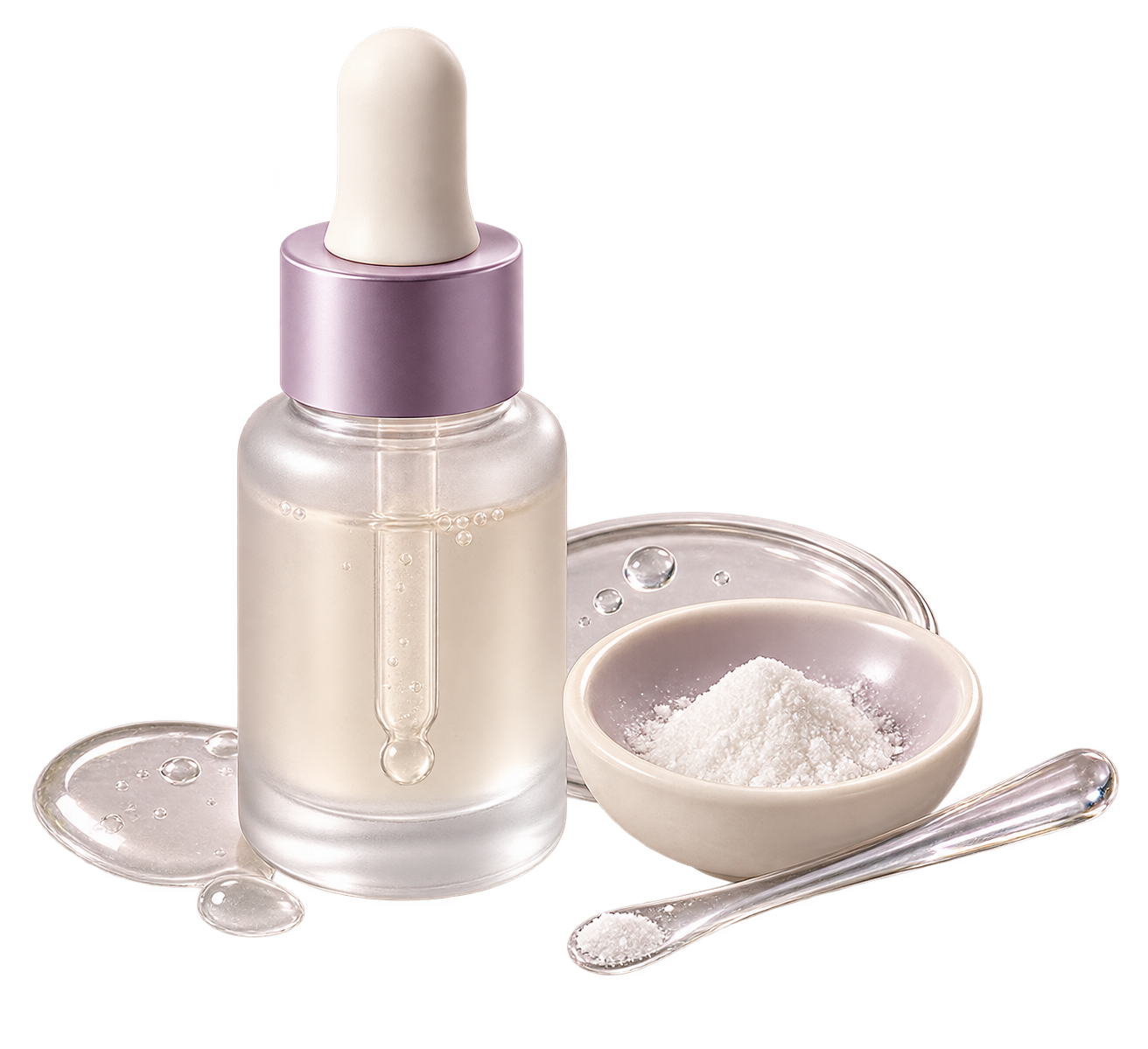
Helps improve uneven skin tone while supporting gentle skin renewal.
Helps reduce the transfer of melanin within the skin, improving the appearance of uneven pigmentation.

Brightens the skin while helping protect against free radical damage caused by environmental exposure.
Support skin cell turnover and gradually improve the appearance of pigmentation over time.

Helps reduce melanin production, making it a commonly used ingredient for pigmentation concerns.

A prescription skin-lightening ingredient that may be recommended by a dermatologist for certain cases of melasma.
Daily sunscreen is one of the most important steps in managing melasma. Tinted sunscreens containing iron oxides may also help protect against visible light.
Melasma is often misunderstood, leading to unrealistic expectations and ineffective skincare habits. Separating myths from facts can help you make more informed decisions about managing pigmentation.
Melasma is a pigmentation disorder caused by overactive melanocytes, not simply tanning.
Melasma commonly returns if triggers such as sun exposure or hormonal changes are not managed.
Scrubbing cannot remove pigment and may worsen skin irritation or barrier damage.
Ultraviolet rays can still reach your skin on cloudy days, making daily sunscreen essential.
Although pregnancy is a common trigger, melasma can affect anyone, including men. Hormones are only one of several factors involved.

Melasma is a condition that requires patience rather than quick results. Brightening ingredients can help improve the appearance of pigmentation, but they work best when combined with consistent daily sun protection.
Even after melasma becomes less noticeable, continue protecting your skin every day. Preventing new pigment from forming is just as important as improving the patches that are already there.
Mimii Says: Don't judge your progress day by day. Melasma fades gradually, and healthy habits matter more than chasing overnight results. Daily sunscreen, gentle skincare, and consistency are your strongest long-term allies.
— Mimii ♡